
Russia Expands Military Bases Near NATO’s Northern Border: Finland, Norway in Focus
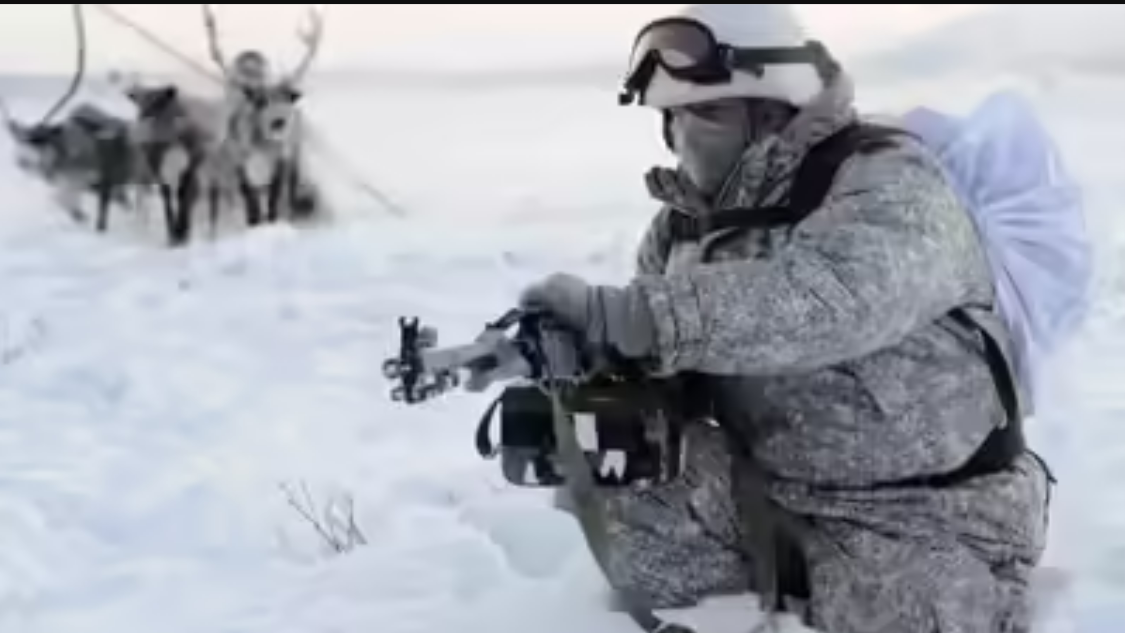
Russia is significantly expanding its military infrastructure along NATO’s northern flank, with new base construction and troop deployments near the borders of Finland and Norway, according to recent reports on Russian military activity in the Arctic region.
The expansion reflects Moscow’s strategic priority to assert control over the Arctic and northern approaches as NATO members Finland and Sweden have shifted their security posture toward the alliance. Russia’s Deputy Foreign Minister has characterised NATO and EU defence planning as comparable to Nazi Germany’s Operation Barbarossa, signalling the intensity of Russian opposition to Western military presence in the region.
Russia maintains one of the world’s largest Arctic military capabilities, including icebreaker fleets, nuclear-powered submarines, and coastal defence systems deployed across the Kola Peninsula and other northern bases. The Arctic region holds strategic significance for Moscow due to vast hydrocarbon reserves, control of northern sea routes, and proximity to NATO territories.
Finland’s accession to NATO in April 2023, followed by increased Swedish security engagement with the alliance, fundamentally altered the security calculus in Northern Europe. Finland shares an 830-kilometre border with Russia, making it the longest NATO-Russia land frontier. Russia’s military build-up serves as both a deterrent against further NATO expansion and a demonstration of capability to defend its interests in the High North.

India has historically maintained a calibrated approach to Arctic geopolitics, emphasising the region’s scientific and environmental dimensions while building limited military-to-military engagement with Arctic states. Indian defence and strategic circles view the Arctic primarily through the lens of climate change impacts, resource access, and freedom of navigation rather than as a theatre for direct military competition.
Russia’s northern military infrastructure includes modernised air defence systems, long-range cruise missile platforms, and advanced surveillance networks. The Kola Peninsula hosts Russia’s Northern Fleet, the largest submarine force in the world, armed with ballistic and cruise missiles capable of striking targets across Europe and beyond.
NATO’s response has included increased air patrols, expanded exercises in the Baltic and Norwegian seas, and enhanced force posture in Poland and the Baltic states. The alliance has also accelerated military modernisation plans in member states bordering Russia, directly prompting Moscow’s counter-deployment strategy along its northern borders.



Facebook Comments