
Taiwan Gets MQ-9B Sea Guardian Drones as India’s Delivery Remains Pending
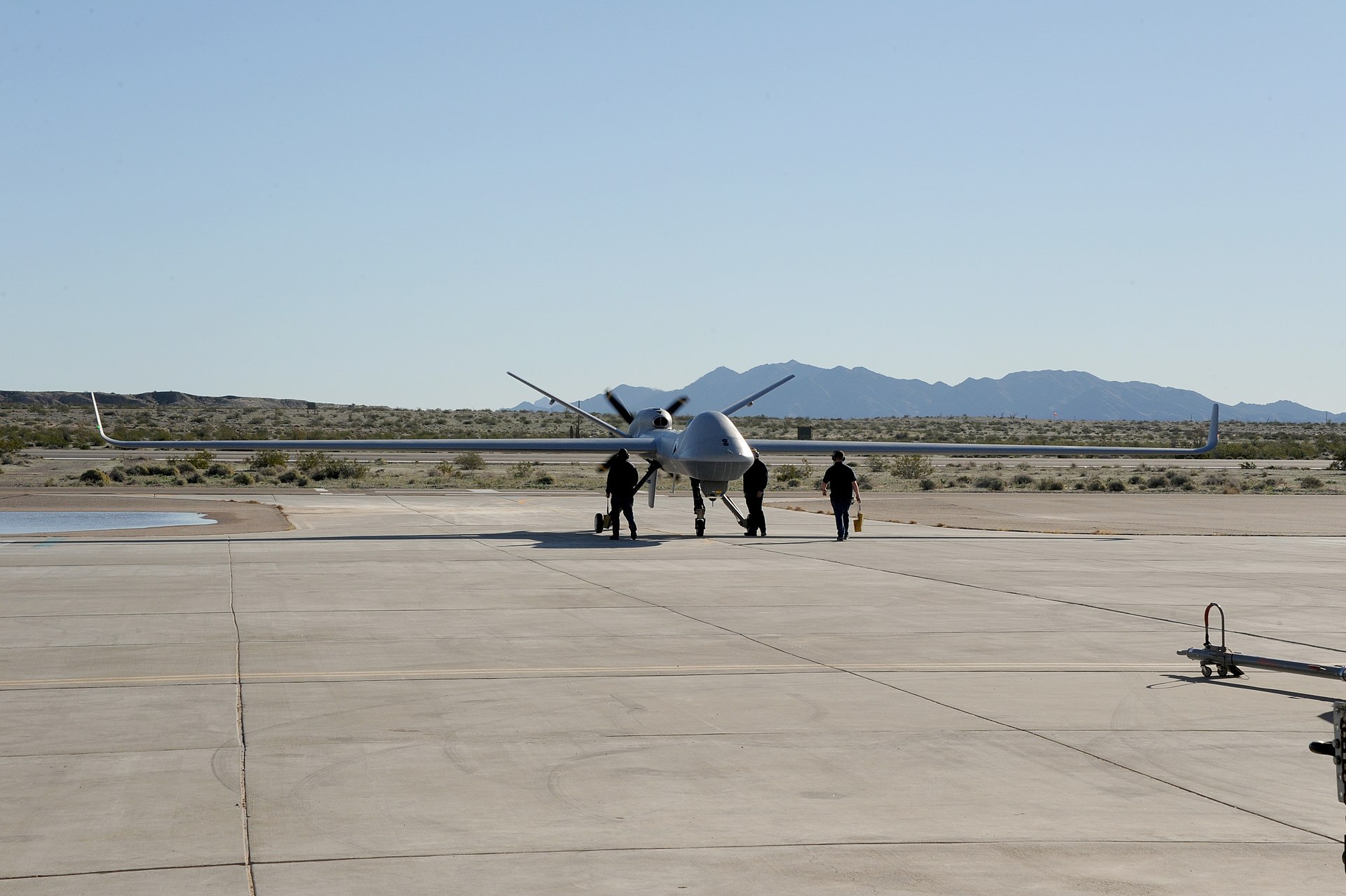
Taiwan has received its first batch of General Atomics MQ-9B Sea Guardian medium-altitude, long-endurance (MALE) drones, according to reports, marking a significant capability addition for surveillance of People’s Liberation Army (PLA) naval activities in the Taiwan Strait and adjacent waters. India, which placed its order for the same platform years ago, continues to await delivery of its MQ-9B variants.
The MQ-9B Sea Guardian is the maritime-optimised variant of the MQ-9 Reaper family, equipped with advanced maritime surveillance radar, electro-optical and infrared sensors, and extended range capabilities. The platform can remain airborne for over 27 hours and operate at altitudes exceeding 40,000 feet, making it suited for extended area surveillance and maritime domain awareness missions across contested waters.
India’s interest in the MQ-9B was formally expressed as part of broader defence cooperation with the United States. The Indian Navy and Air Force identified the platform as filling a critical gap in long-endurance maritime reconnaissance, particularly for Indian Ocean surveillance and coastal security operations. The MQ-9B would complement India’s existing unmanned and manned maritime patrol assets, including the P-8I Poseidon maritime patrol aircraft and the nascent fleet of domestically developed systems.
Taiwan’s acquisition underscores the geopolitical realignment across the Indo-Pacific, where surveillance capabilities have become central to military posture amid Chinese military assertiveness. The MQ-9B’s ability to conduct persistent maritime surveillance without risking pilot casualties makes it an attractive option for nations operating in constrained airspace or high-threat environments.


India’s defence procurement landscape has historically been marked by delays in foreign military sales approvals, even after inter-governmental agreements are signed. The MQ-9B order sits within a broader expansion of India-US defence ties, including the framework for technology sharing, maintenance support, and potential future indigenous integration of drone systems through DRDO partnerships.
The delay in India’s delivery reflects both bureaucratic timelines inherent in US foreign military sales procedures and India’s parallel push toward developing domestic MALE platforms. DRDO is advancing the Rustom and High Altitude Long Endurance (HALE) surveillance drone programmes, though these remain in testing and development phases. Until indigenous systems achieve operational maturity, India’s maritime reconnaissance capability gap persists, a vulnerability the MQ-9B procurement was designed to address.
Taiwan’s operational deployment of Sea Guardians will likely accelerate India’s own timeline, given strategic incentives to maintain technological parity in critical domains and the political imperatives of the Quad partnership framework, where shared maritime domain awareness capabilities strengthen collective deterrence across the Indo-Pacific region.


Facebook Comments