
Ukraine deploys civilian intelligence network to track Russian forces in occupied territories
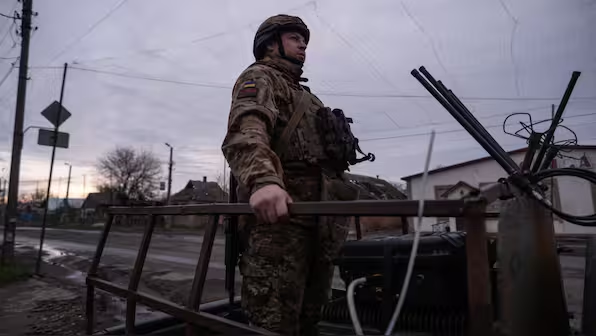
Ukraine is leveraging an extensive civilian intelligence network colloquially known as the “army of witches” to locate and report Russian troop movements across occupied territories, according to reports. The network comprises civilians who gather ground-level intelligence on enemy positions and relay information to Ukrainian military command.
The civilian-led intelligence collection effort represents an adaptation of asymmetric warfare doctrine that has become increasingly relevant in modern conflict. Ukraine’s approach demonstrates how non-traditional intelligence sources can complement formal military reconnaissance and surveillance systems when conventional capabilities face constraints.
Ground-level human intelligence, or HUMINT, has long been a cornerstone of military operations. The integration of civilian networks into broader intelligence architectures allows armies to extend their effective surveillance reach across contested terrain without proportionally increasing military personnel deployed in high-risk zones. This distributed model increases resilience against concentrated enemy targeting.
India’s own military doctrine has consistently emphasized the importance of human intelligence collection, particularly during internal security operations and border management. The Indian Army’s network of village defence committees and civilian informants in conflict-affected regions operates on similar principles, where local populations provide early warning of security threats in exchange for development assistance and protection guarantees.


The Ukrainian experience underscores a broader strategic lesson relevant to India’s defence posture: civilian-military integration in intelligence gathering can significantly amplify situational awareness in denied or contested areas. This principle applies to both conventional military operations and counter-insurgency campaigns.
Ukraine’s conflict has accelerated innovation in low-cost, distributed surveillance methods. Civilians equipped with basic communication devices can report observations that feed into consolidated intelligence databases accessible to military commanders. The model reduces dependency on expensive technological systems like satellite imagery or drone surveillance, which remain vulnerable to electronic warfare or enemy air defence.
The sustainability of such networks depends on ensuring participant safety and maintaining operational security. Ukraine has reportedly implemented compartmentalization and cover protocols to prevent network compromise. Similar considerations apply in any military context where civilian participation in intelligence activities is encouraged.
As India continues to modernize its intelligence collection architecture under the broader defence modernization roadmap, the integration of civilian reporting mechanisms with formal military intelligence channels remains an area of strategic focus, particularly for border security and counter-terrorism operations.




Facebook Comments