
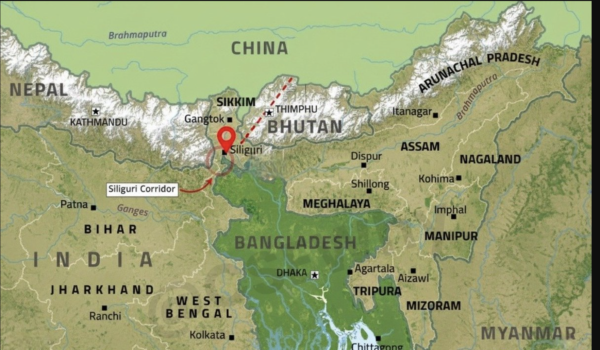
The Siliguri Corridor, a narrow 22-kilometre strip of land connecting mainland India to its northeastern states, remains one of the country’s most strategically vital yet geographically vulnerable regions. This slender neck of territory, nestled between Nepal to the north and Bangladesh to the south, serves as the sole terrestrial link through which the Indian armed forces maintain logistical supply lines and military presence across Assam, Meghalaya, Mizoram, Manipur, Nagaland, Tripura, and Arunachal Pradesh.
The corridor’s geography creates acute defence vulnerabilities that Indian military planners have grappled with for decades. At its narrowest point, it measures just 22 kilometres wide, making it susceptible to interdiction or blockade by hostile forces. This chokepoint means that any disruption to road, rail, or air transit through the corridor directly impacts the operational readiness and logistical sustainability of Indian forces deployed across the northeast.
Indian defence strategy in the region hinges on maintaining uninterrupted control of the corridor while simultaneously strengthening military infrastructure across the seven northeastern states. The Indian Army maintains dedicated formations specifically tasked with securing this vital artery, while the Air Force operates multiple airfields in the region to bypass ground-based vulnerabilities should the corridor face temporary compromise.
From a strategic perspective, China and Pakistan have long recognised the corridor’s significance within their broader regional calculus. During periods of heightened tension with China, particularly following the 1962 war, Indian military planners identified the corridor as a potential target for Chinese encroachment. Pakistan similarly views developments in this region through the lens of its strategic competition with India.


The corridor’s importance has only intensified as India pursues greater integration of its northeastern states into the broader national economic and security architecture. Infrastructure development initiatives, including rail networks like the Northeast Frontier Railway and ongoing highway expansion programmes, focus heavily on improving transit capacity through the corridor. These dual-use projects enhance both civilian connectivity and military mobility.
India’s defence presence in the corridor region is substantial and multifaceted. The military maintains forward operating bases, ammunition depots, and supply lines throughout the territory. Air defence systems provide layered protection, while counter-insurgency and internal security operations continue in certain areas where militant groups operate.
The strategic imperative to secure and strengthen the Siliguri Corridor reflects India’s commitment to integrating its northeastern frontier into a cohesive national defence posture. Control of this corridor remains non-negotiable for Indian sovereignty and regional stability in South Asia’s most complex geographical and geopolitical landscape.



Facebook Comments