
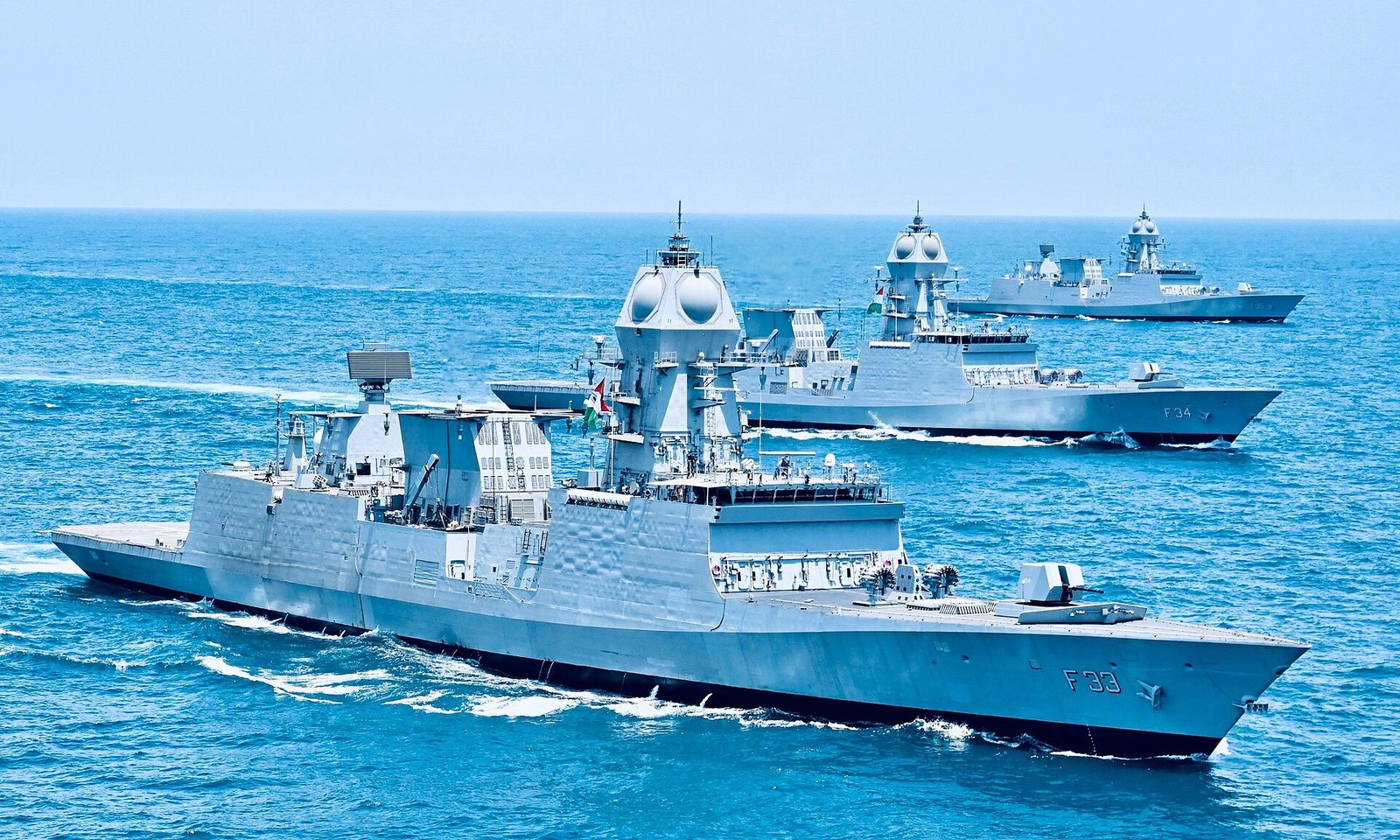
The Indian Navy has initiated a procurement process to acquire drone systems for surveillance and perimeter security at its coastal and island bases, based on operational requirements.
The move reflects the Navy’s modernisation push to plug gaps in ground-level base defence using unmanned platforms. Current base security relies heavily on manned patrols and radar systems, leaving coverage zones vulnerable during low-visibility conditions and at night.
India’s naval bases span thousands of kilometres across the Arabian Sea, Bay of Bengal, and Indian Ocean. Key installations including INS Vikrant, INS Viraat, and major shipyards require round-the-clock surveillance against both airborne and maritime incursions. The Navy has flagged the need for tethered and rotary-wing drones capable of persistent hovering and real-time data transmission to integrated command centres.
The procurement aligns with India’s broader defence indigenisation strategy under Make in India and the Strategic Partnership Model for advanced platforms. DRDO has invested significantly in the Autonomous Underwater Vehicle (AUV) programme and drone development, though the Navy’s requirement appears to focus on tactical short-range systems rather than combat variants.


Similar tethered surveillance platforms are already in service with the Indian Army’s counter-insurgency units in Jammu and Kashmir. The Navy’s requirement differs in focusing on maritime perimeter defence, coastal approach monitoring, and protection of naval assets in harbour. These drones would integrate with the Navy’s existing Air Defence System and ship-based radar networks.
Private sector defence manufacturers including Hindustan Aeronautics Limited (HAL), Bharat Electronics Limited (BEL), and emerging startups are expected to participate in competitive bidding. International vendors including Israeli, French, and South Korean manufacturers have expressed interest in similar Indian Navy contracts in recent years.
The procurement process typically involves technical evaluation of endurance, payload capacity, range, and cybersecurity protocols. Navy specifications emphasise interoperability with shipboard systems and resilience against electromagnetic jamming, a critical capability given evolving maritime threats in the Indian Ocean Region.
Base security remains a strategic priority following past incidents at naval installations. Enhanced drone coverage at choke points, ammunition magazines, and communications facilities addresses identified vulnerability patterns highlighted in internal security reviews.




Facebook Comments