
HAL Targets Over 1,000 Military Helicopters in Long-Term Production Expansion
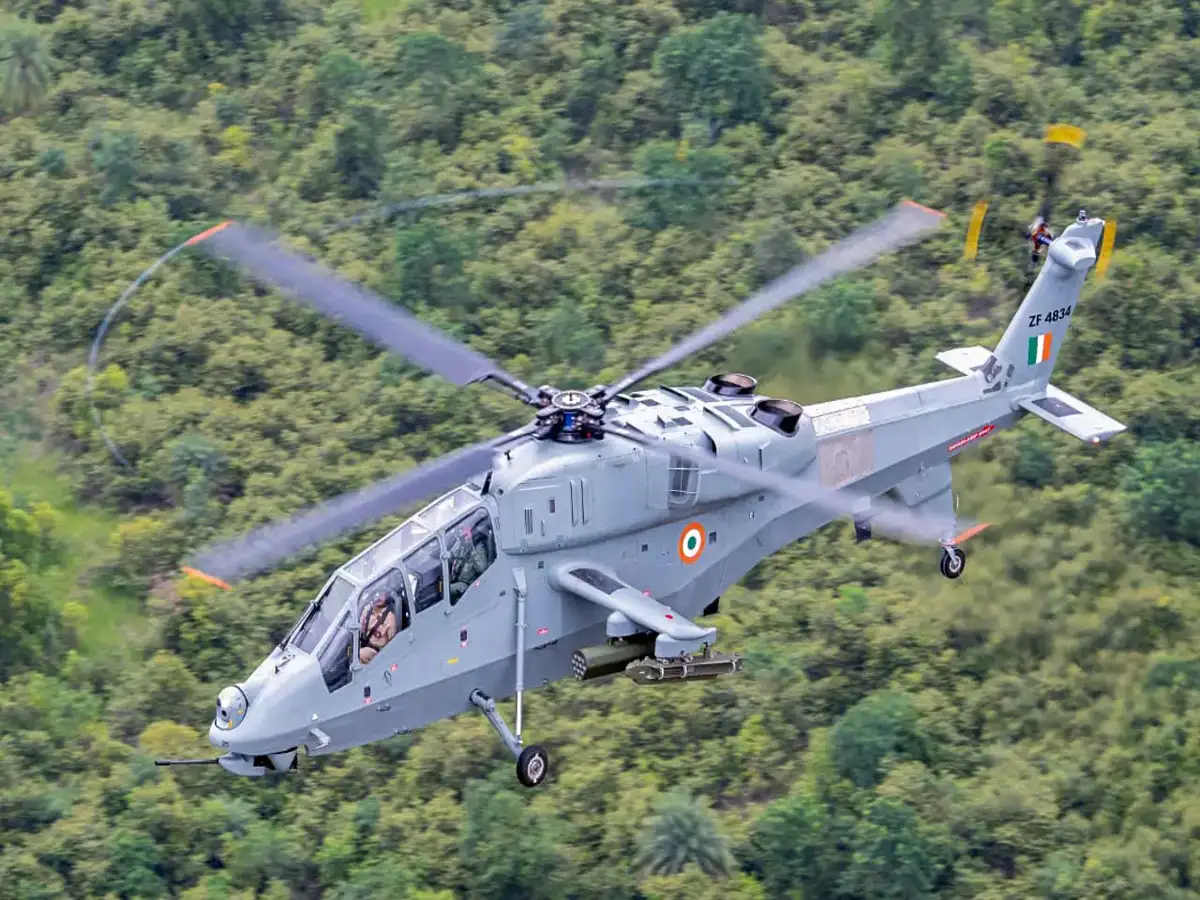
Hindustan Aeronautics Limited (HAL) is charting an ambitious long-term expansion strategy aimed at producing over 1,000 military helicopters, signalling a major scaling-up of India’s rotorcraft manufacturing capability.
The production roadmap reflects HAL’s confidence in sustained demand from the Indian Armed Forces and potential export markets across Asia-Pacific and friendly nations. This expansion aligns with India’s broader Make in India initiative and the government’s push to develop domestic defence manufacturing capacity.
HAL currently manufactures the Dhruv Advanced Light Helicopter (ALH), a twin-turbine, multi-role platform that has been in service with the Indian Army, Navy, Coast Guard, and paramilitary forces since 1992. The Dhruv platform has proven itself across diverse roles: armed attack variant, troop transport, medical evacuation, disaster relief, and armed reconnaissance.
The company is also producing the Hindustan Advanced Light Helicopter (HALcopter or HALH), a modern 5.8-tonne indigenously developed platform designed to replace older rotorcraft inventory. The HALcopter incorporates advanced avionics, composite airframe technologies, and modern propulsion systems, positioning it as a credible alternative to imported platforms in the light and medium-lift segments.


HAL’s production ambition comes at a time when the Indian armed forces face significant helicopter shortages. The Indian Army alone has articulated requirements for light combat helicopters and transport variants to support operations across diverse terrain. Defence acquisitions data shows persistent gaps between authorised helicopter strength and current inventory, particularly in the light-to-medium weight categories.
The 1,000-unit target encompasses both variants across multiple roles and customer bases. Domestic requirements from the Army, Navy, Coast Guard, and central paramilitary forces represent a baseline demand, while export potential to countries in South Asia, Southeast Asia, and the Indian Ocean Region could drive volumes further.
Scaling production to this level requires simultaneous expansion of component supply chains, skilled workforce training, and manufacturing infrastructure. HAL operates helicopter manufacturing facilities at Bangalore and other locations, and the expansion strategy will likely involve modernisation of existing plants and possible capacity augmentation.
The initiative also reflects India’s evolving defence industrial posture. Rather than reliance on imports for critical platforms, HAL’s expansion underscores a strategic commitment to indigenous design, development, and manufacturing of military rotorcraft. This approach reduces foreign exchange outgo, builds technical expertise, and creates domestic employment in the aerospace sector.
The long-term expansion plan signals HAL’s intent to compete in global markets where countries seek alternatives to Western and Russian rotorcraft. India has systematically promoted defence exports, and helicopters represent a high-value product category with growing demand in friendly nations.



Facebook Comments