
India, US Hold Army-to-Army Staff Talks in Hawaii
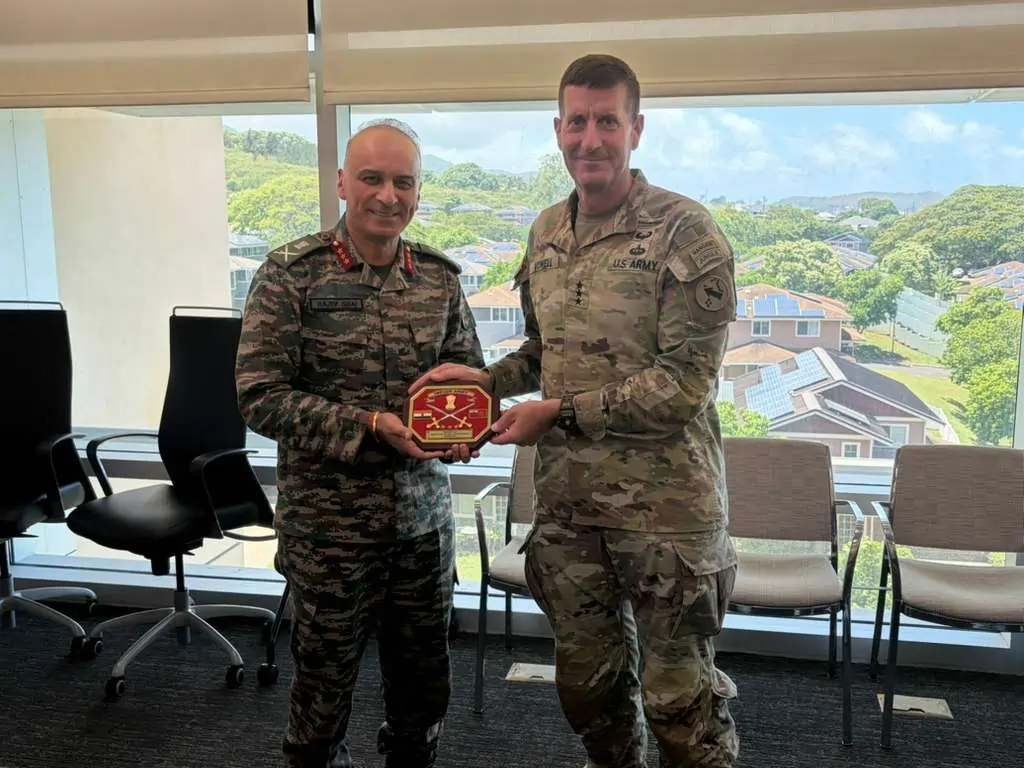
India and the United States held army-to-army staff talks in Hawaii, according to The Times of India, marking another step in deepening military coordination between the two nations at the operational command level.
These staff talks represent a formal channel for direct dialogue between senior Indian Army and US Army leadership on doctrine, interoperability, and joint operational planning. The Hawaii venue, home to US Indo-Pacific Command (INDOPACOM) headquarters at Camp Smith, underscores Washington’s strategic focus on the Indo-Pacific region where India plays an increasingly central role.
Army-to-army staff talks are distinct from the broader India-US defence engagement framework. They allow military commanders to discuss tactical and operational matters without the constraints of broader diplomatic protocols, enabling candid exchanges on shared security challenges, training methodologies, and emerging threats in the Indian Ocean and Indo-Pacific zones.
India has progressively expanded its military engagement with the United States over the past decade. The two countries conduct the Yudh Abhyas exercise annually, a joint army training exercise that alternates between the two nations. India also participates in multinational exercises like RIMPAC (Rim of the Pacific) and hosts the US Army’s Pacific Pathways rotational deployment programme, which brings American troops to India for joint training in high-altitude and jungle terrain.
The depth of India-US military cooperation extends beyond exercises. The two nations have signed foundational agreements including the Logistics Exchange Memorandum of Agreement (LEMOA) in 2016 and the Communications Compatibility and Security Agreement (COMCASA) in 2018. These enable logistical support, interoperability of communications systems, and operational coordination during joint operations or humanitarian missions.
From India’s perspective, staff-level dialogue with the US Army strengthens coordination on challenges including counter-terrorism operations in the Indo-Pacific, maritime security in the Indian Ocean, and responses to Chinese military assertiveness. The Indian Army has been modernising its command structures and operational doctrines to align more closely with US approaches, particularly in areas of network-centric warfare and joint operations.
These talks also serve India’s broader strategic autonomy objectives. While deepening US partnership, India maintains independent defence relationships with Russia, France, Israel, Japan, and others. Staff talks at the operational level allow India to absorb best practices and interoperability standards without compromising its traditional partnerships or strategic independence.
Facebook Comments