
Indian Army, ITBP Conclude Joint Training Exercise in Arunachal Pradesh
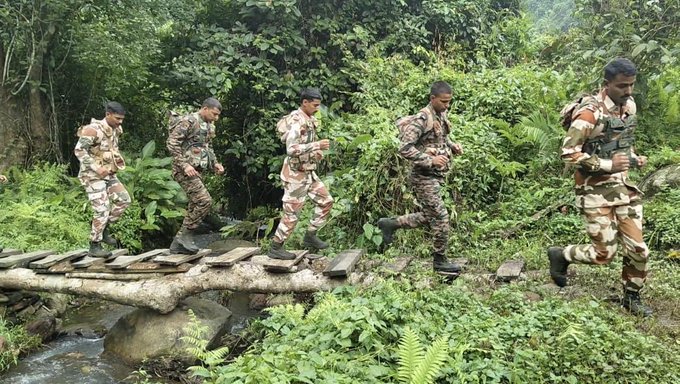
The Indian Army and Indo-Tibetan Border Police Force have concluded a joint training exercise in Arunachal Pradesh aimed at strengthening operational coordination and border readiness along India’s northeastern frontier, according to the Daily Pioneer.
The exercise tested integrated response protocols between the two paramilitary organisations, whose operational areas often overlap in high-altitude terrain. Such joint drills have become routine along India’s sensitive borders, where synchronized action between Army units and ITBP personnel is critical to maintaining security posture.
Arunachal Pradesh remains one of India’s most strategically significant border states, with the northeastern frontier witnessing persistent incursions and boundary disputes. The state shares a 1,146 km border with China, making it a focal point for India’s border management strategy. Joint exercises between the Army and ITBP in this region address the operational challenges posed by difficult terrain, extreme weather, and the need for rapid mobilization across multiple security agencies.
The ITBP, raised in 1962 during the Sino-Indian conflict, maintains 54 battalions and operates across India’s borders with China and Pakistan. In recent years, the force has modernized its weaponry and training protocols to counter evolving security threats. Army-ITBP coordination exercises typically simulate scenarios including border intrusion response, casualty evacuation in remote areas, and counter-infiltration operations.

Such exercises reflect India’s broader strategy of maintaining constant operational readiness along the northern borders. Following the 2020 military standoff in eastern Ladakh, New Delhi has emphasized regular training cycles and inter-agency drills to ensure seamless response capabilities. The northeastern frontier, while quieter than Ladakh, remains under constant watch given China’s historical claims on parts of Arunachal Pradesh.
The training module in Arunachal Pradesh would have included navigation drills in mountainous terrain, medical response under field conditions, and tactical coordination between Army commanders and ITBP leadership. The altitude and weather conditions in the state create unique operational challenges that cannot be replicated in lowland training grounds, making on-ground exercises essential to maintaining proficiency.
Regular joint exercises between the Army and ITBP also serve to standardize procedures and establish command-and-control protocols that may be invoked during actual contingencies. Such interoperability is critical in border security, where response time and coordination failures can create operational vulnerabilities that adversaries may exploit.


Facebook Comments