
Defence Secretary Reviews Operational Readiness in Eastern Ladakh Forward Areas
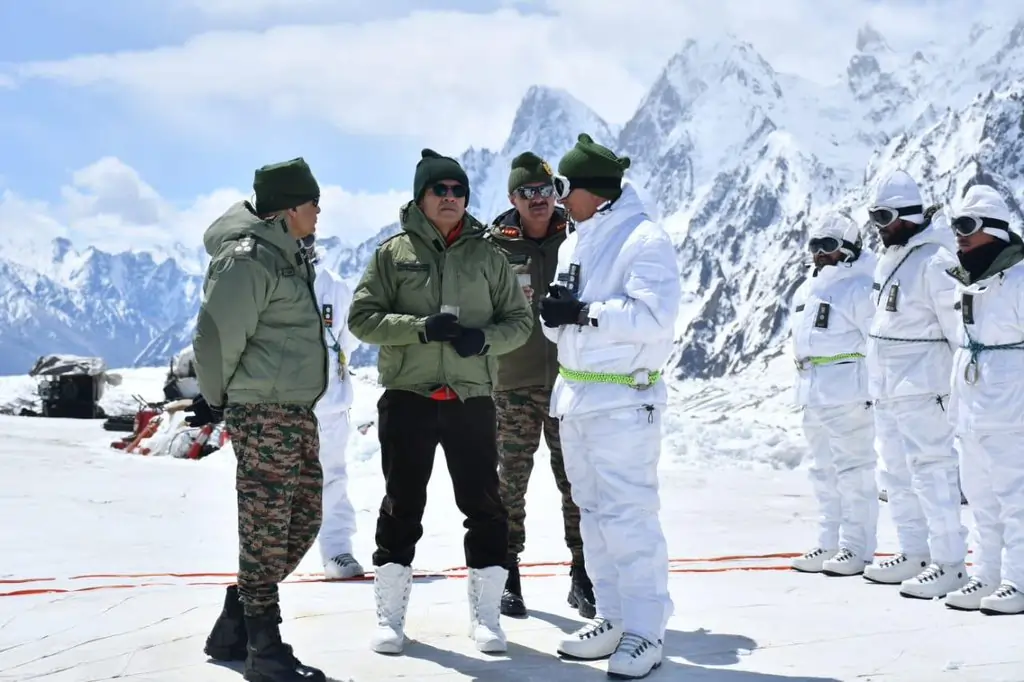
Defence Secretary Rajesh Kumar Singh has conducted a comprehensive review of operational preparedness across forward areas in Eastern Ladakh, assessing combat readiness and infrastructure development in one of India’s most strategically sensitive regions.
The visit underscores the Indian defence establishment’s sustained focus on the Ladakh sector, where Indian and Chinese forces maintain a tense standoff following the 2020 border clash. The review comes at a time when India continues to strengthen military infrastructure and operational capacity along the Line of Actual Control (LAC).
Eastern Ladakh has emerged as a critical operational theatre for the Indian Army since the May 2020 Galwan Valley confrontation that resulted in significant casualties on both sides. Over the past six years, the Army has invested heavily in road networks, airfields, ammunition depots, and accommodation facilities across Ladakh to support sustained troop deployment at high altitudes.
The Defence Secretary’s on-ground assessment likely focused on unit readiness, logistics chains, medical support systems, and the operational effectiveness of formations deployed in the region. Such visits by senior defence leadership typically evaluate soldier welfare at high-altitude locations, where extreme temperatures and thin air present unique operational challenges.
India’s defence infrastructure development in Ladakh has included completion of critical road corridors like the Manali-Kailash highway and upgrades to airfields that enhance the speed of troop reinforcement. The region’s strategic importance extends beyond immediate military considerations; it reflects India’s broader defence modernisation agenda focused on rapid mobility and sustained operations along contested borders.
The Eastern Ladakh sector remains one of the most closely monitored flashpoints in Indo-Chinese relations. Both nations maintain significant military presence, though recent years have seen limited large-scale incidents following protocols established through military-to-military dialogue channels.
Forward-area visits by senior officials serve dual purposes: they provide accurate on-ground intelligence to shape defence policy and signal political commitment to troops deployed in remote, harsh conditions. Such reviews inform procurement priorities, training programmes, and logistical investments that directly impact military capability in contested regions.


Facebook Comments