
India Gains G7 Seat Without Full Membership: Strategic Geopolitical Shift
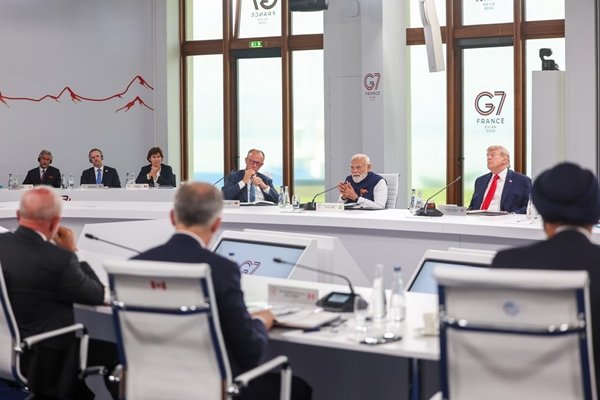
India has secured a seat at the Group of Seven table as an invitee nation, marking a significant diplomatic recognition of its growing geopolitical influence even without formal membership in the world’s premier advanced economies bloc, according to reporting on India’s evolving international standing.
The development underscores India’s elevated status in global affairs and reflects the G7’s acknowledgment of New Delhi’s role in shaping international security architecture, economic policy, and regional stability. This positioning allows India to participate in discussions on critical global issues while maintaining its strategic autonomy.
India’s participation in G7 forums comes at a time when New Delhi has strengthened defence and strategic partnerships across multiple geographies. India is actively engaged in the Quad framework alongside the United States, Japan, and Australia, focused on Indo-Pacific security. Simultaneously, India maintains independent bilateral defence ties with Russia, France, Israel, and other strategic partners, demonstrating a non-aligned approach rooted in national interest.
The country’s defence modernisation agenda has accelerated in parallel with this diplomatic expansion. India’s military spending has grown substantially, and indigenous defence manufacturing through DRDO and OFB now accounts for a rising share of procurement. The Make in India initiative in defence has gained momentum, with platforms ranging from the Tejas light combat aircraft to the BrahMos cruise missile demonstrating indigenous capability.


G7 engagement also reflects India’s economic trajectory. As a potential growth engine for global GDP and a critical player in semiconductor manufacturing, renewable energy, and technology services, India commands attention in forums traditionally dominated by Western economies and Japan. The nation’s large defence market and emerging role as a weapons exporter in the Indian Ocean region add to this calculus.
India’s seat at the G7 table without full membership mirrors a broader pattern of New Delhi’s engagement with traditional Western institutions. India participates in NATO dialogue forums, AUKUS discussions on select issues, and works closely with the US on the defence side through frameworks like the QUAD and emerging initiatives in space and hypersonics research.
This arrangement allows India to shape global discourse on issues ranging from counter-terrorism and maritime security to technology governance and supply chain resilience, all areas central to New Delhi’s strategic interests in the Indo-Pacific and beyond.




Facebook Comments