
INS Srishti Launched in Goa, Strengthening India’s Indigenous Naval Shipbuilding Programme
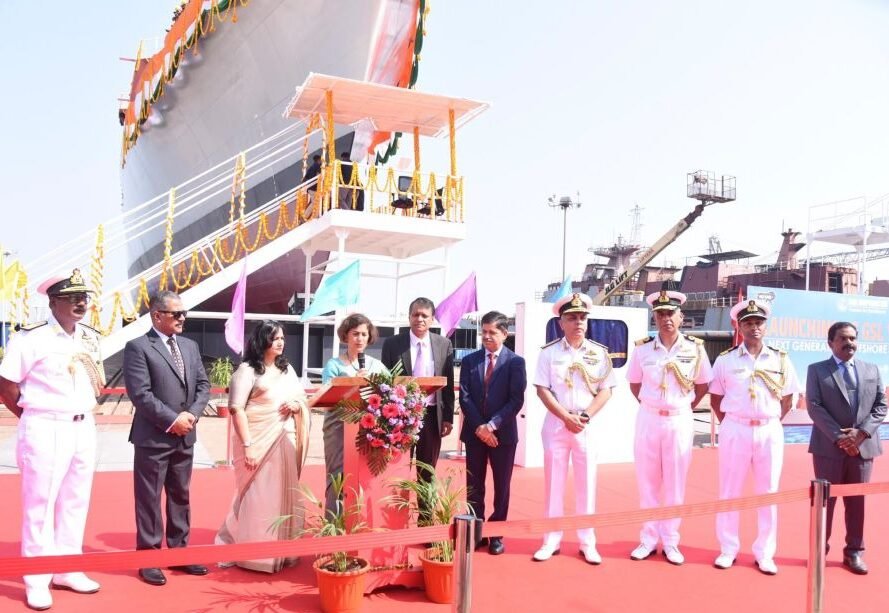
India has taken another step towards strengthening its indigenous naval capabilities with the launch of INS Srishti, a Next Generation Offshore Patrol Vessel (NGOPV), at Goa Shipyard Limited (GSL) on October 27. The vessel, designated Yard 1283, is being built for the Indian Navy and represents continued progress in the country’s domestic warship construction programme.
The launch ceremony took place at GSL’s facility in Vaddem, Goa, with Sandeepa Sahay formally launching the vessel in the presence of Vishvajit Sahay, Secretary (Defence Finance), along with senior representatives from the Indian Navy, the Ministry of Defence and the shipyard. The milestone highlights the growing importance of Indian shipbuilding facilities in delivering platforms designed to meet the Navy’s operational requirements.
Named Srishti, a Sanskrit word meaning creation, the vessel is intended to contribute to a broad range of maritime security missions. According to the Ministry of Defence, the NGOPV programme is designed to strengthen capabilities in maritime surveillance, search and rescue, protection of offshore assets, humanitarian assistance and disaster relief, and anti-piracy operations. These responsibilities are particularly important for a country with extensive coastlines, major maritime trade routes and offshore infrastructure that requires continuous protection.
The launch of INS Srishti forms part of a wider programme to expand India’s fleet of next-generation offshore patrol vessels. Under the programme, construction activities are being carried out simultaneously at Goa Shipyard Limited and Garden Reach Shipbuilders & Engineers (GRSE) in Kolkata. This parallel production approach supports the timely development of multiple vessels while strengthening the capabilities of India’s public-sector shipbuilding industry.


The programme also reflects the government’s emphasis on indigenous defence production under the Aatmanirbhar Bharat and Make in India initiatives. By prioritising domestic design and manufacturing, the initiative aims to strengthen the Indian defence industrial ecosystem, develop technical expertise and create opportunities for Indian manufacturers and supporting industries. Shipbuilding programmes of this scale can also generate employment across engineering, fabrication, equipment production and other supply-chain activities.
During the ceremony, Vishvajit Sahay highlighted the economic importance of indigenisation and its potential contribution to domestic industrial growth. He also emphasised the need for improved productivity, cost efficiency and timely execution in major shipbuilding projects. These factors remain essential as Indian shipyards undertake increasingly complex naval construction programmes.
For Goa Shipyard Limited, the launch demonstrates continued progress in building advanced maritime platforms for national security requirements. The shipyard has been working alongside the Indian Navy and the Ministry of Defence to support the development of indigenous vessels and strengthen the country’s domestic naval manufacturing base. Effective coordination between shipbuilders, equipment suppliers and naval authorities will remain important as the programme advances.
It is important to note that a vessel’s launch does not mean it has already entered operational service. Following this milestone, INS Srishti must progress through the remaining construction, equipment integration and testing stages before its eventual induction into the Indian Navy. An official commissioning date for the vessel has not been announced in the Ministry of Defence’s launch announcement.
As India continues to invest in its maritime capabilities, the progress of the NGOPV programme reflects a broader effort to combine operational preparedness with domestic industrial development. The launch of INS Srishti is therefore significant not only for the Indian Navy’s future offshore patrol capabilities but also for the country’s long-term ambition to build a stronger, more self-reliant naval manufacturing sector.




Facebook Comments