
Indian Army’s Cheetal helicopters continue Ladakh ops as failure investigation underway
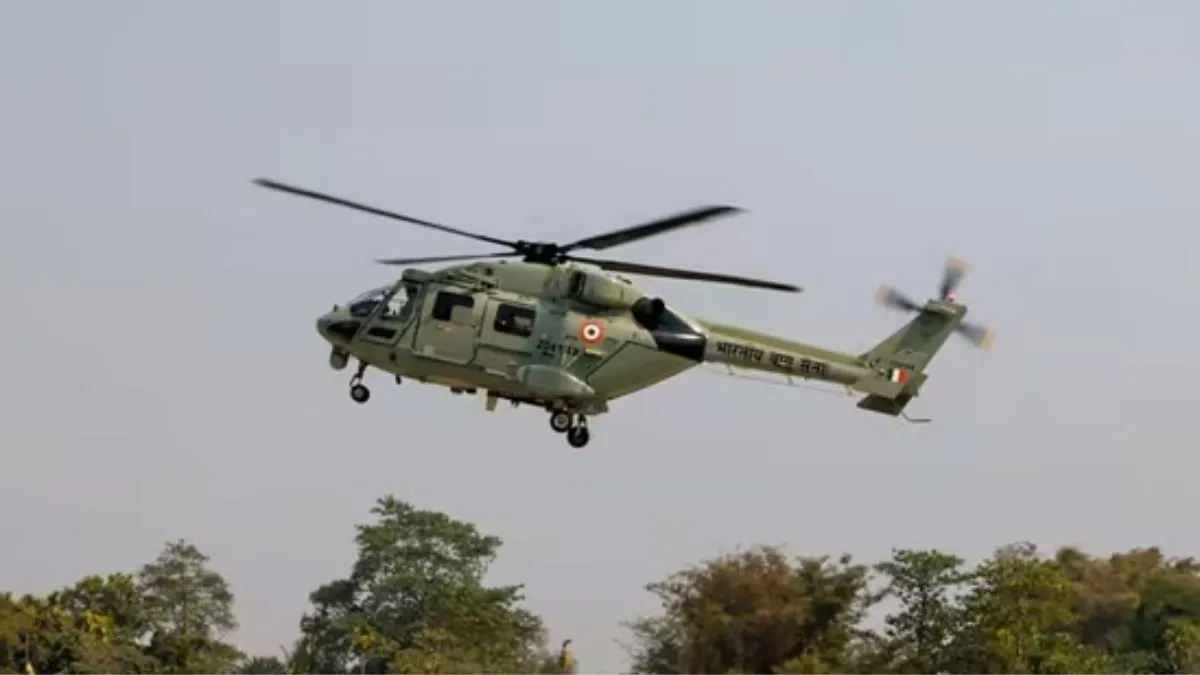
The Indian Army is maintaining operational deployment of its Cheetal helicopters in Ladakh despite an ongoing probe into recent technical failures, officials said. The decision underscores the critical role these light-utility aircraft play in high-altitude operations across the region.
The Cheetal is the armed variant of the Hindustan Aeronautics Limited (HAL) produced Dhruv Advanced Light Helicopter (ALH). It has been a cornerstone of the Army’s aviation assets since induction in 2010, offering superior high-altitude performance essential for operations in Ladakh’s thin-air environment above 10,000 feet.
Powered by two Turbomeca Shakti engines, the Cheetal carries a crew of two and can transport six passengers or 1,200 kg of cargo. The armed variant integrates a 20mm rotary cannon, a 7.62mm general purpose machine gun mounted on flexible stubs, and provisions for air-to-ground rocket pods. This multi-role capability makes it indispensable for the Army’s operations along the Line of Actual Control (LAC) and for logistics support across Ladakh’s challenging terrain.
The platform has demonstrated resilience in Ladakh’s extreme conditions, conducting casualty evacuation, reconnaissance, and combat support missions. Its ability to operate from unprepared landing zones and high-altitude airfields has made it integral to the Army’s operational posture in the eastern theatre since the 2020 border tensions escalated.

The continuation of Cheetal operations during the investigation reflects operational necessity. Ladakh’s geography demands dedicated rotary-wing assets, and the Army has no comparable indigenous alternative for this mission profile. The Cheetal fleet currently forms a substantial portion of the Army’s dedicated helicopter strength in the theatre.
HAL has been progressively enhancing the Cheetal platform through modernisation programmes. Earlier upgrades addressed avionics integration, night-vision capabilities, and sensor packages. The ongoing investigation into recent failures will likely inform further refinements to reliability and maintainability standards.
The aircraft’s continued deployment also reflects confidence in its inherent design and the Army’s maintenance protocols. Operational helicopters routinely fly under investigation regimes when failures are isolated incidents rather than systemic design flaws. The platform’s proven track record across multiple terrains and weather conditions has established it as a trusted asset within the Army’s aviation hierarchy.

Facebook Comments