
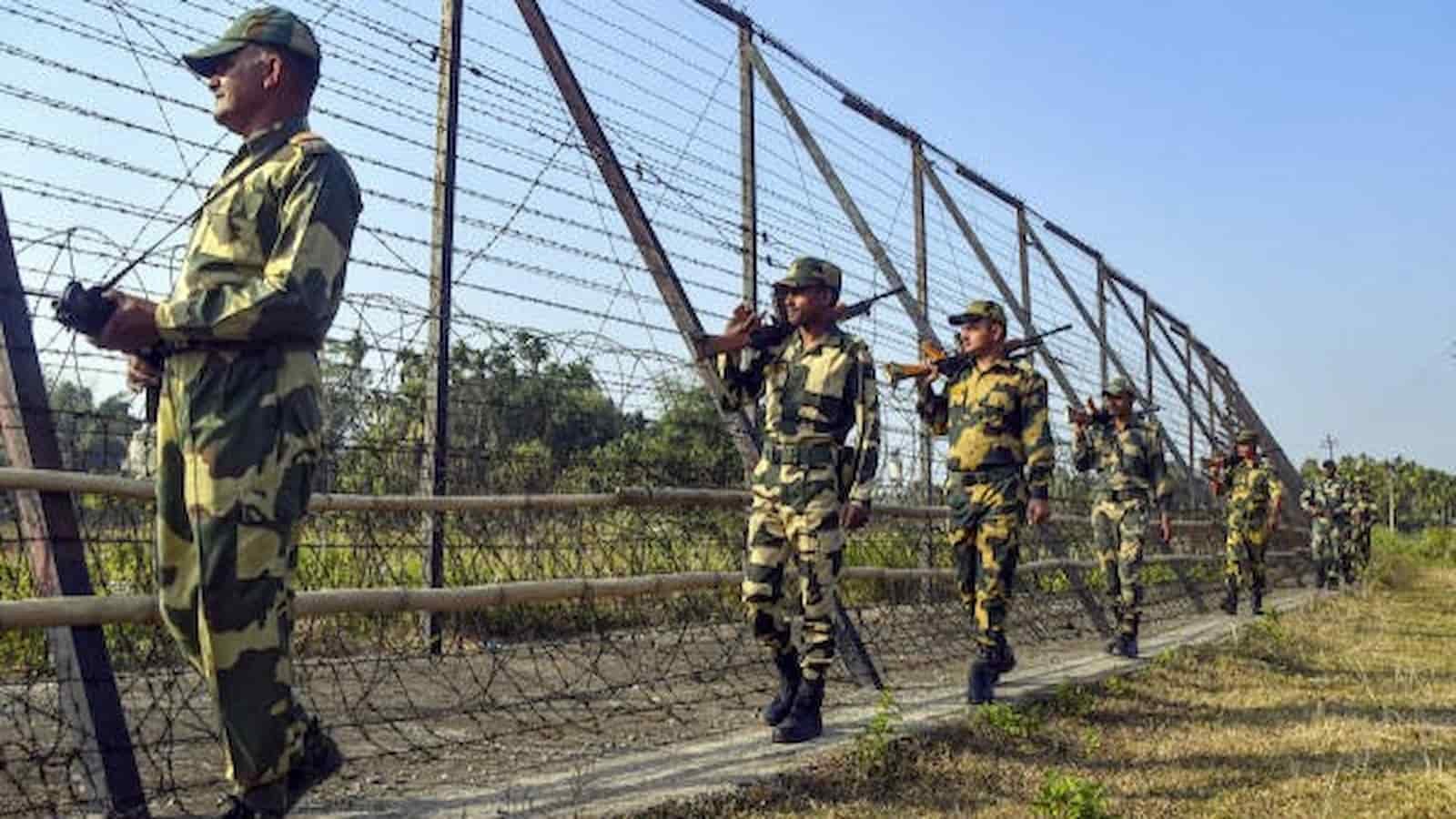
India’s Defence Acquisition Council has approved ₹52,000 crore in defence procurement proposals spanning advanced air defence systems, medium-range surface-to-air missiles, and autonomous jet-powered drones for the Indian Army, Navy, and Air Force.
The approvals mark a significant acceleration in India’s military modernisation roadmap, with platforms designed to address evolving asymmetric threats and strengthen capability across all three services. The phased acquisition strategy reflects India’s commitment to both indigenous development and strategic partnerships in critical defence domains.
The medium-range surface-to-air missile system, developed by DRDO, represents an evolution of India’s air defence architecture. The MRSAM (Medium Range Surface-to-Air Missile) is a two-stage solid-fuelled guided missile system with a maximum engagement range of approximately 70 kilometres. The system uses an active phased array radar for search and track, and employs command guidance during the initial phase, transitioning to semi-active homing in the terminal phase. Both the Army and Air Force variants have been under development since the late 1990s as part of the Integrated Air Defence System initiative, replacing older platforms like the Pechora-2M.
Anti-UAV systems have emerged as a critical capability gap across all services as drone operations have proliferated in regional conflicts. These systems employ a combination of radar detection, electronic warfare packages, and kinetic intercept solutions to neutralise low-altitude airborne threats at ranges spanning 3 to 15 kilometres depending on target classification.

The approval of autonomous jet drones, developed under DRDO’s Autonomous Systems and Robotics Division, signals India’s intent to field indigenous alternatives to imported unmanned aerial systems. These platforms are engineered for extended loiter durations, precision strike capability, and beyond-visual-range surveillance operations across maritime and continental domains.
The ₹52,000 crore envelope encompasses capital acquisition, system integration, indigenous production capacity building, and a five-year support and serviceability component. This structure aligns with India’s Defence Procurement Procedure 2020, which prioritises indigenous design, development, and manufacturing through the ‘Make in India’ framework.
These approvals occur against the backdrop of India’s expanded defence engagement with the Indo-Pacific region, where aerial threats and maritime domain awareness have become central to military planning. The three-service integration of these systems underscores a shift towards joint operations and networked air defence, mirroring doctrinal evolution detailed in India’s published military strategy documents from 2020 onwards.


Facebook Comments