
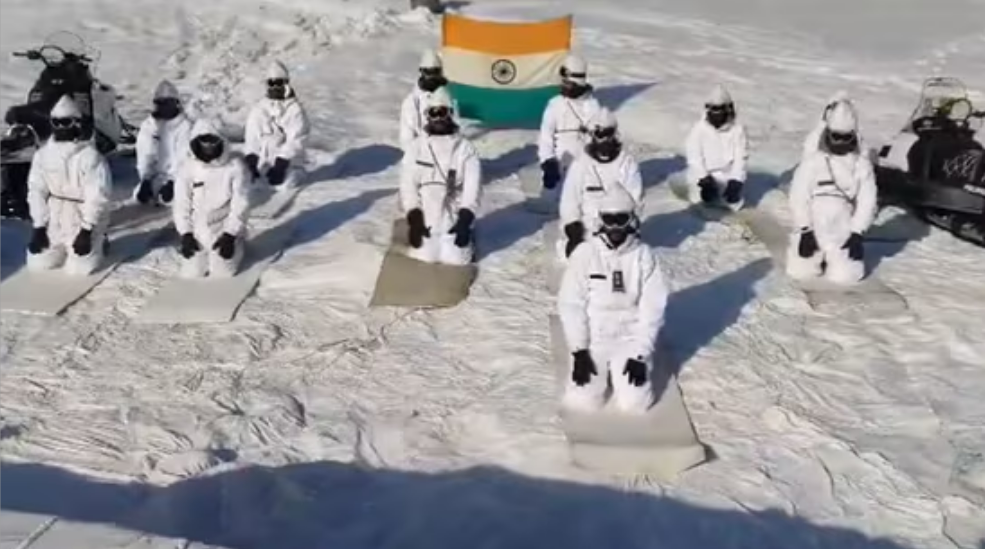
Indian military personnel across operational theatres from Siachen to the Arabian Sea marked International Yoga Day, with units conducting fitness and wellness activities in extreme terrain and maritime environments, the Army said.
The observance underscores the armed forces’ integration of traditional wellness practices into operational readiness and personnel health protocols across all three services in geographically diverse and strategically sensitive locations.
Siachen Glacier, the world’s highest active battlefield at 5,400 metres elevation in the Karakoram range, presents extreme environmental stressors on personnel. Yoga and structured physical conditioning programmes have become integral to acclimatisation and injury prevention for troops deployed in this inhospitable theatre. The Indian Army has steadily expanded wellness initiatives at high-altitude posts, recognising that physical and mental resilience directly impact operational effectiveness in oxygen-thin conditions where even routine tasks demand significant physiological adaptation.
Maritime units across the Indian Navy’s operational theatres similarly observe structured fitness regimens aboard ships and at naval establishments. Naval personnel face unique physiological demands from prolonged deployments, confined shipboard environments, and extended periods away from land. Yoga and flexibility training reduce musculoskeletal injuries common in maritime operations and support mental health in high-stress operational contexts.

International Yoga Day, observed on June 21 annually since its inception in 2015, has become a significant calendar event within the Indian defence establishment. Military participation reflects broader institutional adoption of yoga as a scientifically validated tool for cardiovascular health, postural stability, stress management, and operational resilience rather than merely ceremonial observance.
The Armed Forces Medical Corps has documented health improvements in personnel engaged in regular yoga practice, including reduced injury rates, improved sleep quality, and enhanced cognitive performance under operational stress. These outcomes have prompted formal integration of yoga instruction into basic training curricula and ongoing fitness programmes across infantry battalions, naval squadrons, and air force units.
Cross-service participation in wellness activities reinforces the Ministry of Defence’s broader health and fitness framework, which emphasises preventive healthcare and personnel readiness. As operational tempos increase across multiple theatres and deployment cycles intensify, structured physical and mental conditioning programmes have become operationally critical rather than supplementary initiatives.



Facebook Comments