
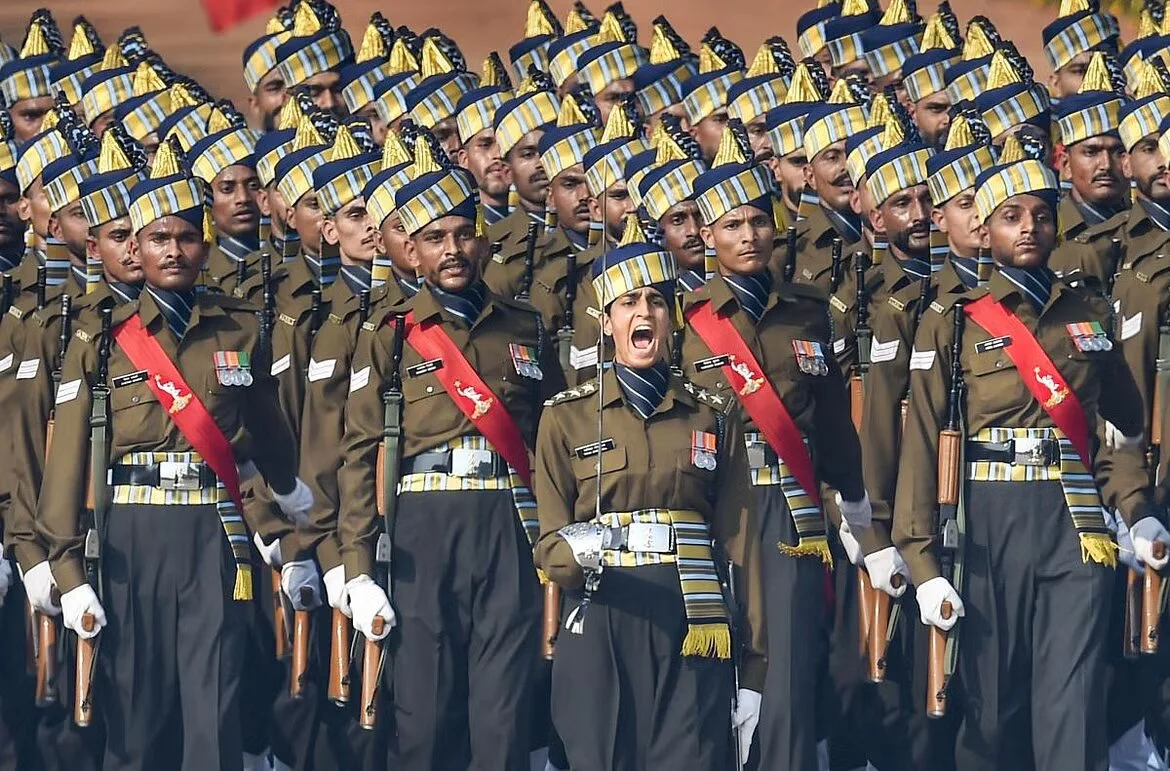
The Indian Army has unveiled a modernised uniform policy designed to phase out colonial-era practices and align its dress code with contemporary military standards, officials said. The decision reflects the Army’s broader effort to shed inherited British traditions and establish distinctly Indian military identity.
The uniform reforms address long-standing inconsistencies in dress protocols that have persisted since independence. These changes encompass adjustments to ceremonial dress, combat uniforms, and daily service attire across all ranks, ensuring greater uniformity and operational practicality across the service.
The Indian Army has historically maintained uniform codes inherited from the pre-1947 era, with multiple amendments over decades but without comprehensive overhaul. Earlier reforms addressed operational effectiveness, but ideological elements rooted in colonial military tradition remained embedded in protocol, insignia placement, and ceremonial conventions.
This initiative aligns with India’s broader defence modernisation agenda, which increasingly emphasises indigenisation and cultural assertion in military operations and institution-building. Similar efforts have been undertaken across the armed forces, including the Indian Navy’s adoption of indigenous warship naming conventions and the Air Force’s push toward locally-designed combat systems and operational doctrine.


The Army’s move also reflects ongoing discussions within India’s defence establishment about reclaiming institutional identity post-independence. Since the mid-2000s, multiple parliamentary committees and defence think tanks have recommended systematic de-colonisation of military practices, though implementation has been gradual due to continuity requirements in operational protocols.
The new uniform policy will be rolled out in phases across military stations to ensure compliance and minimise disruption to field operations. The implementation timeline and specific transition procedures for serving personnel remain subject to detailed command circulars and administrative orders from Army Headquarters.
This reform is also expected to improve soldier morale by strengthening institutional pride tied to Indian heritage rather than colonial legacy. Uniform modernisation has historically served as a morale-building measure across democracies undergoing post-colonial consolidation, and the Indian armed forces have previously noted such benefits during earlier dress code amendments.
The policy change does not alter the Army’s operational capability or combat effectiveness, which remain dependent on training, equipment, and doctrine. Rather, it represents a cultural and institutional recalibration consistent with India’s post-independence assertion of sovereignty in defence institutions.



Facebook Comments