
Ukraine orders 20 new Gripen fighters as Sweden accelerates older jet delivery
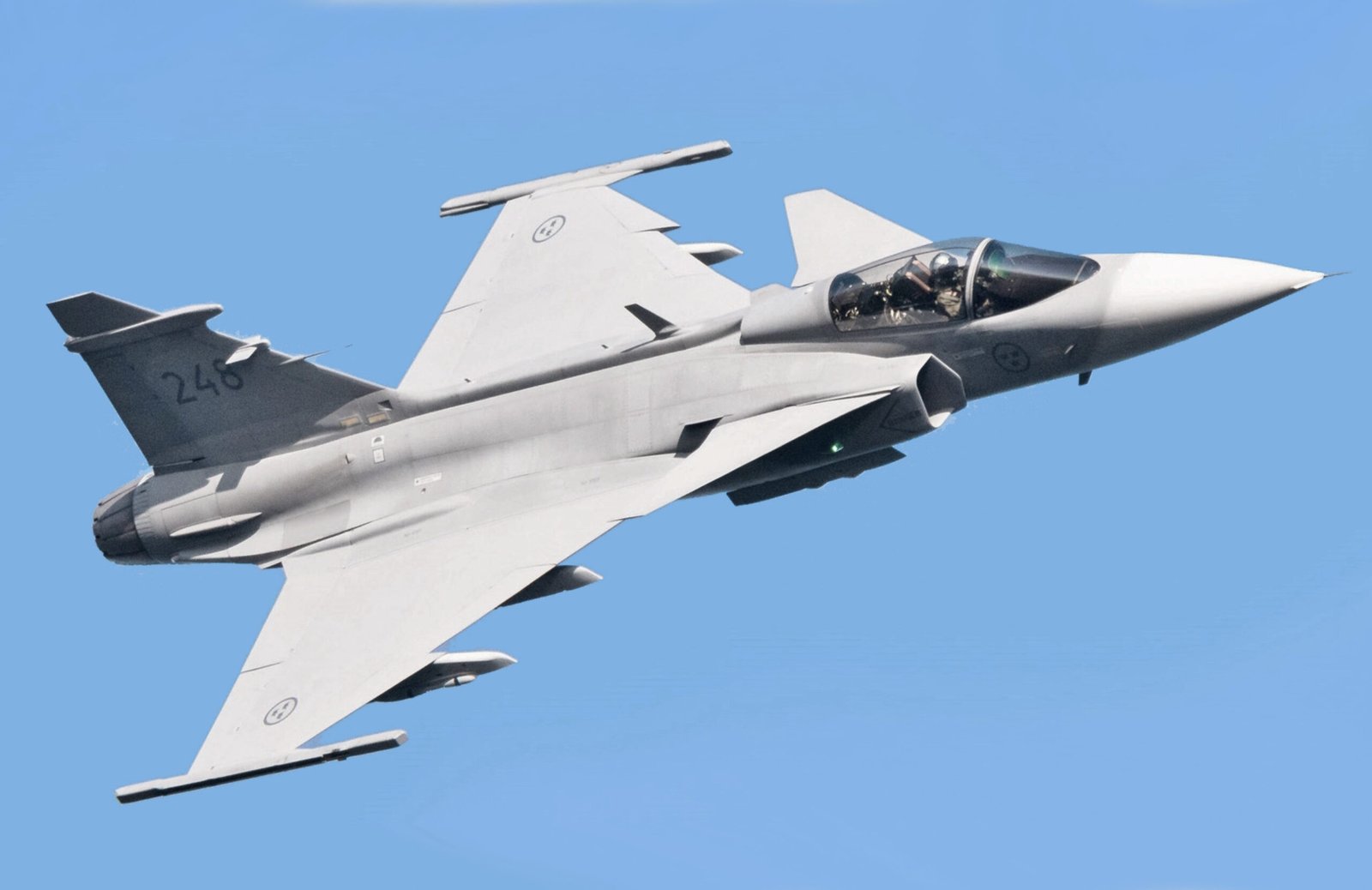
Ukraine has placed an order for 20 new Gripen fighter jets from Sweden, while Stockholm has committed to delivering older variants of the platform sooner to bolster Kyiv’s air defence against Russian operations, according to reports.
The dual-track approach reflects Sweden’s effort to balance long-term capability enhancement with immediate operational need. The newer Gripen variants will represent a significant upgrade in avionics, sensors, and combat systems for the Ukrainian Air Force.
The Gripen is a multi-role, single-engine fighter developed by Swedish defence contractor Saab. First introduced in 1996, the aircraft has evolved through several generations. The JF 17, a lightweight alternative built by Pakistan Aeronautical Complex with Chinese support, competes in a similar operational envelope but the Gripen commands a higher technological ceiling in areas such as sensor fusion and electronic warfare capabilities.
Sweden’s decision to supply Gripens to Ukraine marks a significant shift in Stockholm’s defence posture. Historically constrained by strict neutrality policies, Sweden has progressively deepened military partnerships with NATO allies, particularly following Russia’s 2022 invasion of Ukraine. The Gripen platform offers Ukraine several operational advantages: a combat radius of roughly 1,300 kilometers, advanced fire-control radar systems, and compatibility with NATO-standard air-to-air and precision-guided munitions.

For India, the Gripen decision in Ukraine’s context carries indirect relevance. India evaluated the Gripen alongside other platforms during its Medium Combat Aircraft and fighter procurement processes. The Indian Air Force ultimately selected the Rafale and Tejas MkIA, but the Gripen’s operational performance in a peer-conflict environment offers real-world validation of its design philosophy: agility, maintainability, and sensor capability in a single-engine package.
The accelerated delivery of older Gripen variants addresses an immediate gap in Ukraine’s fighter inventory. These earlier-generation aircraft, likely JF 17 or earlier Gripen C/D variants, can be operationalised faster than new-build airframes, which typically require lengthy manufacturing and integration timelines. This reflects the broader pattern in Ukraine’s air force modernisation: accepting earlier-model Western platforms to maintain sortie generation capacity while longer-term procurements mature.
Sweden’s dual commitment also underscores the strategic challenge facing air forces supporting Ukraine: balancing present attrition rates against future force structure. The older jets absorb current operational demand while the 20 new aircraft represent the foundation of post-conflict air superiority.


Facebook Comments