
Russia Pitches Su-57 Production Partnership to India; IAF Opts for Limited Purchases
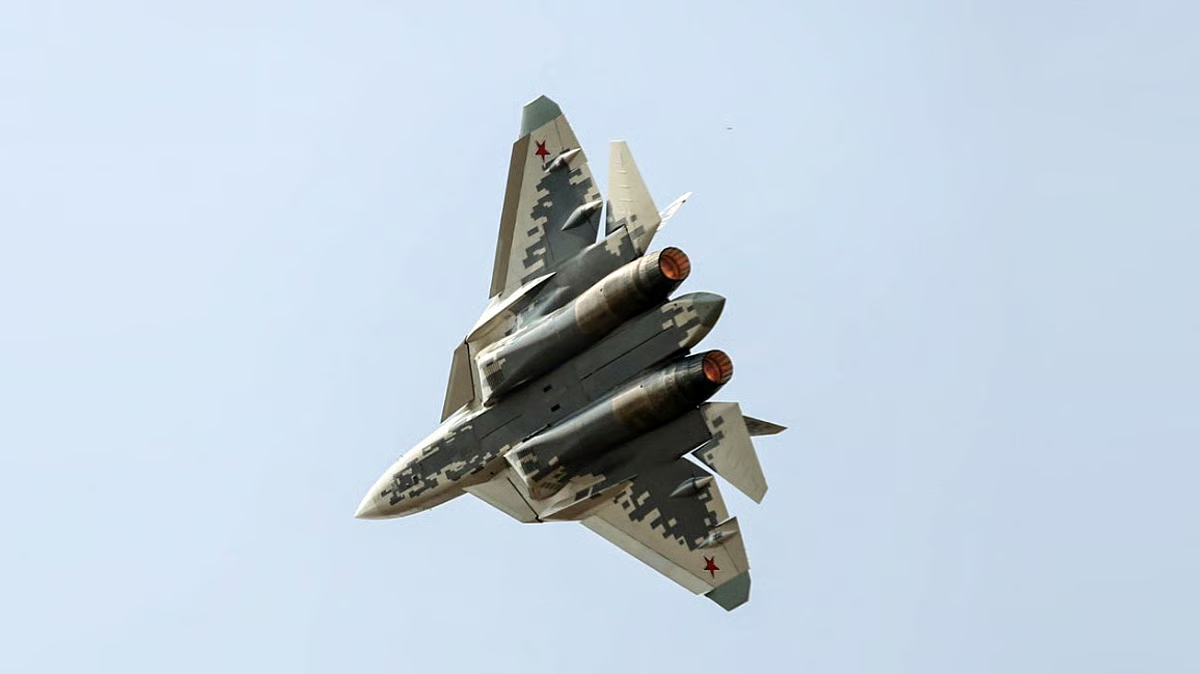
Russia has proposed a joint production and export arrangement for the Su-57 stealth fighter with Indian defence industry partners, but the Indian Air Force has signalled preference for a limited off-the-shelf procurement rather than deeper manufacturing involvement, according to defence industry sources.
The proposal reflects Moscow’s strategy to secure international orders and localised production for the Su-57, a fifth-generation fighter platform that has seen limited adoption globally since its operational debut with the Russian Air Force in 2020. For India, the overture arrives as the IAF continues evaluating fifth-generation combat aircraft requirements against its Medium Multi-Role Combat Aircraft procurement and indigenous Advanced Medium Combat Aircraft programmes.
The Su-57, formally designated the Felon by NATO, features a fly-by-wire control architecture, internal weapons bays, and a design optimised for low radar observability. The aircraft is powered by Saturn AL-41F1S engines and carries air-to-air, air-to-surface, and anti-ship munitions. Russia has equipped the platform with its own avionics suite, though performance metrics remain contested in defence analysis circles.
India’s measured stance reflects institutional caution about technology transfer agreements with Russian defence contractors and questions over the Su-57’s operational maturity. The IAF has invested heavily in the Rafale acquisition and continues induction of Tejas fighter jets from Hindustan Aeronautics Limited, narrowing the case for large-scale Su-57 orders. A limited buy of 6 to 12 aircraft would provide operational exposure without the production infrastructure commitments Russia has sought.


The proposal also coincides with India’s push to reduce dependence on single-source weapons platforms and diversify supplier relationships. Make in India imperatives have made defence officials cautious of production partnerships that offer limited indigenous technology absorption, particularly for advanced fighter systems where design and systems integration capability remains critical strategic leverage.
Russia has faced headwinds marketing the Su-57 internationally. Egypt, India, and Algeria have all shown interest but stopped short of firm orders. Cost considerations and Western alternative availability have eroded the competitive advantage Moscow might have held a decade ago. Joint production models have become Russia’s fallback approach in a constrained global fighter market.
The IAF’s preference for off-the-shelf acquisition aligns with its operational doctrine, which prioritises rapid induction of combat-ready platforms over lengthy indigenisation cycles. This stance has shaped earlier procurement decisions, notably the Boeing P-8I maritime patrol aircraft and the Chinook heavy-lift helicopters, both inducted with minimal production integration in India.
Defence Ministry officials have not issued formal statements on the Su-57 proposal. The Indian government typically gates such strategic assessments within classified procurement committees, with public announcements reserved for signed contracts or formal defence cooperation agreements.

Facebook Comments