
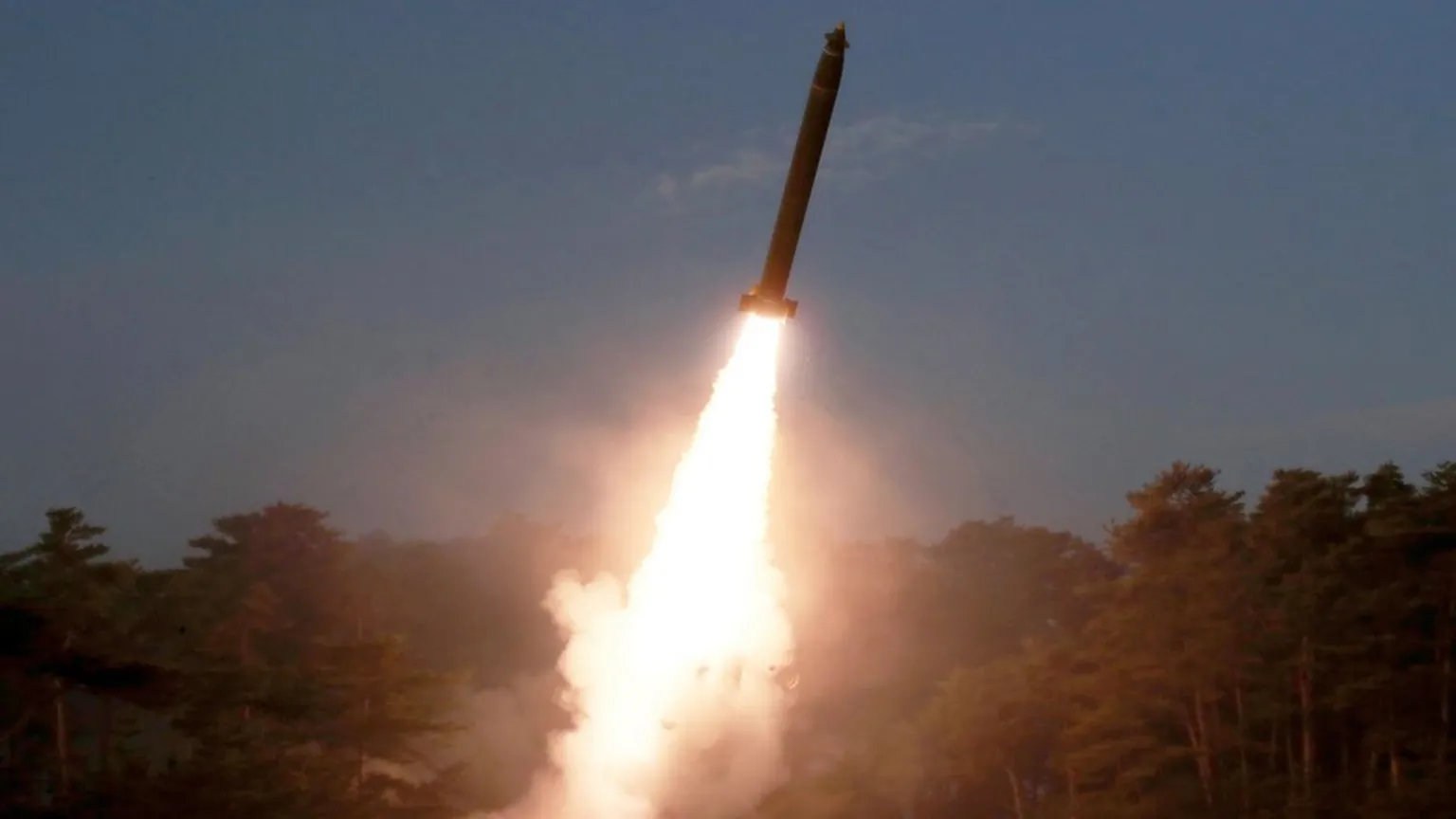
North Korea launched a ballistic missile and multiple projectiles into the sea, according to reports, in the latest demonstration of weapons capability in a region where India maintains strategic interests and active military partnerships.
The launches underscore the persistent threat environment in Northeast Asia and the Korean Peninsula. Ballistic missile development by Pyongyang has long been a flashpoint for regional security, drawing responses from Seoul, Tokyo, and Washington.
For India, North Korea’s weapons programmes carry indirect but significant implications. The Indo-Pacific remains central to India’s maritime strategy, and stability in Northeast Asia affects the broader regional balance. India’s own ballistic missile deterrent, including systems like the Agni series developed by DRDO, reflects similar strategic imperatives in an era of proliferating missile technology.
The Agni family of missiles, ranging from the 700-km Agni-I to the intercontinental Agni-VI capable of striking targets over 6,000 km away, represents India’s response to regional threats and the need for credible deterrence. Unlike North Korea’s opaque testing and development cycles, India’s missile tests are conducted transparently and reported through official channels, reflecting adherence to international norms.
North Korea’s continued ballistic and cruise missile tests have historically prompted technical assessments across defence establishments worldwide. Such launches reveal incremental improvements in guidance systems, re-entry vehicle technology, and solid-fuel propulsion, which analysts monitor closely. The frequency and scope of these tests suggest ongoing development aimed at enhancing accuracy and operational readiness.
India maintains active defence partnerships across the Indo-Pacific through structures like the Quad, defence cooperation agreements with Japan and South Korea, and regular military exercises. These frameworks include information-sharing on regional threats, including North Korean weapons activity. India’s Navy conducts regular operations in the region, reinforcing freedom of navigation and maritime security.
The test also reflects broader patterns in North Korea’s strategic posture. Regular missile demonstrations serve both technical validation and signalling purposes, intended to deter potential adversaries and strengthen domestic political narratives. The pattern mirrors historical precedent from other nations developing advanced weaponry.
For Indian defence planners, such regional developments reinforce the importance of maintaining technological edge across missile systems, air defence capabilities, and naval modernisation. India’s Defence Research and Development Organisation continues advancing indigenous systems to reduce dependence on imports and ensure operational sovereignty in an unpredictable strategic environment.



Facebook Comments