
BEL’s Akashteer Air Defence System Proves Combat Effectiveness in Conflict
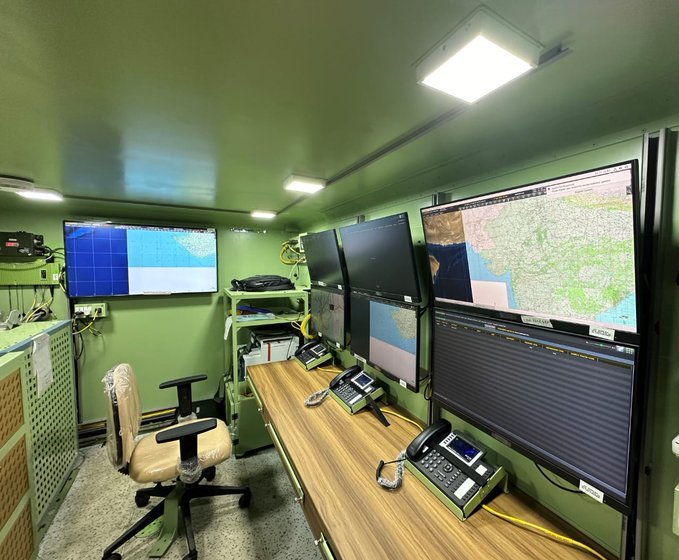
Bharat Electronics Limited’s Akashteer air defence system has demonstrated operational effectiveness during active conflict. The indigenously developed platform has validated its performance in real-world conditions, reinforcing India’s growing capability in integrated air defence.
Akashteer is BEL’s flagship air defence solution, designed to detect, track, and neutralise airborne threats across multiple altitude bands. The system integrates surveillance radar, command centre, and gun or missile firing units into a cohesive network capable of autonomous and networked operations in contested environments.
The system architecture draws on India’s broader philosophy of layered air defence, where Akashteer occupies the medium-to-short-range tier. It complements longer-range platforms like the indigenous Advanced Air Defence (AAD) system and the S-400 Triumf batteries inducted by the Indian Air Force, creating overlapping coverage zones that deny enemy air operations across the entire aerial envelope.
BEL has fielded Akashteer across the three services, with deployments in forward operating areas where the system has accumulated operational experience. The platform’s modular design allows rapid repositioning and integration with existing air defence networks, a critical requirement for operations along India’s extended borders and in high-altitude terrain.


The validation of Akashteer’s combat performance reflects the maturation of India’s air defence industrial base. DRDO and BEL have progressively upgraded the system’s radar processor, engagement algorithms, and inter-operability standards to match evolving airborne threats including unmanned systems and high-speed aircraft.
India’s indigenous air defence ecosystem has expanded significantly since the early 2000s. Platforms like Akashteer reduce operational dependence on foreign vendors for critical air defence architecture and enable rapid modification of firing rules and engagement logic based on theatre-specific threat analysis. This autonomy is strategically important in a contested Indo-Pacific environment where decision cycles matter.
Real-world conflict data feeds back into DRDO’s development cycles, accelerating refinements to sensor sensitivity, track management, and interception algorithms. The operational testing under fire conditions provides higher confidence in system reliability than peacetime trials alone and validates design choices made during development.
BEL continues to develop enhanced variants of Akashteer, incorporating digital signal processing upgrades and multi-sensor fusion to counter saturation attacks and low-radar-cross-section threats. The system’s demonstrated combat readiness positions it as a core element of India’s air defence modernisation roadmap.



Facebook Comments