
Navy Chief Flags China’s Growing Grip on Pakistan’s Military Arsenal
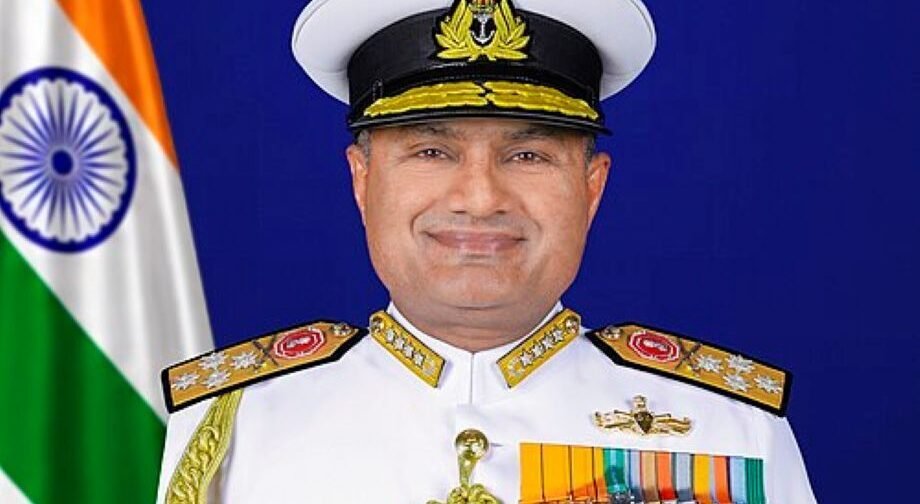
Pakistan’s growing dependence on Chinese military equipment has drawn attention from India’s defence establishment, with Chief of the Naval Staff Admiral Krishna Swaminathan stating that more than 85 per cent of the hardware currently used by Pakistan’s armed forces is of Chinese origin. His remarks highlight the expanding defence partnership between Beijing and Islamabad and its implications for India’s regional security environment.
Speaking at the ANI National Security Summit 3.0 in New Delhi on November 16, 2026, Admiral Swaminathan said that Pakistan’s military inventory was largely sourced from China, although some equipment also came from Turkey. He emphasised that India was fully aware of the capabilities available to neighbouring countries and was closely monitoring their military developments.
The Navy Chief also addressed concerns about a possible two-front security challenge involving China and Pakistan. He explained that the Indian Navy does not approach maritime security through the conventional distinction of one-front or two-front wars because the sea is interconnected. According to him, India possesses powerful surface warships, aerial platforms and submarines to respond to potential threats in the maritime domain.
A major focus of his remarks was Pakistan’s planned acquisition of eight Hangor-class submarines from China. Admiral Swaminathan described the proposed submarine fleet as a significant addition to the Pakistan Navy’s capabilities, noting that it would provide Islamabad with an underwater warfare capability that it had not previously possessed at this scale.
The planned acquisition is particularly important for India’s maritime security calculations because submarine operations are becoming increasingly significant in the Indian Ocean Region. Pakistan’s submarine programme is part of its broader military modernisation efforts, supported by its longstanding defence relationship with China. Under the reported acquisition arrangement, four submarines are being built in China, while the remaining four are planned for construction in Pakistan through a technology-transfer programme.
Responding to questions about the potential challenge, the Navy Chief said India had a strong submarine force and was working towards expanding its underwater capabilities. He highlighted the importance of submarine warfare in the Indian Ocean and stated that the Indian Navy had the operational experience and geographical understanding required to address emerging underwater threats.
He further explained that India’s response would not depend on submarines alone. The country’s surface fleet, submarine capabilities and naval aviation would collectively contribute to protecting national interests and maintaining maritime security.
Admiral Swaminathan also clarified that the Indian military does not automatically group China and Pakistan together when assessing bilateral relationships. He said the armed forces follow the national approach towards both countries, maintaining separate assessments of their military capabilities and strategic relationships.
Commenting on China’s sustained presence in the Indian Ocean Region, the Navy Chief noted that Beijing had maintained an almost continuous maritime presence in the area since September or October 2008. He added that India supports freedom of navigation and considers international waters part of the global commons, welcoming legitimate maritime activities.
His statements underline India’s continued focus on maritime surveillance, submarine warfare preparedness and the development of a capable naval force. With Pakistan strengthening its military cooperation with China and expanding its underwater fleet, the Indian Navy remains focused on maintaining operational readiness and safeguarding the country’s strategic interests across the Indian Ocean Region.

Facebook Comments