
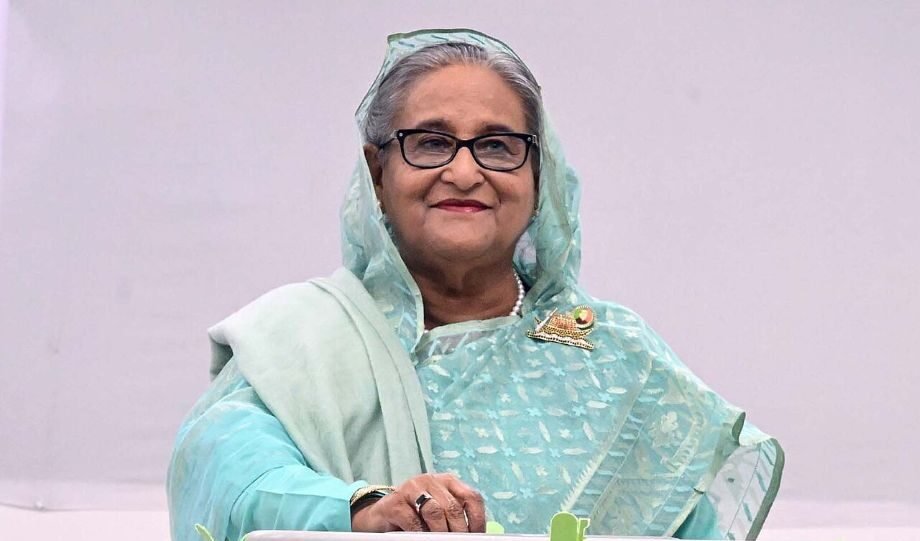
Gopalganj, the ancestral home district of former Bangladesh Prime Minister Sheikh Hasina, has witnessed renewed political unrest following demonstrations by supporters of the banned Awami League. The violence, which included vandalism, arson and clashes involving protesters and public property, has prompted authorities to strengthen security arrangements and replace senior administrative and police officials.
The situation escalated on November 15, 2026, when hundreds of Awami League supporters took to the streets of Gopalganj town. Demonstrators reportedly arrived from surrounding areas using motorcycles, buses, trucks and other vehicles before organising a large procession. Many participants were carrying locally used weapons, including wooden sticks, bamboo poles, oars and machetes.
During the demonstrations, protesters reportedly broke through police barricades and moved through several parts of the town while raising slogans in support of Sheikh Hasina and the Awami League. The procession disrupted normal activities and created tension among local residents and business owners.
According to local media reports, several public properties were targeted during the unrest. Demonstrators vandalised a police armoured personnel carrier (APC), damaged a police box and attacked public installations. The July Memorial near Sheikh Kamal Stadium and signboards at important locations, including Hadi Square, were also damaged. Reports further indicated that tyres and other materials were set on fire at multiple locations, temporarily affecting road movement and commercial activities.

The developments raised concerns about the law-and-order situation in a district that has considerable political significance for the Awami League because of its association with Sheikh Hasina and her family.
In response to the deteriorating security situation, the Bangladesh government transferred two senior district officials. Gopalganj Deputy Commissioner Md Arif-Uz-Zaman was replaced by GM Sharfaraz, while Superintendent of Police Md Habibullah was transferred and Pratyush Kumar Majumder was appointed to the position. The administrative changes were aimed at strengthening local security management and improving the authorities’ response to the unrest.
Security deployments have also been increased across the district. Border Guard Bangladesh (BGB) personnel were mobilised to assist local law enforcement agencies in maintaining public order. According to a BGB statement reported on November 16, a total of 10 platoons had been deployed in key areas of Gopalganj.
The security arrangements reportedly include armoured personnel carriers, body-worn cameras and drone-based surveillance. These measures are intended to improve monitoring of sensitive locations, coordinate security operations and enable authorities to respond quickly to potential incidents.
The unrest comes amid continuing political tensions following the removal of Sheikh Hasina’s government in August 2024. The activities of the Awami League and its affiliated organisations have been banned under Bangladesh’s Anti-Terrorism Act, adding another dimension to the political situation.
Sheikh Hasina’s legal circumstances have also remained a major issue in Bangladesh’s political environment. She was sentenced to death by International Crimes Tribunal-1 on November 17, 2025, in a case concerning crimes against humanity linked to the July 2024 uprising.
The latest developments in Gopalganj highlight the challenges facing Bangladesh’s security authorities as the country navigates a period of political uncertainty. With additional security personnel deployed and surveillance strengthened, authorities are seeking to prevent further violence and restore normalcy. The situation in the district remains significant for Bangladesh’s wider political and internal security environment.




Facebook Comments