
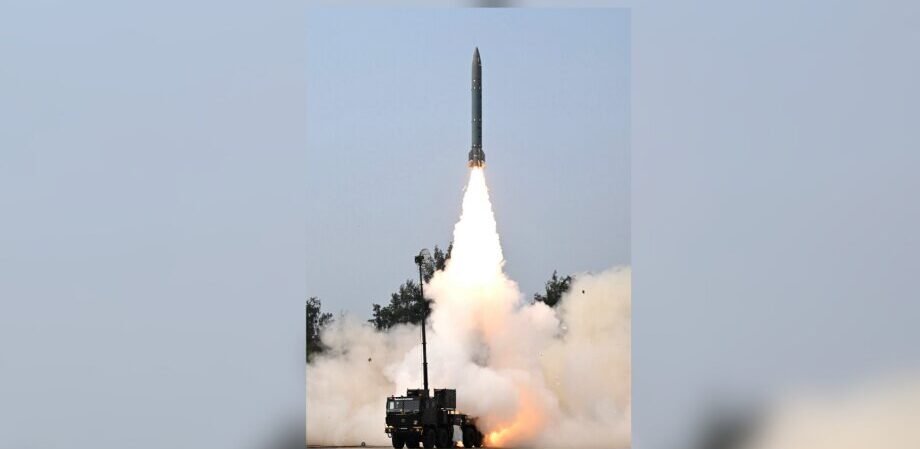
India’s efforts to strengthen its home-grown missile capabilities have received a major boost after the Defence Research and Development Organisation (DRDO) successfully completed another flight test of the Pralay quasi-ballistic missile. Conducted on November 5, 2026, the trial represents an important development in the missile programme as the system moves closer to joining the country’s military inventory.
The missile was launched from Dr APJ Abdul Kalam Island, situated off the Odisha coast, at approximately 11:10 AM. The latest exercise was organised under the User Evaluation Trials, an important phase in assessing the system’s performance before its formal induction into military service. The Ministry of Defence confirmed that the missile successfully fulfilled all the objectives established for the test.
The successful outcome was established through detailed information gathered by different range-monitoring instruments positioned by the Integrated Test Range (ITR) at Chandipur. These instruments recorded the flight-test data, allowing the concerned authorities to evaluate whether the missile performed according to the required parameters. The confirmation of all testing objectives marks a significant achievement for the scientists and organisations associated with the programme.
The Pralay project is an example of India’s growing ability to develop advanced missile systems through domestic research and industrial participation. Research Centre Imarat (RCI), Hyderabad, has taken the lead in developing the missile in partnership with several other DRDO laboratories. Their combined contribution has supported the development of an indigenous weapon system designed to meet the requirements of India’s defence forces.

Manufacturing responsibilities have also involved the domestic defence industry. Bharat Dynamics Limited (BDL), which serves as one of the project’s Development-cum-Production Partners, has manufactured the missile system. This collaboration between DRDO laboratories and Indian manufacturers demonstrates how research institutions and industrial organisations are working together to strengthen the country’s defence production ecosystem.
The latest test was witnessed by senior DRDO officials, representatives from participating industries and members of the Defence Forces. Their presence was particularly relevant because the exercise formed part of the user evaluation process rather than being limited to a routine developmental activity. Successful completion of this stage brings the missile programme closer to its intended operational role.
Defence Minister Rajnath Singh welcomed the achievement and congratulated DRDO, the Defence Forces and the industry partners involved in the project. He highlighted the importance of the missile’s advanced technologies, stating that they would contribute to enhancing the technological capabilities and operational preparedness of India’s military against emerging threats.
Defence Secretary and DRDO Chairman Rajesh Kumar Singh also extended his congratulations to the teams responsible for the successful flight test. Their recognition underlines the importance of the collective effort behind the programme, involving scientists, engineers, manufacturers and military representatives.
The Ministry of Defence has indicated that the successful trial makes the induction of the Pralay missile system imminent. However, formal induction remains a separate process and has not yet been announced as completed. The latest achievement nevertheless brings India closer to adding another indigenously developed missile capability to its armed forces.
For India’s defence sector, the successful evaluation is more than a technical milestone. It demonstrates the progress being made in domestic missile development and reinforces the country’s broader objective of building a stronger, more self-reliant defence manufacturing base. As the Pralay programme approaches its next stage, its progress will remain an important development in India’s military modernisation efforts.


Facebook Comments