
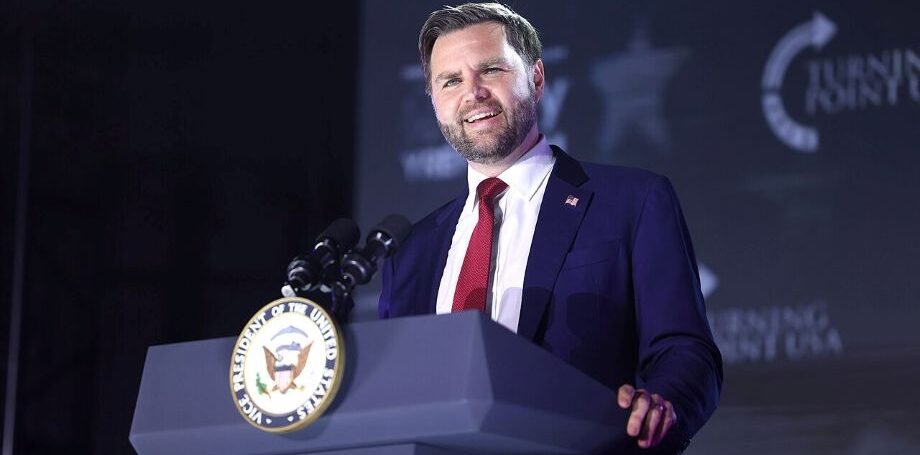
The political consequences of the ongoing war with Iran have intensified in Washington after US Vice President JD Vance publicly linked the Republican Party’s major setback in the 2026 midterm elections to the conflict. In remarks released on Wednesday, November 4, Vance questioned the political cost of the military campaign and argued that the administration had underestimated public frustration over its foreign policy decisions.
The Republican Party suffered significant losses in the November 3 elections, with Democrats securing control of both the House of Representatives and the Senate. The outcome represents a major political challenge for President Donald Trump as he enters the remaining two years of his current presidential term.
Vance suggested that the election results reflected dissatisfaction among voters who had previously supported the Trump-Vance ticket in the 2024 presidential election but shifted their support towards Democratic candidates. According to the Vice President, the problem was not simply voter turnout but the growing number of former Republican supporters who were unhappy with the administration’s decisions.
He identified the Iran conflict as a major reason behind the electoral defeat and argued that continuing the war had created political consequences for the Republican leadership. Vance also questioned whether the military campaign was worth the cost, particularly after the party lost its congressional majorities.

The Vice President’s remarks marked a notable shift in his public position on the conflict. Vance had previously supported the administration’s broader objectives but had also been associated with efforts to pursue a negotiated settlement. Following the election results, he described his earlier recommendation to bring the conflict to an end as sound advice.
The disagreement comes as President Trump maintains that the military operation was necessary to prevent Iran from acquiring a nuclear weapon. Speaking to reporters on Wednesday, Trump acknowledged Vance’s position and indicated that the Iran war had affected the Republican election performance. However, he continued to defend the decision to launch the military campaign, maintaining that the United States had achieved an important national security objective.
Beyond the political debate, the financial burden of the conflict has become another major concern for American taxpayers. According to an Associated Press report citing a Pentagon estimate provided to Congress, the cost of the Iran war had reached approximately $47.1 billion as of October 16, 2026. The estimate includes operational expenses, replacement of military munitions and equipment losses. It does not include the full cost of damage to American military installations in the Middle East.
Rising military expenditure and the conflict’s impact on energy prices have added to domestic economic concerns. An Associated Press voter survey found that approximately six in ten voters considered the US decision to take military action against Iran to have been wrong. However, the survey also indicated that the cost of living and government corruption were more important voting considerations for many Americans than the war itself.
The election outcome has therefore raised broader questions about the administration’s foreign policy priorities and the domestic consequences of prolonged military involvement overseas. The results also strengthen the Democrats’ position in Congress, giving the opposition greater authority to scrutinise government policies, conduct investigations and challenge the administration’s legislative agenda.
Meanwhile, uncertainty continues over the future direction of the Iran conflict. Reuters reported that the Trump administration has been considering military options for potentially restarting major combat operations, although diplomatic efforts to secure a settlement remain ongoing. The possibility of renewed hostilities could further complicate Washington’s relations with Tehran and increase concerns over regional security and global energy supplies.
Vance’s public criticism has also attracted attention because of his potential political ambitions ahead of the 2028 presidential election. His comments could signal an effort to distinguish his foreign policy position from Trump’s, although he has not formally announced a presidential campaign.
The Republican defeat has placed the Iran war at the centre of a wider debate over America’s military commitments, economic priorities and political accountability. Whether the administration changes its approach towards Tehran remains uncertain, but the midterm results have made it increasingly difficult for Washington to separate its foreign policy decisions from their consequences at home.


Facebook Comments