
Indian Navy Accelerates Warship Building: Chief Highlights Indigenous Capability Surge
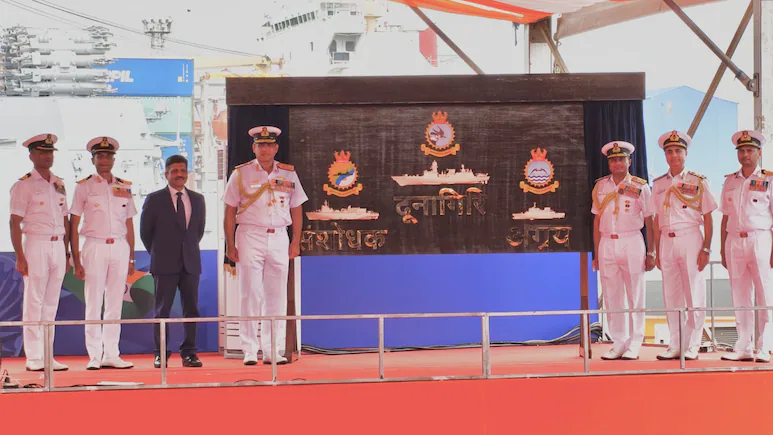
India’s naval shipbuilding momentum has entered a new phase, with the Navy Chief underscoring the country’s accelerating capacity to design and construct warships indigenously, according to recent statements from the service leadership.
The emphasis on indigenous warship construction reflects a strategic pivot within the Indian Navy’s modernisation roadmap. Over the past decade, India has progressively reduced its dependence on foreign shipyards for major combat vessels, a shift anchored in the Defence Acquisition Procedure and the Make in India initiative.
The Indian Navy currently operates two major state-owned shipyards: Cochin Shipyard Limited and Mazagon Dock Shipbuilders Limited, both of which have demonstrated growing technical competence in building advanced naval platforms. In the private sector, Goa Shipyard and Larsen and Toubro’s shipbuilding division have also emerged as credible builders for naval vessels and auxiliaries.
India’s ongoing frigate programme exemplifies this capability. The Shivalik-class guided-missile stealth frigates, designed in-house by the Navy’s Design Bureau, are being constructed domestically. The Navy is also advancing the P15B destroyer project, featuring enhanced indigenous systems and greater automation than earlier variants. The newer Project 17A and Project 15B platforms represent the maturation of Indian naval architecture and integration expertise.


The focus on speed in warship construction addresses a longstanding challenge: India’s shipyards have historically operated with longer build cycles compared to their international counterparts. Modernisation of docking and assembly facilities, adoption of modular construction techniques, and improved supply chain coordination with domestic defence suppliers and DRDO laboratories have collectively improved turnaround times.
The Navy’s shipbuilding expansion also aligns with India’s broader strategic positioning in the Indo-Pacific, where fleet modernisation and operational readiness depend on sustained indigenous production capacity. A larger, more rapidly constructed fleet supports both deterrence objectives and the Navy’s role in humanitarian assistance and disaster relief operations across the Indian Ocean Region.
The Navy’s stated confidence in accelerating indigenous warship production signals to both domestic industry and international partners that India views naval self-reliance as a core strategic objective, independent of traditional defence partnerships.


Facebook Comments