
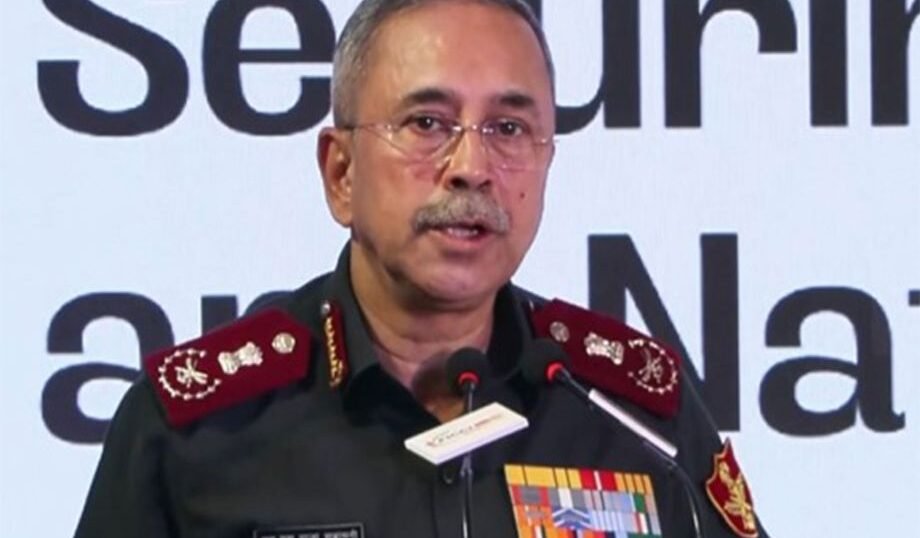
India’s push towards defence self-reliance has received fresh emphasis from Chief of Defence Staff (CDS) General NS Raja Subramani, who has urged domestic industries to strengthen their technological capabilities and take greater responsibility for developing critical military technologies. Addressing a special session at the Federation of Indian Chambers of Commerce and Industry (FICCI) Annual General Meeting and Annual Convention in New Delhi on November 18, 2026, he highlighted the importance of building a strong indigenous defence industrial base to support India’s long-term security requirements.
General Subramani stressed that national security cannot depend entirely on foreign suppliers. He described Atmanirbharta as the freedom to make independent decisions, the ability to act when required and the capacity to sustain operations during challenging circumstances. According to him, India must develop its defence capabilities in advance rather than waiting for specific military orders or emergencies to create domestic manufacturing capacity.
The CDS also called for a significant change in the relationship between the Armed Forces and the defence industry. Instead of following a conventional buyer-and-seller approach, he encouraged manufacturers and military organisations to work together through technology partnerships, joint development and collaborative production. Such cooperation would help Indian companies better understand operational requirements while allowing the military to access solutions suited to changing battlefield conditions.
A major part of his address focused on ownership of critical technologies, designs and intellectual property. General Subramani indicated that Indian manufacturers should move beyond assembling complete defence platforms and develop important components and technologies within the country. He also encouraged companies to invest more in research and development, strengthen domestic supply chains and establish production facilities capable of increasing output during prolonged conflicts.


The CDS highlighted how modern warfare is changing with the growing importance of artificial intelligence, digital networks, space-based systems and electronic warfare. He explained that future military operations would increasingly depend on interconnected capabilities rather than individual platforms operating independently. The ability to collect information, process intelligence and make decisions quickly will become an important factor in determining battlefield effectiveness.
He also identified the changing economics of warfare as a major challenge, particularly with the increasing use of inexpensive drones and other low-cost weapons. Indian defence manufacturers were encouraged to develop affordable interception technologies and solutions that can be produced in large numbers without compromising quality or reliability.
General Subramani further emphasised the importance of modernising existing military equipment and ensuring interoperability between different platforms. He called for stronger coordination across the Army, Navy and Air Force, supported by advanced technologies and integrated operational systems.
To encourage greater industry participation, he said the Armed Forces would offer more predictable demand and opportunities for Indian engineers to understand operational requirements. He also indicated that the military would consider indigenous solutions meeting 60–70 per cent of its requirements, provided manufacturers take responsibility for quality and continuously improve their products.
His remarks underline the growing importance of cooperation between India’s defence establishment, private manufacturers, technology companies and research institutions. Building domestic expertise in critical technologies, expanding manufacturing capacity and strengthening intellectual property ownership will be essential to reducing external dependence.
General Subramani’s message reinforces India’s broader ambition of developing a technologically advanced and self-reliant defence ecosystem. Stronger partnerships between the military and domestic industry could help improve operational preparedness, support innovation and strengthen the country’s ability to meet future national security challenges.




Facebook Comments