
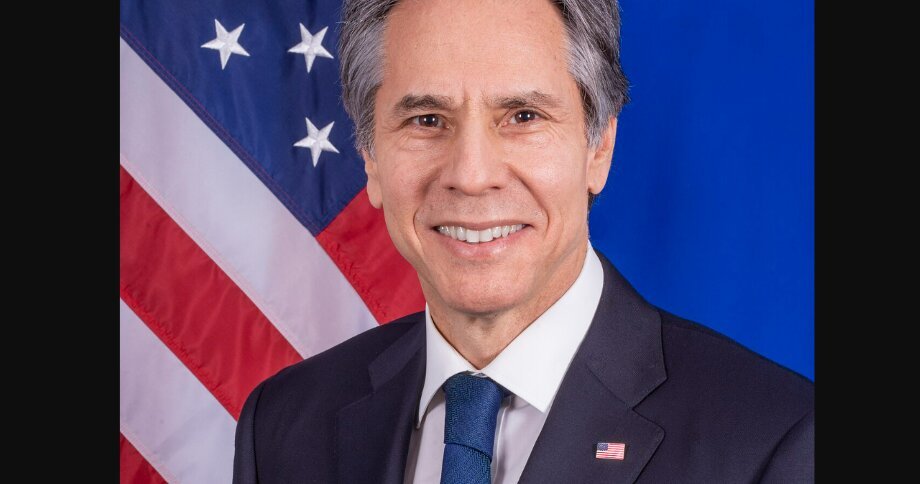
Former US Secretary of State Antony Blinken has highlighted India’s growing importance in international affairs, stating that Washington must recognise New Delhi’s right to protect its national security against terrorist threats. His comments also underline the need for a firm international approach towards terrorism and a stronger strategic partnership between India and the United States.
Speaking at the Hindustan Times Leadership Summit 2026 in New Delhi, Blinken discussed America’s foreign policy priorities and its relationships with India and Pakistan. He made it clear that the two partnerships serve different strategic purposes and should not be considered equivalent.
Blinken described India as an influential global power whose relationship with the United States is based on a broad range of shared interests. He pointed to the expanding strategic connection between the two democracies, supported by economic engagement, diplomatic cooperation and strong people-to-people relations.
On the issue of terrorism, the former US diplomat advocated a clear and uncompromising position. He said Washington should maintain zero tolerance towards terrorism and respect India’s right to defend itself against terrorist attacks. His remarks highlighted the importance of recognising India’s security concerns while supporting efforts to prevent further instability in the region.

Discussing Pakistan, Blinken explained that American engagement with Islamabad has traditionally focused more on regional matters. Counter-terrorism remains an important area of cooperation between the two countries. He also reflected on how Washington’s historical dependence on Pakistan during the Cold War and the Afghanistan conflict influenced its approach towards the country’s military and political establishment.
Blinken also addressed the sensitive security situation between India and Pakistan. Both countries possess nuclear capabilities, making the prevention of military escalation an important international concern. He indicated that the United States must balance support for India’s security interests with diplomatic initiatives designed to avoid a larger regional conflict.
Turning to the future of India-US cooperation, Blinken identified advanced technology as an important opportunity for both countries. He highlighted space exploration, quantum technology and artificial intelligence as sectors that could significantly expand bilateral collaboration. According to him, cooperation in these areas represents an important next phase in the development of their strategic relationship.
He also discussed India’s longstanding relationship with Russia, acknowledging the historical connections between New Delhi and Moscow. Blinken indicated that Washington understands these ties and does not expect India to completely discontinue its relationship with Russia despite differences in certain international policy matters.
Reflecting on the broader transformation of bilateral relations, Blinken described the progress made between Washington and New Delhi over recent decades as a major development in international diplomacy. The relationship has moved beyond earlier periods of limited engagement towards a partnership involving defence, technology, economic interests and wider geopolitical cooperation.
His comments at the summit highlight India’s increasing international influence and the importance of its independent security decisions. They also reinforce the significance of continued cooperation between India and the United States in addressing terrorism, strengthening regional stability and advancing emerging technologies.
For India, the remarks represent an important discussion about international recognition of its security concerns and the evolving role of its partnership with Washington in the changing global strategic environment.


Facebook Comments