
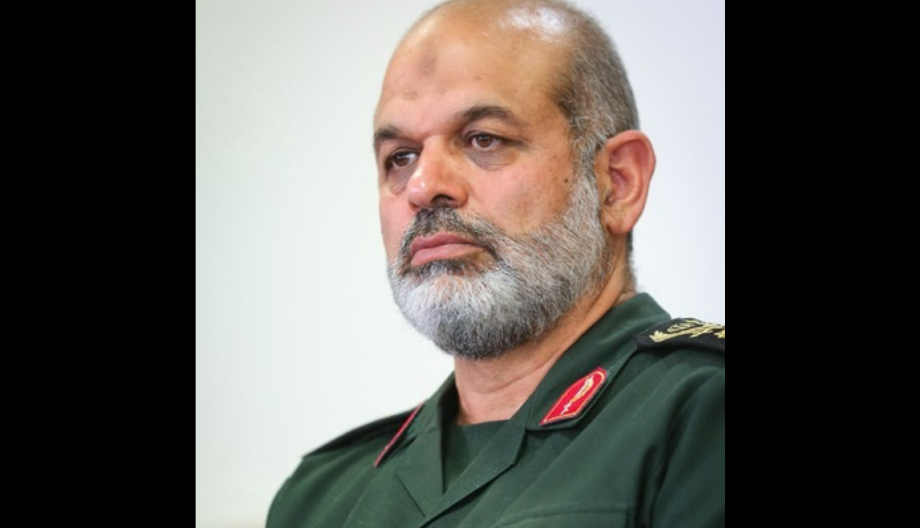
Iran’s Islamic Revolutionary Guard Corps (IRGC) Commander, Major General Ahmad Vahidi, has issued a fresh warning to the United States, threatening a severe military response if Washington takes further action against Tehran. His remarks come amid growing tensions between the two countries, with military developments around the Strait of Hormuz adding to concerns about regional security.
According to Iranian state media reports cited by international news agencies, Vahidi stated that the United States and its allies must learn from previous confrontations with Iran. He warned that any hostile action, regardless of its scale, would result in what he described as devastating and painful strikes. The IRGC chief also suggested that Iran was prepared to respond more forcefully if its security and territorial interests were threatened.
Vahidi’s statement reflects Tehran’s increasingly firm position towards Washington as both sides continue exchanging warnings over possible military action. Iranian officials have repeatedly emphasized that the country’s armed forces remain prepared to defend national territory and strategic interests against external threats.
The latest warning also comes amid reported incidents involving military and maritime infrastructure in the Persian Gulf. The IRGC has claimed that its Aerospace Force destroyed a US early-warning radar installation in Bahrain. According to Iranian reports, the operation was carried out in retaliation for an alleged American attack on telecommunications infrastructure in the Sirik region of southern Iran.


However, the claim regarding the destruction of the radar installation has not been independently verified, and US authorities had not publicly confirmed the reported damage at the time of publication.
Maritime security has also emerged as a major concern in the region. The IRGC Navy claimed that a liquefied gas carrier experienced a major explosion after striking a naval mine while attempting to navigate an unauthorised route through the Strait of Hormuz. Iranian officials alleged that the vessel had ignored repeated warnings. Details about the ship’s ownership, the extent of the damage and possible casualties were not immediately available.
The Strait of Hormuz remains one of the world’s most important maritime passages, connecting the Persian Gulf with international shipping routes. Any disruption in this strategic waterway could affect global energy transportation, oil supplies and international trade.
Meanwhile, Iranian Foreign Ministry spokesperson Esmaeil Baqaei warned other countries against providing military or logistical assistance to the United States in operations targeting Iran. He argued that direct or indirect involvement would be considered participation in aggression against Tehran. His remarks highlighted Iran’s intention to discourage regional and international support for potential American military operations.
On the American side, President Donald Trump has also maintained a strong position regarding Iran. In a recent interview, Trump indicated that he would not hesitate to use military force if Iranian actions threatened American officials or interests.
The exchange of warnings highlights the continuing confrontation between Washington and Tehran, with military installations, maritime routes and regional security becoming increasingly important elements of the dispute. Although both countries have adopted firm public positions, further developments will determine whether the situation moves towards renewed military confrontation or diplomatic engagement.
For now, Vahidi’s latest statement signals that Iran intends to maintain a strong military posture and respond forcefully to any action it considers a threat to its national security.

Facebook Comments