
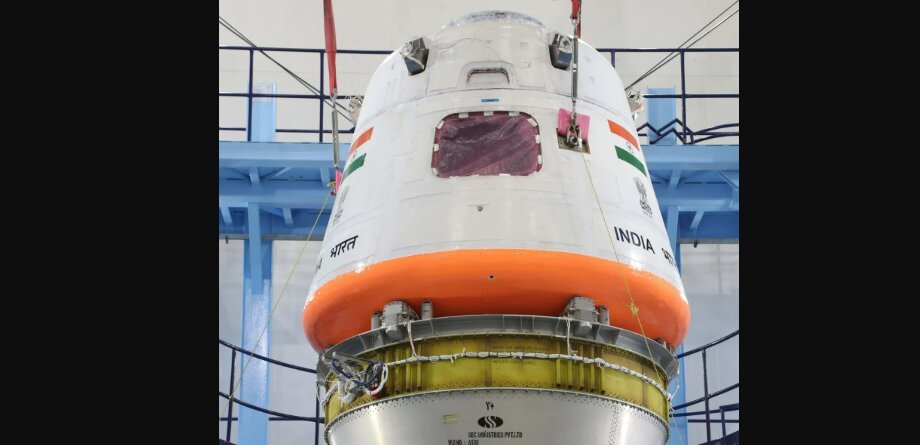
India’s ambitious human spaceflight programme, Gaganyaan, is approaching another significant milestone, with the Indian Space Research Organisation (ISRO) working towards its first uncrewed experimental flight in the final quarter of 2026. The mission is expected to take place in December, according to the latest reports, and will play an important role in preparing India for its maiden human spaceflight.
The first uncrewed mission, known as G1, is designed to test critical technologies and systems required to safely transport astronauts into space and bring them back to Earth. A major feature of this flight will be Vyommitra, ISRO’s specially developed half-humanoid robot, which will be placed inside the Crew Module to simulate selected human functions during the mission.
According to an official statement presented by Union Minister of State for Science and Technology and Space Dr Jitendra Singh in Parliament on August 5, 2026, the first uncrewed experimental mission carrying Vyommitra is targeted for the fourth quarter of 2026. The government also outlined plans for two additional uncrewed missions in a configuration similar to the first crewed flight before the maiden human spaceflight, with these missions targeted by 2027.
ISRO has made considerable progress in developing the hardware and safety technologies required for the programme. The Human Rated Launch Vehicle (HLVM3), which will carry the Gaganyaan spacecraft, has completed the development and ground testing of all its propulsion stages and structures. The rocket has been specifically adapted to meet the stringent safety requirements of human spaceflight.
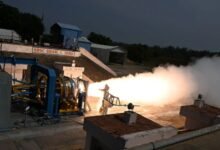

Several important tests have also been completed to validate the spacecraft’s emergency and recovery capabilities. The Test Vehicle Demonstration-1 (TV-D1) successfully demonstrated the in-flight performance of the Crew Escape System, which is designed to move astronauts away from the launch vehicle in an emergency. Additionally, Integrated Air Drop Tests IADT-01 and IADT-02 were successfully conducted using a simulated Crew Module to assess the parachute-based deceleration system required for a safe return to Earth.
Other essential components, including the Crew Module and Service Module propulsion systems, thermal protection systems and avionics, have undergone development and testing. ISRO has also established important ground infrastructure, communication facilities and recovery arrangements to support the upcoming missions. Work on further qualification tests and the next Test Vehicle mission, TV-D2, is continuing.
Vyommitra will provide valuable information about the spacecraft’s internal environment and the performance of systems intended to support astronauts. Its participation will help scientists evaluate technologies under actual spaceflight conditions before human passengers are introduced into the mission.
Gaganyaan is one of India’s most important space exploration initiatives. The programme aims to demonstrate the country’s ability to send Indian astronauts into low Earth orbit and safely recover them. The planned human spaceflight mission is designed for a crew of three astronauts.
The first uncrewed flight will therefore represent a major step towards achieving India’s independent human spaceflight capability. However, mission readiness and astronaut safety remain the primary considerations, and the launch schedule will depend on the successful completion of necessary technical evaluations.
With the G1 mission approaching, India’s space programme is moving towards a historic phase. Its successful completion would provide crucial flight data and strengthen the foundation for future crewed missions, bringing the country closer to joining the group of nations capable of independently sending humans into space.

Facebook Comments