
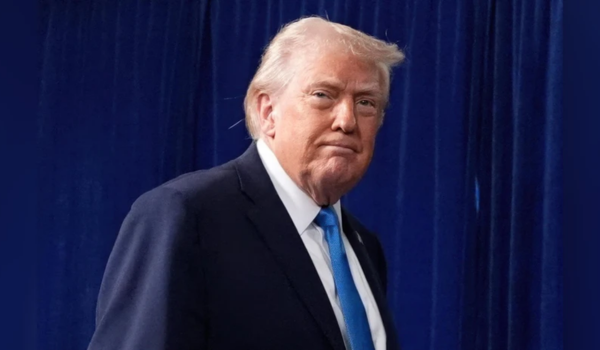
US President Donald Trump is reportedly weighing an alternative path to end the confrontation with Iran, with the reopening of the Strait of Hormuz emerging as a possible condition for a settlement.
Trump has indicated to senior advisers that he could accept ending the conflict without obtaining a new nuclear agreement from Tehran if Iran fully restores access through the strategically important waterway. The reported approach would represent a notable change in emphasis for Washington, shifting the immediate focus from a nuclear settlement to maritime security and the restoration of commercial shipping.
The Strait of Hormuz has become one of the most important pressure points in the US-Iran confrontation. The narrow passage connects the Persian Gulf with the Gulf of Oman and serves as a critical route for international energy shipments. Any prolonged restriction on shipping through the strait can therefore create wider concerns for energy supplies, maritime trade and global markets.
Trump’s reported position comes as Washington and Tehran continue to face major differences over the conditions required to restore normal traffic. While an arrangement involving Oman has been under discussion, Iran has made clear that reopening the waterway would require broader concessions from the United States.
Iranian officials have demanded measures including an end to the US naval blockade, sanctions relief, the release of frozen Iranian assets and compensation for damage caused during the conflict. Tehran has also sought an end to US military operations and pressure against Iran and its regional allies. These demands have made an immediate agreement considerably more difficult.
The dispute over Hormuz is strategically important because Iran’s influence over the waterway provides Tehran with significant leverage in negotiations. For Washington and its regional partners, unrestricted commercial passage is a major security and economic priority.
The reported willingness to move forward without a nuclear agreement does not necessarily mean that the United States has abandoned concerns about Iran’s nuclear programme. Instead, the administration could be looking at the two issues separately, attempting to secure an immediate reduction in tensions while leaving the nuclear question for future negotiations.
Such an approach could give Trump a potential route out of the conflict if Iran agrees to restore commercial passage. At the same time, accepting an arrangement centred only on Hormuz could leave some of the broader strategic disagreements between Washington and Tehran unresolved.
Diplomatic efforts have continued with Oman playing a key role in communications between the two sides. Iran said on Sunday that discussions over new shipping lanes through the Strait of Hormuz had reached an advanced stage, while also maintaining that the United States must take action before the waterway can be fully reopened.
The latest developments indicate that the Strait of Hormuz is now closely tied to the wider diplomatic effort to end the conflict. For the United States, reopening the waterway would help restore maritime commerce and ease pressure on global energy markets. For Iran, the issue remains linked to wider demands involving sanctions, military activity and financial assets.
No final US-Iran agreement has been announced, and the outcome remains uncertain. If Washington ultimately accepts an end to the conflict without a new nuclear deal in exchange for the full reopening of the Strait of Hormuz, it would mark a significant adjustment in the Trump administration’s approach to Iran.
Negotiations remain focused on whether the two sides can bridge their differences over the terms of reopening the vital maritime corridor and establish a broader framework for reducing tensions.




Facebook Comments