
US Military Strikes Southern Iran; Strategic Implications for India’s West Asia Policy

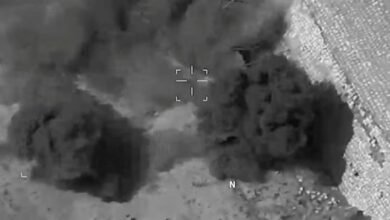
The United States military has launched fresh strikes on southern Iran, according to BBC reporting, marking an escalation in regional tensions that carries direct implications for India’s defence posture and strategic interests in the West Asian theatre.
The strikes represent a significant military action in a region where India maintains critical energy security partnerships, active naval operations, and growing defence cooperation frameworks. India’s energy imports from Iran, though constrained by US sanctions, remain strategically important to New Delhi’s energy security calculus.
For the Indian Navy, operations in the Persian Gulf and Arabian Sea remain a core responsibility. The Navy’s Western Fleet operates extensively through these waters, protecting Indian merchant shipping and maintaining freedom of navigation. Heightened military activity in southern Iran directly affects the security environment within India’s Area of Responsibility.
India has historically maintained a careful diplomatic balance in West Asia, avoiding alignment with any single power while preserving bilateral relationships with both the United States and Iran. The country’s defence partnerships span both nations: India conducts joint naval exercises with the US Navy, including the annual MALABAR series involving Australia and Japan, while also maintaining historical defence ties with Iran dating back decades.


The current escalation underscores challenges India faces in the region. New Delhi has invested substantially in port infrastructure, particularly at Chabahar in Iran, as a counter-balance to Pakistan’s Gwadar Port and to secure alternative trade routes bypassing Pakistan. Regional instability threatens these strategic investments and complicates India’s broader connectivity ambitions under the International North-South Transport Corridor framework.
The Indian defence establishment has consistently emphasized protecting the maritime domain and critical sea lanes of communication through the Arabian Sea and Persian Gulf. India’s defence strategy for the region relies on naval superiority, intelligence gathering capabilities, and diplomatic engagement rather than military interventionism.
For India’s defence procurement and strategic autonomy, incidents like these reinforce the rationale for indigenous maritime surveillance systems, anti-ship missile platforms, and naval air assets currently under development or operational with the Navy. These capabilities enable independent assessment of regional threats and faster response times without reliance on external intelligence sharing.
The Ministry of External Affairs will likely issue carefully calibrated statements reaffirming India’s commitment to international law, freedom of navigation, and peaceful resolution of disputes. India’s defence ministry monitors such developments closely to assess impacts on Indian military operations, merchant shipping security, and personnel deployed across the region.


Facebook Comments