
Unmanned Wingmen Armed with Air-to-Air Missiles Transform Combat Doctrine
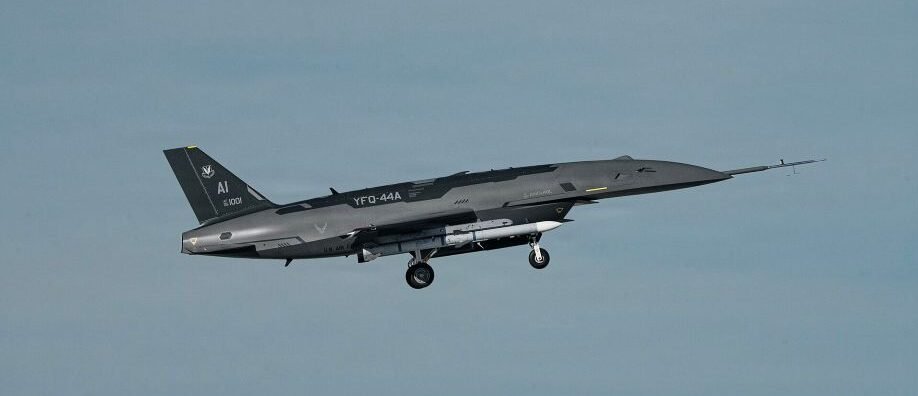
The successful live-fire demonstration of an AI-enabled combat drone highlights the growing importance of manned-unmanned teaming in future aerial warfare.
The United States has taken another significant step toward the future of aerial warfare by successfully testing an autonomous combat drone capable of launching an air-to-air missile. The demonstration underscores how artificial intelligence is rapidly transforming military aviation, with unmanned aircraft expected to play a much larger role alongside traditional fighter jets in future conflicts.
The test featured the YFQ-44A Fury, an advanced Collaborative Combat Aircraft (CCA) developed as part of the US Air Force’s next-generation air combat programme. During the exercise, the drone successfully launched an AIM-120 AMRAAM beyond-visual-range missile against an aerial target, proving that autonomous aircraft can perform complex combat tasks previously reserved for manned fighter aircraft.
Unlike conventional drones that mainly conduct surveillance or ground-attack missions, collaborative combat aircraft are designed to fly in coordination with crewed fighters. Acting as “loyal wingmen,” these drones can extend a fighter’s operational reach by carrying additional weapons, collecting intelligence, conducting electronic warfare and engaging hostile aircraft when required. Their ability to operate in high-risk environments also helps reduce the exposure of human pilots during combat missions.

Despite the growing use of artificial intelligence, military officials have stressed that humans will continue to oversee critical combat decisions, particularly the authorization of weapon launches. The AI system assists with navigation, mission planning and target tracking, while the final decision to employ lethal force remains under human control.
The successful missile launch is considered a major milestone for the US Air Force’s Collaborative Combat Aircraft programme, which aims to integrate autonomous drones with current and future fighter fleets. Defence experts believe such systems will significantly increase operational flexibility, improve survivability and provide a cost-effective force multiplier in contested airspace.
The development also reflects a broader global trend, as several countries invest in autonomous “loyal wingman” programmes to strengthen their air power capabilities. India is among the nations pursuing similar technologies through its Combat Air Teaming System (CATS) Warrior project, designed to support Indian Air Force fighters during reconnaissance, strike and electronic warfare missions.
As autonomous technologies continue to mature, military analysts believe the combination of crewed aircraft and AI-powered combat drones will become a defining feature of next-generation air warfare, fundamentally changing how future air battles are planned and fought.



Facebook Comments