
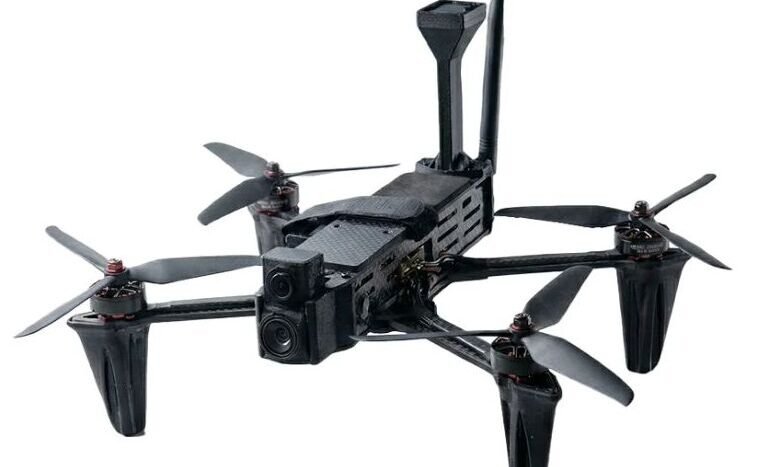
Surat-based defence startup InsideFPV has delivered 100 indigenous combat drones to the Indian Army within 60 days, marking a significant milestone in India’s push towards homegrown unmanned aerial systems for frontline military operations.
The rapid production and deployment underscores the growing role of First-Person-View (FPV) drones in modern warfare. These compact, agile platforms have proven their operational value across multiple theatres, particularly in providing real-time surveillance and enabling precision strikes at tactical ranges without exposing personnel to direct fire.
FPV drones represent a shift in India’s approach to drone acquisition. Unlike larger, platform-specific systems that require extended development cycles and centralised procurement, FPV platforms enable distributed manufacturing and faster iteration. The 60-day timeline reflects both streamlined production and the relative maturity of the underlying technology, which has seen rapid evolution in civilian and defence applications globally over the past five years.
India’s armed forces have increasingly recognised the operational utility of FPV systems in border security, counter-insurgency, and limited-scope tactical operations. The platforms offer advantages in cost per unit, ease of training, and rapid deployment compared to heavier rotorcraft or fixed-wing unmanned systems. Their small size makes them suitable for operations in constrained terrain, urban environments, and high-altitude regions where larger systems face logistical constraints.

The delivery by InsideFPV reflects the broader Make in India initiative within defence procurement. Private sector participation in unmanned systems development has accelerated following policy changes that opened exclusive defence categories to indigenous startups and smaller manufacturers. This contrasts with earlier practices where drone acquisition was concentrated within DRDO or foreign OEMs operating under technology transfer agreements.
The Indian Army’s acceptance of 100 units in operational timeframes suggests confidence in the platform’s reliability and performance standards. Integration into existing Army command structures, ground control stations, and tactical doctrines requires validation across multiple operational scenarios before bulk orders are placed. Rapid delivery timelines often indicate systems designed to match existing operational protocols rather than requiring extensive retraining or infrastructure modification.
InsideFPV’s achievement also signals the maturing ecosystem of defence manufacturing in Gujarat. The state has emerged as a significant hub for aerospace and defence components production, supported by existing industrial infrastructure, skilled labour availability, and proximity to major military establishments across western India.




Facebook Comments