
India’s Pralay Missile Moves Closer to Military Deployment After Successful DRDO Trial
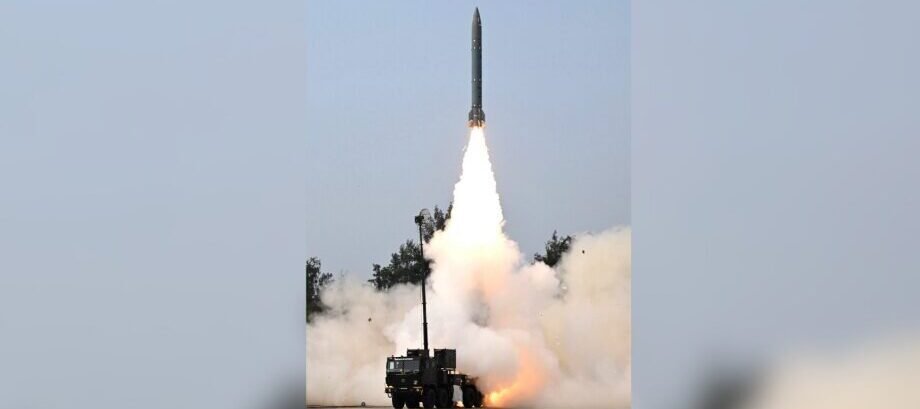
India has taken another important step towards strengthening its indigenous missile capabilities after the Defence Research and Development Organisation (DRDO) successfully conducted a flight test of its Pralay quasi-ballistic missile on November 5, 2026. The successful trial, carried out off the Odisha coast, has brought the missile closer to operational deployment with the Indian armed forces.
The missile was launched from Dr APJ Abdul Kalam Island at approximately 11:10 am as part of its user evaluation trials. According to the Ministry of Defence, all stipulated objectives were successfully achieved. Performance data collected through various tracking and monitoring instruments deployed by the Integrated Test Range (ITR) at Chandipur confirmed the successful completion of the flight test.
The latest achievement represents an important milestone in India’s efforts to develop advanced conventional missile systems through domestic research and manufacturing. Following the successful evaluation, the Ministry of Defence stated that the induction of the Pralay missile into the armed forces has become imminent.
Pralay is an indigenously developed, solid-propellant, surface-to-surface quasi-ballistic missile designed to deliver precision conventional strikes against selected targets. Its reported operational range extends from approximately 150 kilometres to 500 kilometres, depending on the weight of the payload. The missile can carry conventional warheads weighing between 500 kg and 1,000 kg, providing flexibility for different operational requirements.


One of the important characteristics of Pralay is its quasi-ballistic flight profile. Unlike conventional ballistic missiles that generally follow a predictable trajectory, quasi-ballistic systems incorporate manoeuvrability during flight. This capability, combined with advanced guidance and navigation technologies, is intended to improve targeting accuracy and make the missile’s flight path more difficult for opposing air-defence systems to predict.
The missile is powered by a solid-fuel propulsion system and can be equipped with different conventional warhead configurations. Its combination of mobility, payload capacity and precision-strike capability could provide India’s military planners with an additional option for engaging important tactical and strategic targets. The system is expected to strengthen conventional strike capabilities without requiring the deployment of combat aircraft for every mission.
The development programme has been led by Research Centre Imarat (RCI), Hyderabad, in collaboration with several other DRDO laboratories. Bharat Dynamics Limited (BDL), one of the project’s development-cum-production partners, has manufactured the missile system. The latest evaluation was witnessed by senior DRDO officials, defence industry representatives and members of the armed forces, highlighting the cooperation between India’s research institutions, military organisations and domestic defence industry.
Defence Minister Rajnath Singh congratulated DRDO, the armed forces and industry partners following the successful test. He highlighted that the missile’s advanced technologies would strengthen the technological capabilities and operational preparedness of the Indian military in response to emerging security challenges.
The successful trial also reflects India’s broader commitment to the Aatmanirbhar Bharat initiative in defence manufacturing. Developing sophisticated missile systems domestically can help reduce dependence on foreign suppliers while strengthening the country’s research, production and technological capabilities.
With the latest user evaluation trial successfully completed, Pralay is moving closer to becoming an operational component of India’s conventional missile arsenal. Its eventual induction would add another important capability to the country’s defence infrastructure and reinforce India’s focus on building a modern, technologically advanced and self-reliant military.



Facebook Comments