
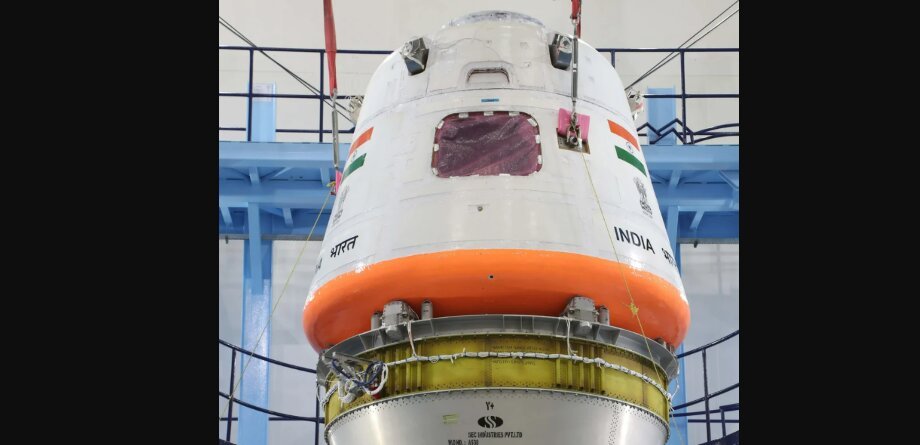
India’s ambitious Gaganyaan human spaceflight programme is approaching a major milestone, with the Indian Space Research Organisation (ISRO) preparing for the first uncrewed test flight, designated G1, in December 2026. The mission will represent a significant step towards India’s goal of developing an independent capability to send astronauts into space and bring them safely back to Earth.
According to recent reports citing ISRO Chairman V. Narayanan, the G1 mission is scheduled for December 2026. The flight will not carry human astronauts. Instead, it will transport Vyommitra, ISRO’s half-humanoid robot, which has been developed to help evaluate spacecraft systems and monitor conditions inside the crew module during the mission.
The G1 flight is designed to demonstrate and validate several critical technologies required for human spaceflight. These include the performance of the human-rated launch vehicle, crew and service modules, onboard systems, re-entry operations and recovery arrangements. The mission will provide valuable operational data to engineers before the programme progresses towards crewed flights.
The launch vehicle selected for Gaganyaan is the Human Rated Launch Vehicle Mark-3 (HLVM3), a human-rated version of India’s LVM3 rocket. ISRO has completed the development and ground testing of its propulsion stages and structures, according to information presented by the Department of Space in Parliament in August 2026.
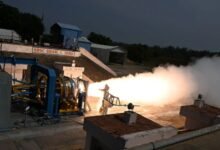
Another important element of the mission is the Crew Escape System, which is designed to protect astronauts in the event of an emergency during launch. ISRO has developed and successfully conducted static tests on five types of motors associated with this system. The agency has also completed important tests involving the simulated crew module’s deceleration system, supporting the development of safe recovery operations.
In a further development, ISRO announced on October 16, 2026, that it had successfully completed a series of Crew Module-Service Module separation tests. These tests assessed the separation mechanism and its ability to protect critical spacecraft systems during the transition from orbital operations to the return journey. The results provide additional confidence ahead of the first uncrewed Gaganyaan flight.
Vyommitra will play an important role in the upcoming experimental mission. The robot is intended to monitor the spacecraft environment, provide alerts and demonstrate selected functions associated with crew operations. Its participation will help engineers understand how onboard systems perform under actual flight conditions without putting human astronauts at risk.
The G1 mission is part of a broader testing programme rather than an isolated launch. ISRO plans two additional uncrewed missions, G2 and G3, following the first experimental flight. These missions will further validate the systems and configuration intended for India’s first crewed spaceflight, currently included in the programme roadmap for 2027.
The Gaganyaan programme aims to demonstrate India’s ability to send a three-member crew into low Earth orbit for a mission lasting up to three days and return them safely to Earth. Achieving this objective requires extensive testing of launch systems, life-support technology, spacecraft operations and astronaut recovery procedures.
The December 2026 target therefore represents an important stage in India’s journey towards human space exploration. While the successful completion of G1 and subsequent uncrewed missions will remain essential before astronauts fly, the programme marks steady progress in strengthening India’s indigenous spaceflight capabilities.

Facebook Comments