
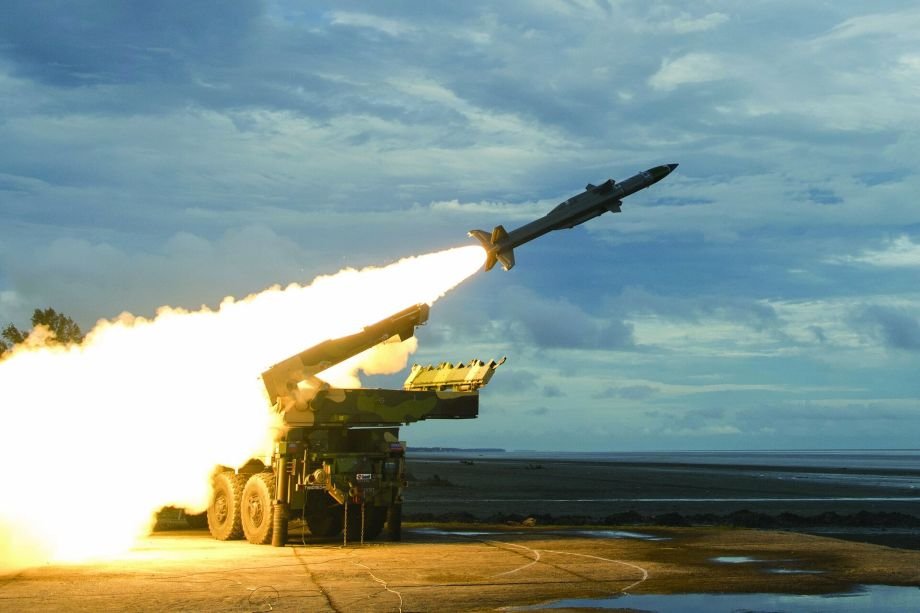
India is moving forward with its ambitious Mission Sudarshan Chakra, a long-term initiative aimed at establishing an integrated national air and missile defence shield. Defence Secretary Rajesh Kumar Singh confirmed on November 16, 2026, that the formal report for the programme is ready and is being examined by Headquarters Integrated Defence Staff (HQ IDS). The development marks an important step in India’s efforts to strengthen its defence preparedness against increasingly sophisticated aerial threats.
Announced by Prime Minister Narendra Modi during his Independence Day address on August 15, 2025, Mission Sudarshan Chakra aims to protect important military installations, strategic assets, critical infrastructure and major civilian establishments. The proposed architecture is intended to combine surveillance, early-warning systems, command networks and multiple interception technologies into a coordinated national defence framework.
One of the most significant elements of the proposed system is its extensive radar surveillance network. According to a report published by The Indian Express on October 6, 2025, the architecture could involve approximately 6,000 to 7,000 radars distributed across the country. These would include advanced Over-the-Horizon (OTH) radar systems capable of detecting and tracking potential aerial threats at considerable distances, including activities beyond India’s borders. The network would provide an extended early-warning capability against hostile aircraft, unmanned aerial vehicles and incoming missiles.
Space-based surveillance is another important component of the programme. India’s Space-Based Surveillance Phase III initiative is working towards deploying 52 additional surveillance satellites by 2030. These satellites are expected to complement ground-based radar installations by monitoring large geographical areas and providing information about potential threats. The broader surveillance concept outlined in an Institute for Defence Studies and Analyses (IDSA) publication envisages detection coverage extending approximately 2,000–2,500 kilometres beyond India’s borders, although this represents a proposed capability requirement rather than a confirmed operational range.

The defence architecture is also expected to incorporate different categories of interception systems. These include long-range and medium-range surface-to-air missiles, short-range air defence weapons, anti-drone technologies, electronic warfare equipment and air defence guns. Indigenous Directed Energy Weapons (DEWs), particularly high-powered laser systems, are also expected to play an important role in countering drones and other aerial targets.
India has already demonstrated progress in integrated defence technology through DRDO’s Integrated Air Defence Weapon System (IADWS). In August 2025, DRDO successfully conducted flight tests involving Quick Reaction Surface-to-Air Missiles (QRSAM), Very Short-Range Air Defence System (VSHORADS) missiles and a high-energy laser-based weapon. Multiple aerial targets were successfully engaged during the trials, demonstrating the potential of combining different interception technologies under a centralised command-and-control system.
The proposed Mission Sudarshan Chakra network is expected to connect surveillance sensors and weapon platforms through an integrated command structure, enabling faster threat identification and coordinated responses. Defence research organisations, the armed forces, defence public sector companies and private industry are expected to contribute to its development.
The latest confirmation from the Defence Secretary indicates that the programme is progressing through its review and planning stages. Meanwhile, procurement activities to address existing air defence gaps are continuing independently of the report’s final acceptance. As India advances its indigenous defence capabilities, Mission Sudarshan Chakra represents a major long-term effort to establish a stronger, technology-driven national security shield.

Facebook Comments