
India Urges Major Reforms in UN Peacekeeping, Highlights Contribution of Over 300,000 Troops
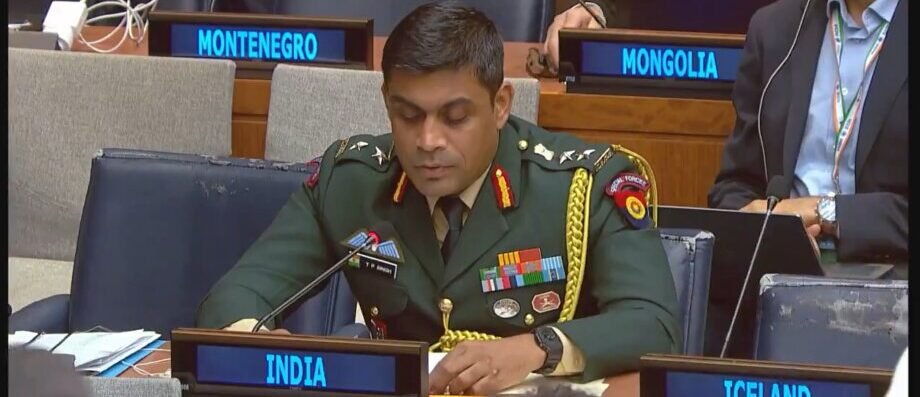
India has called for significant improvements in United Nations (UN) peacekeeping operations, stressing the need for better resources, stronger security arrangements and greater representation of countries contributing troops and police personnel. Highlighting its longstanding contribution to international peace and security, New Delhi has pointed out that more than 300,000 Indian troops have served across 50 UN peacekeeping missions, making India the largest troop contributor to date.
The statement was delivered by Colonel Tarunendra Pratap Singh, Military Advisor at India’s Permanent Mission to the United Nations, during the annual debate on the comprehensive review of peacekeeping operations at the UN General Assembly’s Fourth Committee. He reiterated India’s commitment to strengthening the international peacekeeping framework and ensuring that personnel deployed in challenging environments receive adequate support.
During his address, Singh paid tribute to peacekeepers who lost their lives while carrying out their responsibilities. He highlighted that 184 Indian peacekeepers have made the supreme sacrifice during their service under the United Nations flag. Their contribution, he said, reflects India’s commitment to maintaining international peace and security over more than seven decades of operational engagement.
India also raised concerns about the increasingly complex security environment faced by UN peacekeeping personnel. According to Singh, peacekeepers are now exposed to asymmetric and technology-enabled threats, making their safety a growing priority. He emphasised that attacks against UN personnel must not go unpunished and called for stronger accountability mechanisms to ensure those responsible are brought to justice.
In this context, Singh recalled India’s leadership in promoting UN Security Council Resolution 2589, adopted in August 2021 when India held the Council’s presidency. The resolution focused on accountability for crimes committed against UN peacekeepers and encouraged countries hosting peacekeeping missions to take action against attacks on international personnel.
Another important issue raised by India was the role of troop- and police-contributing countries in determining peacekeeping mandates. Singh stressed that countries providing personnel should have a structured opportunity to participate in discussions before mandates are adopted or reviewed. He argued that better consultation would help ensure that operational responsibilities match the capabilities and resources available to deployed forces.
India further emphasised that successful peacekeeping operations require clear political objectives and sufficient resources from the beginning. Missions should not be expected to perform increasingly demanding responsibilities without appropriate equipment, training and operational support. Singh also called for reviewing missions that no longer have a clear operational purpose, warning that unnecessary deployments can divert resources from more urgent requirements.
The Indian representative also highlighted the importance of modern technology and renewable energy in improving the effectiveness of UN operations. He referred to India’s support for the UNITE AWARE initiative, which promotes technology-based solutions to strengthen situational awareness and the safety of peacekeeping personnel.
Women’s participation in international peacekeeping was another key aspect of India’s statement. India has deployed women peacekeepers since 1960 and made history in 2007 by sending the first-ever all-female Formed Police Unit to Liberia. Singh noted that 160 Indian women peacekeepers are currently deployed across different missions.
Concluding his remarks, Singh said strengthening peacekeeping operations would remain an important priority for India’s candidature for the United Nations Security Council for the 2028–29 term. India reaffirmed its commitment to building a peacekeeping system that is better equipped, safer for personnel and more representative of the international community.
Facebook Comments