
India and Uzbekistan Elevate Defence Ties, Eye Co-Production and Co-Development of Military Equipment
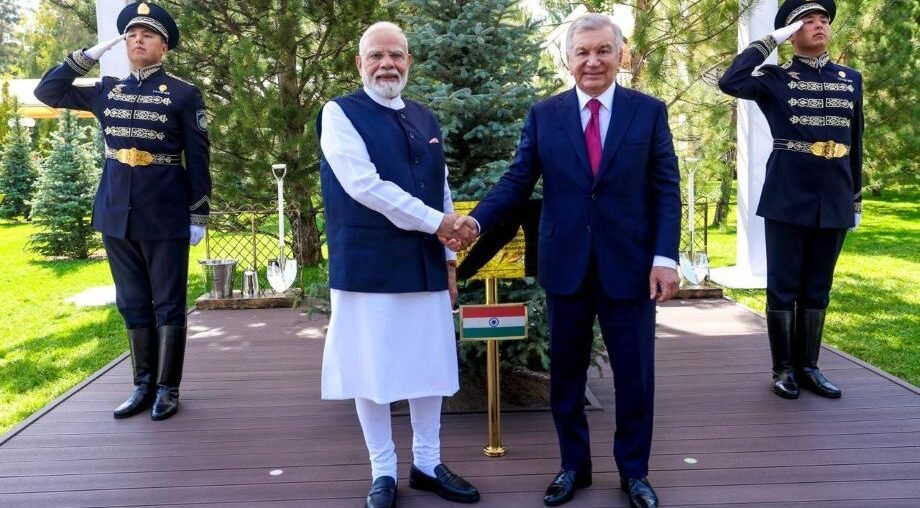
India and Uzbekistan have taken a significant step towards strengthening their defence partnership, with Prime Minister Narendra Modi and Uzbek President Shavkat Mirziyoyev agreeing to expand cooperation between their defence industries. During Modi’s state visit to Uzbekistan, the two countries elevated their bilateral Strategic Partnership to a Comprehensive Strategic Partnership, while placing greater emphasis on defence, security and industrial collaboration.
A key element of the upgraded relationship is the decision to promote direct linkages between Indian and Uzbek defence industries, with both sides encouraging greater cooperation in the co-production and co-development of military equipment. The move is aimed at taking bilateral defence cooperation beyond traditional military exchanges and creating opportunities for industrial and technological collaboration.
The two countries also highlighted the importance of regular defence exchanges, institutional mechanisms, capacity-building and joint activities. Their cooperation is supported by the Joint Working Group on Military Cooperation, which has been exploring new avenues in the defence industrial sector. Both sides also welcomed the successful conduct of the Dustlik joint military exercise, with the latest edition held in Uzbekistan’s Namangan Region in April 2026.
Security cooperation remains another important part of the partnership. India and Uzbekistan reaffirmed their shared concerns over terrorism, extremism and separatism and stressed the need for a coordinated approach to regional security challenges. The two sides also agreed to continue cooperation through their Joint Working Group on Counter Terrorism.
The defence push comes as India and Uzbekistan broaden cooperation across strategic sectors including critical minerals, energy, technology, infrastructure, healthcare, space and digital connectivity. The two countries have also set an ambitious target of increasing bilateral trade to $5 billion by 2030.
The latest decisions underline the growing strategic importance of India-Uzbekistan relations in Central Asia. By expanding defence-industry engagement and pursuing co-development and co-production, New Delhi and Tashkent are seeking to build a more resilient and long-term security partnership while strengthening their ability to respond to shared regional challenges.


Facebook Comments