India Advances Autonomous Naval Warfare as US Develops Next-Generation Drone Submarines
The future of submarine warfare is entering a new phase as the United States moves towards developing its next-generation nuclear-powered attack submarine, the SSN(X), with the ability to deploy and control unmanned underwater vehicles. At the same time, India is expanding its own autonomous maritime technology programmes to strengthen naval surveillance, reconnaissance and maritime security across strategically important waters.
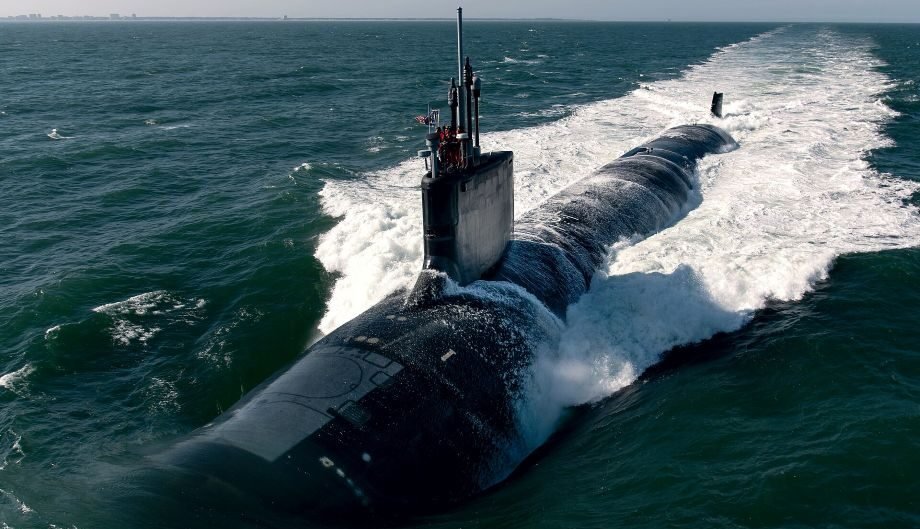
According to recent remarks by US Navy Rear Admiral Andrew Miller at the Naval Submarine League’s annual conference, the proposed SSN(X) is expected to offer greater speed, improved operational availability and expanded capabilities for hosting robotic and autonomous systems. The submarine is being designed as the successor to the Virginia-class attack submarines, with a broader operational role in future undersea warfare.
The American Navy wants to move beyond the traditional concept of attack submarines operating primarily as independent hunter-killer platforms. Under the proposed approach, SSN(X) could launch unmanned underwater vehicles directly through its torpedo tubes, allowing the submarine to extend its surveillance and operational reach without exposing additional personnel to dangerous environments. The US Navy is also examining greater payload capacity, improved stealth and additional flexibility in the submarine’s overall design. However, SSN(X) remains under development, and its construction is currently planned for the early 2040s.
Unmanned maritime platforms are becoming increasingly important because they can conduct extended underwater and surface missions, collect intelligence and monitor strategically important maritime infrastructure. Equipped with advanced sensors, sonar and navigation technologies, these systems can support mine detection, reconnaissance, anti-submarine warfare and monitoring of underwater communication cables and pipelines. Their deployment can also reduce risks to naval personnel during demanding operations.


India, meanwhile, is pursuing a different but complementary approach by developing indigenous unmanned surface vessels and autonomous maritime platforms. The Indian Navy has encouraged domestic defence companies to develop advanced systems through initiatives such as the Swavlamban programme, supporting the government’s Atmanirbhar Bharat objective of reducing dependence on foreign defence technology.
Several Indian projects highlight this progress. The Defence Ministry has cleared unmanned maritime systems under the Make category, including SAVIOR, a semi-submersible autonomous vessel designed for intelligence and reconnaissance, and CASCADE-ASW, an autonomous platform intended for anti-submarine warfare applications.
Indian defence companies and research organisations have also demonstrated progress in this field. Sagar Defence’s Matangi unmanned surface vessel completed an autonomous journey of approximately 1,600 kilometres between Karwar and Thoothukudi in 2024. Garden Reach Shipbuilders and Engineers also delivered its Jaldoot unmanned surface vessel to the Naval Science and Technological Laboratory in December 2024. Bharat Electronics Limited has additionally developed a solar-powered unmanned surface vessel for hydrographic surveys and coastal surveillance.
Despite these developments, India faces several technological challenges. Rough sea conditions, monsoon weather, saltwater exposure and communication disruptions can affect the reliability of autonomous maritime platforms. Secure satellite communication, resilient data networks and effective coordination between multiple unmanned systems will therefore remain essential.
The Indian Navy is also looking towards a Unified Platform Management System that could enable operators to control different unmanned platforms through a common interface.
Although the American SSN(X) programme and India’s indigenous unmanned vessel initiatives follow different technological paths, both reflect a broader transformation in naval warfare. As autonomous systems become increasingly integrated into maritime operations, the ability to combine manned warships with unmanned platforms could become an important factor in maintaining naval superiority and protecting strategic maritime interests.




Facebook Comments