
HAL Tejas MK-1A Should Get Enhanced Infrared Sensors for Indian Ocean Operations
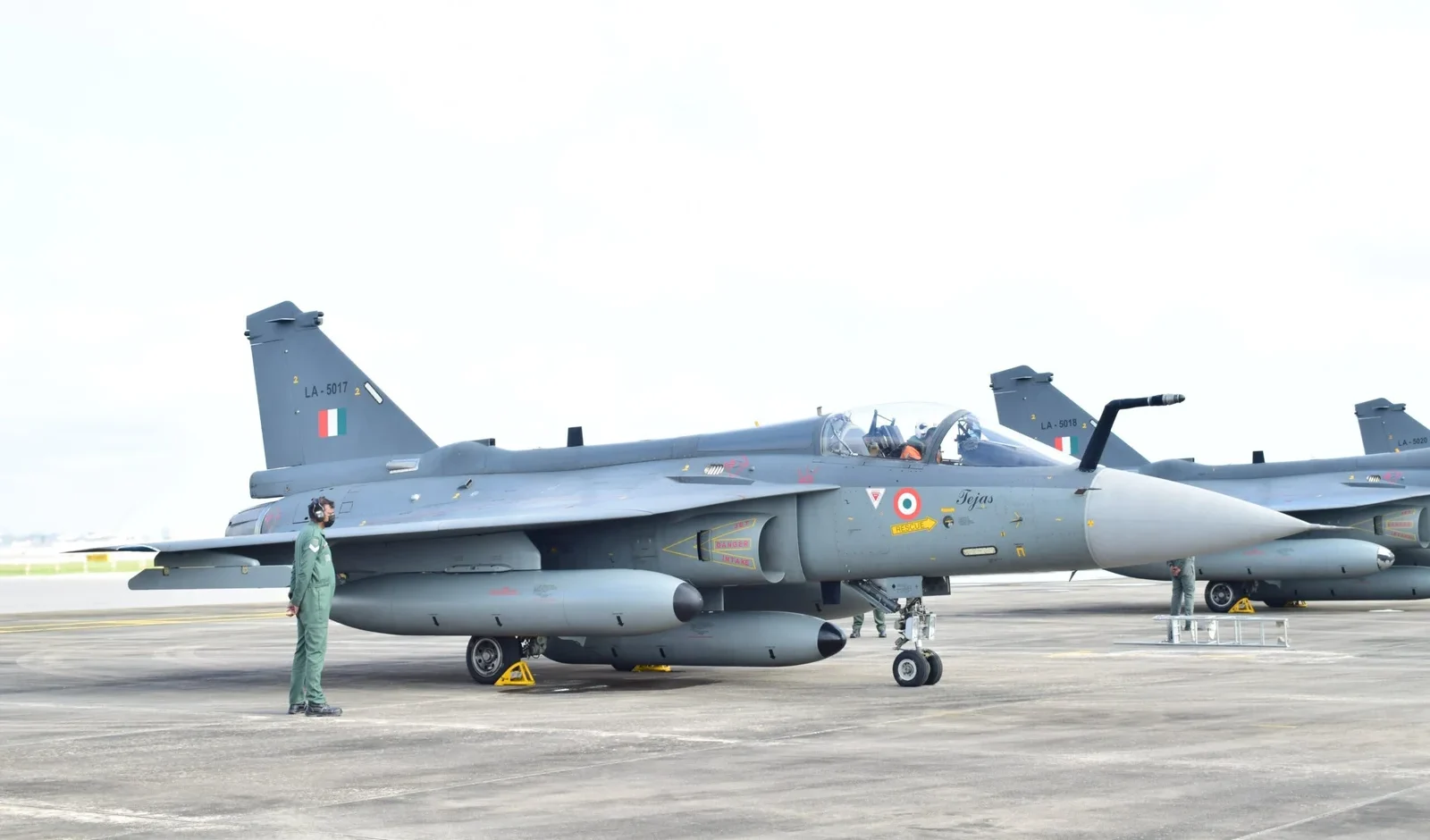
The HAL Tejas Mk-1A could receive advanced infrared sensor technology in the future to enhance its ability to detect and engage stealth aircraft operating in the Indian Ocean Region (IOR). As modern air forces increasingly deploy low-observable fighters that are difficult to detect using conventional radar alone, integrating passive infrared sensors would provide the indigenous fighter with an additional layer of situational awareness and improve its effectiveness in complex air combat environments.
The Tejas Mk-1A is the latest upgraded version of India’s indigenous Light Combat Aircraft, jointly developed by the Defence Research and Development Organisation (DRDO) and Hindustan Aeronautics Limited (HAL). Compared to the original Tejas Mk-1, the new variant features improved avionics, enhanced mission systems, greater payload capability, and structural refinements aimed at increasing combat efficiency. The aircraft currently relies on the Rajendra phased-array radar, developed by DRDO’s Centre for Airborne Systems (CAS) in Bengaluru, to detect, track, and engage aerial targets during air defence missions.
Powered by a single General Electric F404 turbofan engine, the Tejas Mk-1A is capable of flying at speeds of up to Mach 1.6 while carrying a combat payload of approximately 4,600 kilograms across 13 weapon stations. The Indian Air Force has already committed to inducting 83 Tejas Mk-1A fighters as part of its ongoing fleet modernisation programme.
The proposed integration of infrared technology would introduce passive detection capability through systems such as Infrared Search and Track (IRST) or Forward-Looking Infrared (FLIR). Unlike radar, these sensors do not emit electromagnetic signals, allowing the aircraft to detect the heat signatures produced by engines and airframes without revealing its own position. This makes infrared systems particularly valuable against stealth aircraft and in electronic warfare environments where radar jamming may reduce the effectiveness of conventional sensors.

India already possesses significant expertise in infrared and avionics technologies through DRDO laboratories, including the Defence Avionics Research Establishment (DARE) in Hyderabad. Incorporating such sensors into the Tejas Mk-1A would require updates to the aircraft’s avionics architecture and software to enable effective sensor fusion, allowing infrared data to work alongside radar inputs and provide pilots with a more comprehensive tactical picture.
The operational value of this capability is especially relevant in the Indian Ocean Region, where maritime security, coastal defence, and the presence of advanced military aircraft demand improved surveillance and tracking capabilities. A combination of radar and passive infrared detection would strengthen the Tejas Mk-1A’s ability to identify potential threats while operating in contested airspace.
Globally, modern combat aircraft increasingly rely on multi-sensor fusion to improve battlefield awareness and engagement capability. Equipping the Tejas Mk-1A with advanced infrared sensors would bring the indigenous fighter closer to these evolving standards, further enhancing its operational effectiveness and ensuring it remains capable of addressing future air defence challenges.


Facebook Comments