
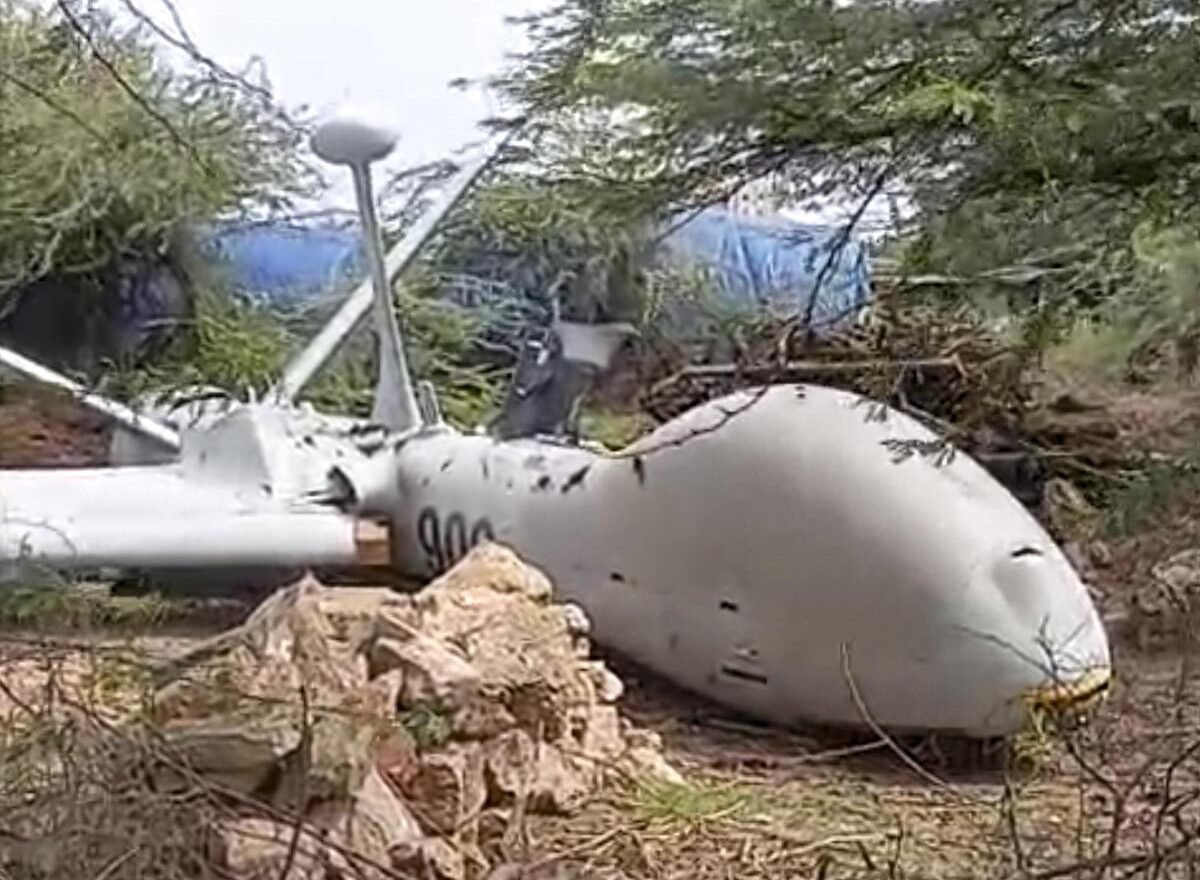
The Indian Navy’s Drishti-10 unmanned aerial vehicle crashed, marking the second loss of the tactical drone system within 18 months. The incident underscores persistent reliability challenges in one of the Navy’s primary organic surveillance platforms.
The Drishti-10 is a tactical-grade rotorcraft UAV developed by DRDO’s Aeronautical Development Establishment (ADE) in Bangalore. It is designed for coastal surveillance, reconnaissance, and over-the-horizon targeting in support of naval operations across the Indian Ocean Region.
The system carries an electro-optical and infrared (EO/IR) sensor payload and operates at ranges up to 50 kilometres, with an endurance of approximately four hours. The Drishti-10 entered service with the Indian Navy in the mid-2010s and has been progressively inducted across both Eastern and Western Fleet commands.
The repeat failure within a relatively short timeframe is significant because the Navy relies on the Drishti-10 for persistent maritime domain awareness in low-to-medium threat environments. Each platform costs several crores and their loss, whether operational or training-related, impacts mission readiness and consumes scarce capital allocation.
The first documented Drishti-10 loss occurred approximately 18 months prior, suggesting either a systemic issue in airframe integrity, power systems, or flight control algorithms, or elevated operational tempos that may have exposed latent design vulnerabilities. Accident investigation teams typically examine structural fatigue, battery management systems, and sensor payload integration points in rotorcraft failures.
DRDO has historically conducted root-cause analysis on major platform losses and issued service bulletins to operators. The Drishti-10 programme has faced periodic technical setbacks since development; multiple versions and payload configurations have been tested to improve reliability and sensor fusion capabilities.
The Indian Navy currently operates a mixed UAV fleet that includes Israeli Searcher Mark II and Heron platforms acquired through direct purchase, alongside indigenously developed systems like Drishti-10 and the smaller Nishant. This diversified approach has been part of India’s broader strategy to reduce dependence on foreign suppliers for intelligence, surveillance, and reconnaissance (ISR) capabilities.
The crash will likely trigger a comprehensive technical audit of remaining Drishti-10 airframes across both commands and may influence funding decisions for successor programmes currently under development at ADE. Enhanced pilot training protocols and operational restrictions may also be imposed pending completion of investigation findings.


Facebook Comments