
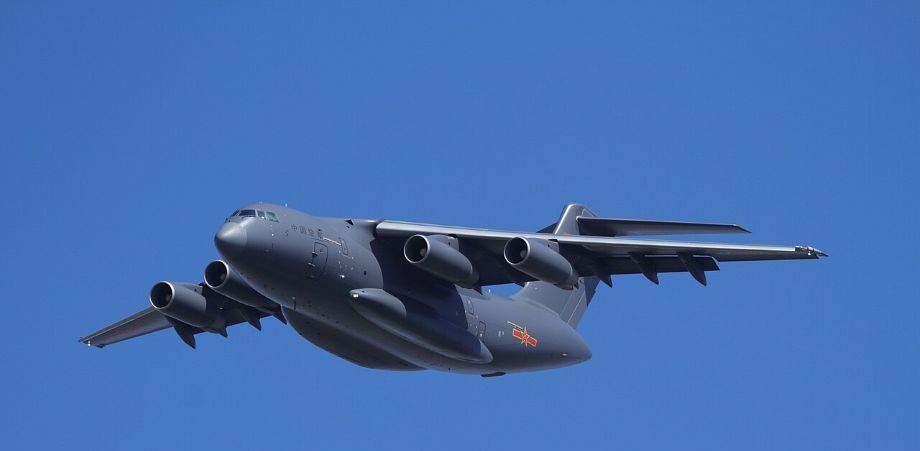
A reported Chinese military aircraft intrusion over Sikkim has drawn attention to India’s eastern border security, particularly because of the region’s proximity to the strategically important Siliguri Corridor. According to media reports published on November 14, 2026, a Chinese military aircraft allegedly entered Indian airspace on the morning of November 12 and remained in the area for approximately 20 to 25 minutes.
The report, citing an anonymous source familiar with the incident, stated that the Indian Air Force (IAF) detected the aircraft at around 8:00 AM while it was flying at an altitude of approximately 25,000 feet. Indian Air Force personnel reportedly issued repeated radio warnings, instructing the aircraft to return to Chinese territory. However, the aircraft allegedly continued operating over the area before eventually departing.
The exact identity of the aircraft has not been disclosed. There is also no publicly available information about its precise flight path, operational purpose or the circumstances surrounding its departure. Whether it was a fighter aircraft, surveillance platform or another type of military aircraft has not been established.
The reported incident is particularly sensitive because of Sikkim’s geographical position along India’s border with China’s Tibet Autonomous Region. The region is also close to the Doklam plateau, which witnessed a prolonged military standoff between Indian and Chinese troops in 2017. Any unusual military activity in this area is therefore likely to attract close attention from Indian defence and security agencies.
Another major concern is the nearby Siliguri Corridor, popularly known as the Chicken’s Neck. This narrow stretch of territory in West Bengal connects India’s northeastern states with the rest of the country. Measuring approximately 20 to 22 kilometres at its narrowest point, the corridor holds considerable strategic importance for India’s military logistics, transportation and national security. Its geographical significance makes security developments in surrounding border regions particularly important for Indian defence planners.
Despite the attention surrounding the report, the alleged airspace violation has not received official confirmation from the Indian Air Force or the Ministry of Defence. According to the media report, the publication had approached the IAF for a response and was awaiting clarification at the time of publication. No publicly available radar records or detailed operational information have independently established the aircraft’s reported route.
The development comes against the backdrop of continuing security sensitivities along the Line of Actual Control (LAC), where India and China have maintained heightened military attention following earlier border tensions. Both countries have continued diplomatic and military engagements aimed at maintaining stability along their disputed frontier.
India has also been strengthening its border infrastructure through improved roads, bridges, tunnels and airfields to enhance military mobility and operational readiness in strategically important areas. These developments are particularly significant in regions where challenging terrain and limited connectivity can influence military deployment and logistics.
For now, the reported Sikkim aircraft incident remains unverified by official defence authorities. Further clarification from the Indian government or the Indian Air Force will be essential to establish the circumstances surrounding the alleged aircraft movement and determine whether any formal response was initiated.




Facebook Comments