
Army Chief General Dhiraj Seth Sets Out SAMARTH Vision for a Technology-Driven Indian Army
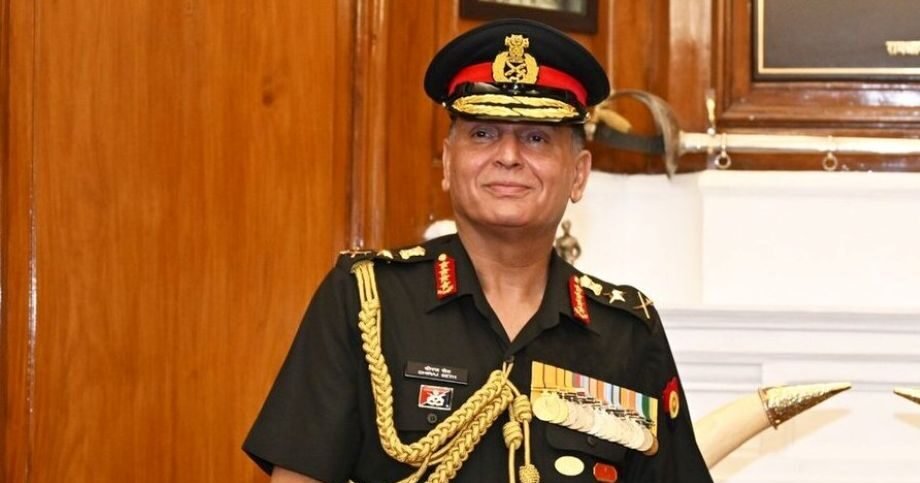
Army Chief General Dhiraj Seth has outlined a new seven-part framework called SAMARTH, presenting a broad vision for how the Indian Army should prepare for the changing character of warfare. The framework places equal emphasis on battlefield endurance, rapid adaptation, modernisation and the effective use of emerging technologies.
The word SAMARTH, meaning capable or empowered, reflects the objective of developing an Army that can remain operationally effective even as the nature of conflict continues to change. General Seth’s framework brings together seven interconnected priorities: Sustainability, Adaptation, Modernisation, Acceleration, Resilience, Technology and Human-Machine Teaming.
A major element of the vision is sustainability. Future conflicts could place considerable demands on ammunition stocks, logistics networks, equipment and industrial supply chains. The Army therefore needs the ability to maintain combat operations over an extended period while continuing to replenish and repair critical resources.
Adaptation is another central component of the framework. Battlefield conditions can change rapidly, particularly with the increasing use of drones, electronic warfare, artificial intelligence and precision weapons. The Army needs to continuously adjust its tactics, training and capabilities in response to these developments.

The modernisation component focuses on bringing new-generation capabilities into the force while ensuring that existing operational commitments are not affected during the transition. This is particularly important for a large military that operates a combination of legacy platforms and newer systems.
Acceleration, meanwhile, points to the need for faster adoption and integration of useful technologies. Developing a new capability is only one part of modernisation; converting that capability into an effective operational tool requires faster testing, induction, training and deployment.
The resilience aspect of SAMARTH addresses the ability of the force to continue functioning despite battlefield losses and disruptions. Modern warfare can involve attacks on communications, logistics and information networks, making the ability to absorb disruption and recover quickly increasingly important.
Technology forms another major pillar of the framework. Artificial intelligence, unmanned aerial systems, robotics and autonomous technologies are changing how information is collected, decisions are supported and operations are conducted. The Army’s approach is aimed at using these technologies to improve the capabilities of personnel rather than viewing technology as a replacement for soldiers.
This connects directly with the final element, Human-Machine Teaming. The concept envisages soldiers and commanders working alongside intelligent and autonomous systems. Drones and other machines can undertake surveillance, reconnaissance or other tasks, while human personnel remain responsible for judgement, command and critical decisions.
The SAMARTH framework therefore goes beyond the acquisition of individual weapons or platforms. It represents a broader approach in which manpower, technology, logistics, industrial capacity and operational doctrine need to develop together.
For the Indian Army, the approach comes at a time when military forces worldwide are adapting to increasingly technology-intensive conflicts. The growing importance of unmanned systems, artificial intelligence, autonomous platforms and networked warfare is creating new demands on military organisations.
General Seth’s SAMARTH vision places the emphasis on building an Army that can sustain operations, adapt quickly, absorb disruption and integrate technology effectively. The framework provides a broad direction for strengthening the force’s preparedness for the increasingly complex demands of future warfare.



Facebook Comments