
Indian Navy Set for Triple Induction of Frigate, Sub-Hunter and Survey Ship
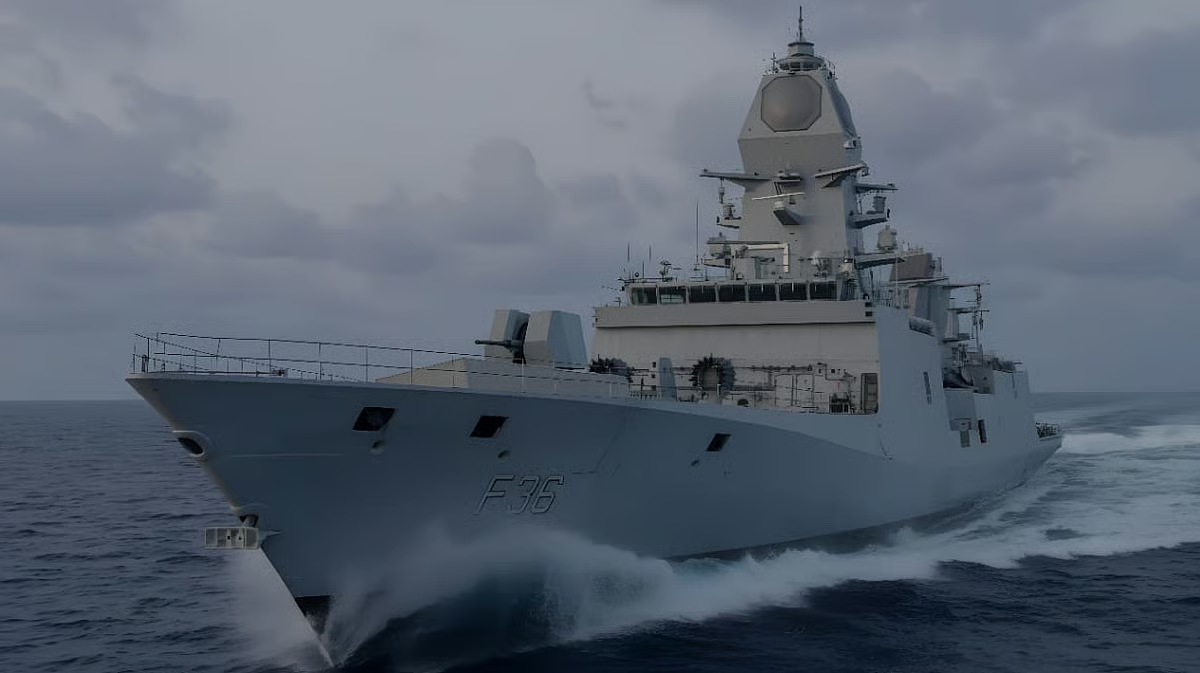
The Indian Navy is preparing for the simultaneous induction of three major warship classes, marking a significant expansion of the service’s operational fleet across surface warfare, anti-submarine capability, and hydrographic survey missions, according to reports.
The triple induction reflects India’s accelerating indigenisation agenda under the Defence Acquisition Procedure and Make in India framework. Each platform addresses a distinct operational gap in the Navy’s current order of battle and strengthens India’s maritime security posture across the Indian Ocean Region.
The frigate induction likely references the Nilgiri-class vessels under construction at Mazagon Dock Shipbuilders Limited in Mumbai. These are 6,670-tonne guided-missile frigates designed to replace the aging Godavari-class. Armed with extended-range BrahMos missiles, Aster 15 air defence systems, and advanced radar suites, the Nilgiris represent the Navy’s modern surface combatant capability and can operate independently or as part of battle groups across the Indian Ocean.
The sub-hunter vessel designation points to the anti-submarine warfare shallow water craft programme, potentially referring to the ASW Shallow Water Craft project. These platforms are critical for India’s coastal defence strategy, particularly in the Bay of Bengal and Arabian Sea, where they will conduct maritime patrol, target acquisition, and anti-submarine operations in littoral zones where larger destroyers cannot operate effectively.

The hydrographic survey ship component strengthens India’s maritime domain awareness and charting capabilities. Survey vessels gather oceanographic and bathymetric data essential for naval operations, merchant shipping safety, and establishing India’s maritime claims. This role has grown in strategic importance as India asserts its presence in contested waters.
India’s shipbuilding sector has matured significantly since the launch of major frigate and corvette programmes in the early 2000s. State-owned yards at Mazagon Dock and Cochin Shipyard, alongside emerging private partners like Goa Shipyard and Larsen and Toubro, now possess design and construction expertise that reduces dependence on foreign platforms and retains naval capability development within India.
These inductions occur against a backdrop of growing naval competition in the Indian Ocean, where China’s expanding submarine fleet and surface presence have prompted India to prioritize fleet modernization and capability gaps. The concurrent addition of three distinct vessel types demonstrates the Navy’s commitment to balanced force development across multiple warfare domains.




Facebook Comments