
HAL Tejas Mk1A Review Delayed to June Amid Radar and Engine Integration Issues
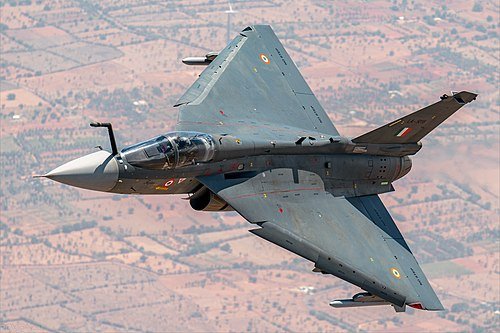
The Indian Air Force and Hindustan Aeronautics Limited have postponed the formal review of the Tejas Mk1A fighter aircraft to June, citing unresolved challenges in radar integration, engine performance validation, and weapons system compatibility, according to sources tracking the programme.
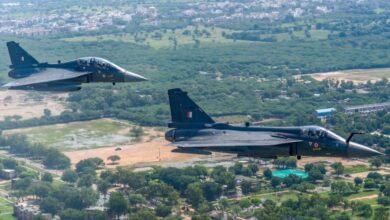
The delay underscores persistent technical hurdles in bringing the indigenous light combat aircraft to full operational standard. The Tejas Mk1A represents a significant upgrade over the earlier Mk1 variant, incorporating a more powerful General Electric F404-IN20 turbofan engine, an active electronically scanned array radar, and expanded weapons carriage capability.
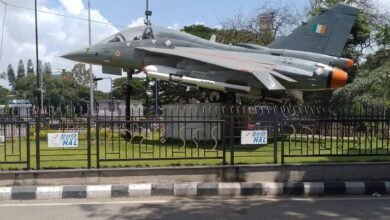
HAL has been developing the Tejas since the 1990s as India’s answer to the requirement for a lightweight, agile combat platform suited to operations across diverse geographical terrain. The Mk1 variant entered IAF service in 2019, initially with limited operational clearance. The Mk1A build introduces enhanced avionics, improved thermal management, and deeper integration of air-to-air and air-to-ground weapons.
The radar integration challenges likely centre on ensuring the aircraft’s fire-control radar operates seamlessly with the onboard mission computer and air defence systems. Engine validation, meanwhile, remains critical to demonstrating sustained performance across the aircraft’s operational envelope, particularly at sustained high altitudes and in demanding low-level penetration scenarios.
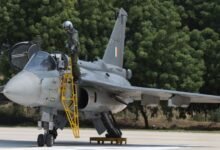
Weapons integration delays reflect the complexity of certifying diverse munitions across multiple launch modes. The Mk1A is cleared to carry indigenous Astra air-to-air missiles, the BrahMos cruise missile, and various precision-guided air-to-ground weapons. Each integration demands extensive flight testing to validate separation characteristics, targeting algorithms, and fail-safe mechanisms.
The June timeline allows HAL and IAF engineering teams additional months to conduct ground validation, subsystem testing, and incremental flight trials. This phased approach, while extending development timelines, reduces the risk of flight test failures that could set the programme back by quarters.
The Tejas programme remains central to India’s Make in India defence strategy and the IAF’s objective to narrow the fighter gap against regional air forces. Current IAF strength in light combat aircraft relies heavily on the ageing MiG-21 Bison fleet, making indigenous alternatives strategically important. HAL has committed to delivering 83 Mk1A aircraft under the initial production contract, with deliveries extending through 2029.
The postponement reflects realistic engineering discipline rather than programmatic failure. Complex weapons platforms routinely encounter integration challenges during certification phases, and transparent rescheduling protects both manufacturer credibility and operational safety standards.
Facebook Comments