India’s efforts to expand its independent satellite navigation capabilities have received a boost after the Indian Space Research Organisation (ISRO) successfully carried out the first orbit-raising manoeuvre of the NVS-03 spacecraft. The operation represents an important step towards placing the satellite in its designated orbital position and strengthening the country’s Navigation with Indian Constellation (NavIC) network.
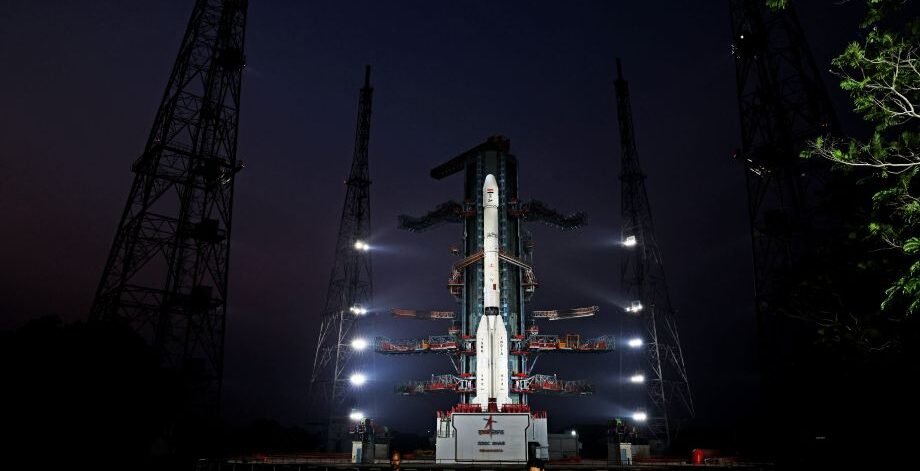
The navigation satellite was launched on October 30, 2026, at 11:51 pm IST using the Geosynchronous Satellite Launch Vehicle GSLV-F18 from the Satish Dhawan Space Centre in Sriharikota. After its launch, the spacecraft was successfully placed into a Geosynchronous Transfer Orbit (GTO), with an initial perigee of approximately 170.3 km and an apogee of 38,080 km.
The next stage of the mission involved adjusting the satellite’s orbit using its onboard propulsion system. ISRO successfully performed this operation on October 31, 2026, at 4:48 pm IST. During the exercise, the spacecraft’s Liquid Apogee Motor (LAM) was fired for 2,174.8 seconds, equivalent to around 36 minutes.
The engine firing raised the satellite’s perigee and changed its orbital parameters to approximately 5,477.6 km by 37,833.4 km. ISRO reported that the spacecraft remained healthy after completing the operation. Further orbital adjustments are planned to move NVS-03 into its designated geosynchronous orbital slot at 111.75 degrees East longitude.


NVS-03 belongs to India’s second-generation navigation satellite programme, which consists of five planned spacecraft, designated NVS-01 through NVS-05. These satellites are intended to improve the performance, coverage and reliability of the country’s regional navigation infrastructure. Their deployment is particularly important for maintaining the continuity of NavIC services and expanding their use across different sectors.
The spacecraft features an upgraded navigation payload supporting L1, L5 and S frequency bands. The inclusion of the L1 frequency is expected to make NavIC signals accessible to a broader range of compatible navigation receivers. This improvement could support wider adoption of India’s navigation services in transportation, aviation and other location-based applications.
NVS-03 also incorporates an indigenous atomic clock, alongside procured atomic clocks, to support precise timekeeping. Accurate timing is essential for satellite navigation because receivers determine their positions by calculating the time taken for signals to travel from satellites to the ground.
NavIC provides positioning, navigation and timing services across India and a surrounding area extending approximately 1,500 kilometres beyond the country’s geopolitical boundaries. Its applications cover road and air transportation, maritime navigation, agriculture, disaster response and strategic operations. The system also supports restricted services for authorised users, making it relevant to India’s national security requirements.
For the defence sector, a reliable domestic navigation network offers an important technological advantage. It can support military positioning, naval activities and other strategic applications while reducing reliance on foreign satellite navigation infrastructure.
The completion of NVS-03’s first orbit-raising manoeuvre marks progress towards its operational deployment. With additional orbital adjustments remaining, the satellite is expected to become another important component of India’s efforts to establish a dependable and technologically advanced indigenous navigation system.




Facebook Comments