
Japan’s F-2A Deployment Gives IAF a Closer Look at Advanced F-16-Derived Fighter
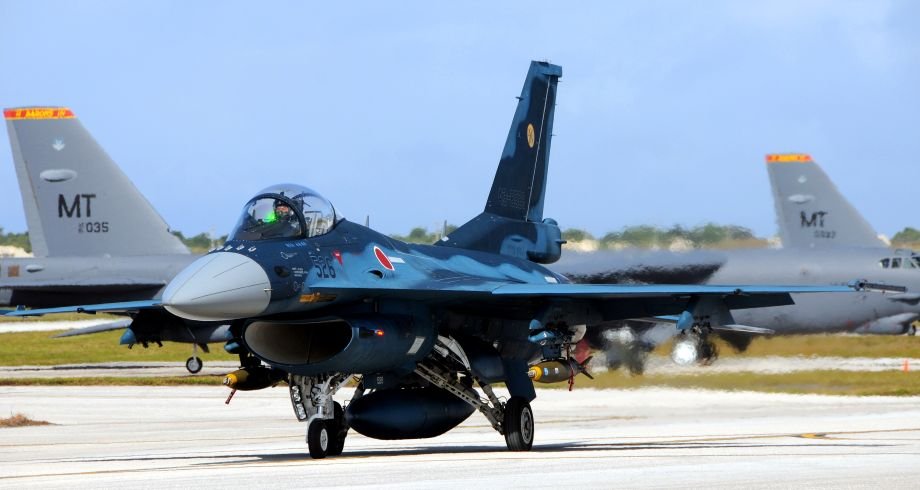
The Indian Air Force is preparing to gain first-hand operational insights into Japan’s Mitsubishi F-2A fighter aircraft during Exercise Veer Guardian 2026, as the Indian and Japanese air forces come together for advanced air-combat training at Jodhpur in Rajasthan.
The participation of Japanese F-2 fighters is an important development in the bilateral exercise, particularly because the aircraft has a distinctive background. The F-2 was developed through a Japan-US programme based on the F-16 Fighting Falcon design, but Japan introduced extensive structural, avionics and weapons-system modifications to create a fighter suited to its own operational requirements.
For the IAF, the F-2 offers an opportunity to examine a fighter with an F-16-derived design while also understanding how Japanese technology has been integrated into the platform. This could provide useful insights for air-combat training and tactical planning against different fourth-generation fighter configurations.
The F-2A is larger than the original F-16 and features a bigger wing, an extended fuselage and other aerodynamic changes. These modifications were intended to improve the aircraft’s range, payload and overall performance for Japan’s defence requirements. The aircraft was also designed with a strong emphasis on maritime operations.

One of the most notable aspects of the F-2 is its advanced sensor suite. The aircraft was among the early fighter platforms to introduce an operational AESA radar, providing advanced capabilities for detecting and tracking airborne targets. Japanese-developed avionics and electronic warfare systems further distinguish the F-2 from standard F-16 variants.
These characteristics make the Japanese fighter particularly useful for dissimilar air-combat training. For IAF pilots, flying against or alongside an unfamiliar fighter can help develop a better understanding of different flight characteristics, sensor capabilities and tactical approaches.
The F-2’s presence in India is also significant from an operational perspective. Japanese fighter aircraft are participating in an exercise from Indian territory, allowing the two air forces to conduct more complex training while improving coordination between their personnel and combat platforms.
Indian fighter aircraft are expected to participate in the exercise alongside the Japanese contingent. The interaction between different aircraft types will allow both sides to practise air-combat scenarios and exchange operational experience in a controlled training environment.
Exercise Veer Guardian has become an important platform for strengthening the defence relationship between India and Japan. The two countries have steadily expanded military cooperation, particularly in the Indo-Pacific, where both New Delhi and Tokyo have a shared interest in maintaining a stable and secure regional environment.
The 2026 edition carries additional importance because of the deployment of Japanese F-2 fighters to India. Beyond the exercise itself, the engagement provides an opportunity for personnel from both air forces to gain a deeper understanding of each other’s equipment, procedures and operational methods.
For the Indian Air Force, studying the F-2 could be particularly useful because of the aircraft’s combination of American design heritage and Japanese-developed technology. The experience can provide Indian aircrews with exposure to a different interpretation of a modern fourth-generation fighter and contribute to broader tactical awareness.
The exercise also demonstrates the increasing depth of India-Japan defence cooperation. Regular interaction between the two air forces can help build interoperability and improve their ability to coordinate during future regional security situations.
As Veer Guardian 2026 progresses, the F-2 deployment is expected to remain one of the key highlights of the exercise. For the IAF, the opportunity to study and train against Japan’s unique F-2A fighter provides valuable experience that extends beyond routine bilateral engagement and contributes to the development of more adaptable air-combat tactics.



Facebook Comments