
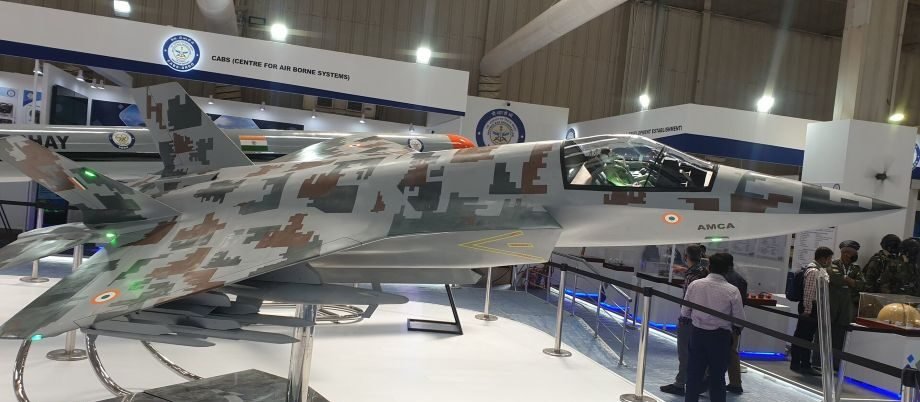
India’s ambitious effort to develop an indigenous fifth-generation stealth fighter has reached another important milestone, with three industry contenders advancing in the competition for the ₹15,000 crore Advanced Medium Combat Aircraft (AMCA) programme. The development marks a significant step towards expanding private-sector participation in India’s advanced military aviation industry.
The technical bid submission process for selecting the Development-cum-Production Partner (DcPP) concluded on October 30, 2026, following an extension granted by the Ministry of Defence. The original deadline of August 27 was extended to provide participating companies with additional time to prepare their proposals for the technically demanding project.
Three shortlisted contenders have entered the competition. Tata Advanced Systems Limited (TASL) has submitted an independent bid, while Larsen & Toubro (L&T) is leading a consortium that includes Bharat Electronics Limited (BEL) and Dynamatic Technologies. The third proposal comes from a Bharat Forge-led partnership involving BEML and Data Patterns.
The three groups had already progressed through the initial qualification process. Their proposals will now undergo further scrutiny by the Ministry of Defence’s evaluation committee, which will examine the submitted documentation and assess their technical capabilities. A detailed technical evaluation is expected to continue until the end of 2026, followed by commercial discussions and price negotiations.

The selected partner will work closely with the Aeronautical Development Agency (ADA), the organisation responsible for designing and developing the AMCA. The contract involves manufacturing five flying prototypes and one structural test specimen based on ADA’s aircraft design. These prototypes will play a critical role in validating the fighter’s engineering, flight performance and operational technologies before the programme moves towards further development and certification.
One notable aspect of the competition is the absence of Hindustan Aeronautics Limited (HAL), India’s traditional military aircraft manufacturer. HAL did not qualify for the final selection stage, leaving the prototype development competition to the three shortlisted industry groups. The decision reflects the government’s broader effort to establish an additional fighter aircraft manufacturing capability by bringing private companies into a sector historically dominated by public-sector organisations.
The AMCA programme represents a major investment in India’s long-term air combat capabilities. Designed as a twin-engine, fifth-generation multirole stealth fighter, the aircraft is expected to feature low-observable technology, internal weapons bays, advanced avionics, sensor fusion and supercruise capabilities. These technologies are intended to improve survivability, situational awareness and effectiveness in highly contested airspace.
The initial AMCA Mk1 variant is planned to use the American GE F414 engine, while the subsequent Mk2 version is expected to incorporate a more powerful engine developed through international collaboration involving India’s Gas Turbine Research Establishment (GTRE) and France’s Safran.
Beyond the development of a new combat aircraft, the project is expected to strengthen India’s domestic aerospace manufacturing ecosystem. It will create opportunities for private companies to develop expertise in aircraft structures, advanced materials, systems integration and sophisticated defence technologies.
The upcoming evaluation will determine which of the three contenders receives the responsibility of bringing India’s next-generation stealth fighter from design to flying prototypes. Its outcome could represent a turning point in India’s military aviation industry and support the country’s broader ambition of achieving greater self-reliance in advanced defence manufacturing.



Facebook Comments