
Indian Army Pursues Indigenous 1,000 km AI-Enabled Loiter Munition Drones
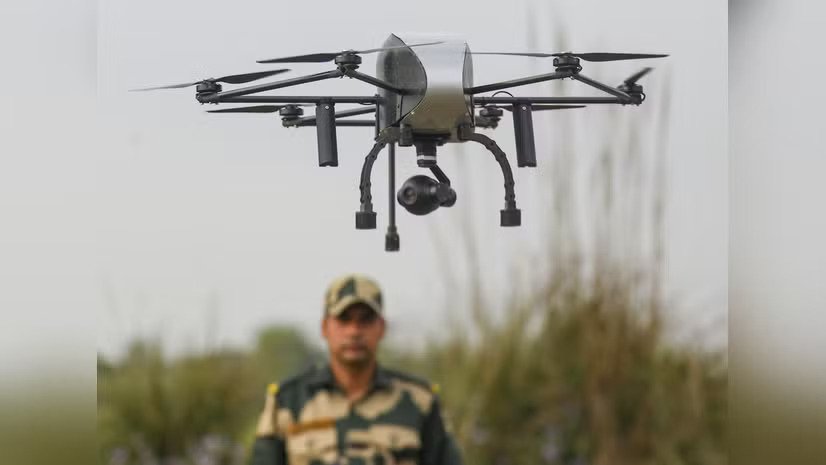
The Indian Army is pursuing an indigenous, AI-enabled loiter munition system with a range of 1,000 km, capable of autonomous target engagement and self-destruction. The development reflects the Army’s push to acquire long-range precision strike capabilities through domestically designed and manufactured platforms.
Loiter munitions, commonly referred to as kamikaze or suicide drones in military terminology, are unmanned aerial vehicles designed to loiter over a target area before diving onto and destroying their intended objectives. Unlike conventional missiles that follow a ballistic trajectory, loiter munitions provide operators with extended time to acquire or reassess targets before commitment to strike.
The 1,000 km operational range significantly exceeds that of existing tactical unmanned systems in Indian service. For context, the Army’s current inventory includes platforms like the Rustom and Dhruv-based surveillance drones, which operate in the medium-range reconnaissance role. An indigenous loiter munition system of this range would position India alongside select global operators capable of deep-strike uncrewed operations.
The AI integration is central to the system’s appeal. Autonomous target recognition and engagement capabilities reduce operator workload during extended missions and enable the platform to function in communication-denied environments. This aligns with Indian military doctrine’s emphasis on operating in high-altitude and geographically challenging terrain along the northern frontier, where conventional communication infrastructure may be degraded or unavailable.

India’s defence research establishment has accelerated work on autonomous systems and AI-augmented platforms since 2018, when the Defence Ministry identified artificial intelligence as a critical technology for future combat operations. The DRDO’s work on loitering munitions builds on earlier programmes in precision-guided systems, including cruise missile development and tactical guided weapons.
Self-destruct capability is a critical design feature. It mitigates the risk of unexploded ordnance and reduces collateral damage potential in contested zones. The loiter munition can either execute its strike mission or, if no valid target emerges within its operational window, safely deactivate and self-destruct rather than drift uncontrolled.
The Army’s interest in this system reflects a broader shift toward indigenous platforms for offensive operations. With procurement cycles for foreign platforms extending beyond a decade and foreign policy restrictions potentially limiting acquisition of strategic weapons, India is prioritizing homegrown solutions in precision strike, surveillance, and autonomous systems.
Development timelines for such systems typically span 5-7 years from concept to trials. The project’s progression through DRDO’s development stages and eventual induction into operational service will likely be measured against India’s performance in regional security scenarios and the maturation of the underlying AI and autonomy technologies.


Facebook Comments