
India Revives Javelin Missile Procurement After 16-Year Hiatus
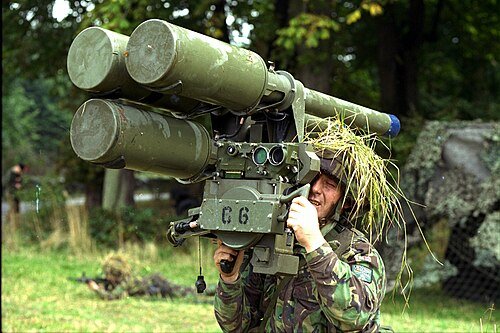
India is moving to revive procurement of the US-manufactured Javelin anti-tank guided missile, marking a significant shift in the Army’s anti-armour strategy after more than a decade and a half of inaction on the system.
The renewed interest comes as the Indian Army reassesses its short-range anti-tank capability requirements, particularly in high-altitude and mountainous terrain where precision-guided munitions offer decisive advantages against armoured formations.
The Javelin is a shoulder-fired, man-portable anti-tank missile developed jointly by Raytheon Technologies and Lockheed Martin. It employs a tandem-shaped charge warhead capable of defeating modern composite armour on main battle tanks and operates in a lock-on-before-launch and lock-on-after-launch mode, giving operators tactical flexibility in engagement scenarios.
India first explored Javelin procurement in the early 2000s as part of a broader modernisation initiative targeting the Indian Army’s mechanised formations. That programme stalled due to budgetary constraints, technology transfer concerns, and strategic shifts in procurement priorities. The Army subsequently pursued indigenous solutions and phased inductions of other precision-guided anti-tank systems.


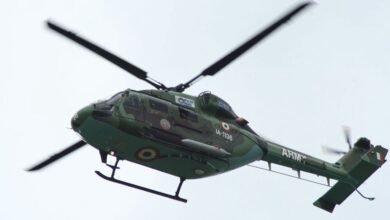
The 16-year gap reflects India’s shifting defence acquisition approach. During this period, the Indian Army inducted the Nag missile, a domestically developed fire-and-forget anti-tank guided weapon developed by DRDO’s Pune-based Weapons Research and Development Establishment. The Nag was integrated onto the Helina airborne platform and deployed with Army aviation units, though induction remained limited compared to planners’ initial expectations.
Javelin’s renewed traction stems from operational lessons and technological advances. The missile’s proven performance in asymmetric and conventional warfare scenarios, demonstrated extensively in Europe and Central Asia over the past two decades, has reinforced confidence in its effectiveness. Additionally, newer variants offer improved guidance systems, extended range, and enhanced lethality against emerging armoured threats.
A fresh Javelin acquisition would complement rather than replace indigenous efforts. The Indian Army continues development of next-generation anti-tank systems, including advanced versions of the Nag and emerging loitering munitions under DRDO’s Autonomous Munitions programme. However, the Javelin’s operational maturity and battlefield-proven record make it attractive for filling immediate capability gaps in mechanised formations defending India’s northern and eastern borders.
Procurement would also strengthen India-US defence cooperation in precision munitions, aligning with broader trends in bilateral military partnerships. The US has progressively eased export restrictions on advanced weaponry to India over the past decade, facilitating sales of systems ranging from Guardian drones to MH-60R helicopters and Harpoon anti-ship missiles.
Any revival of the Javelin programme would require fresh budget allocation and formal approval through India’s defence procurement process, with final numbers and delivery schedules to be negotiated with the US State Department and relevant manufacturers.



Facebook Comments