
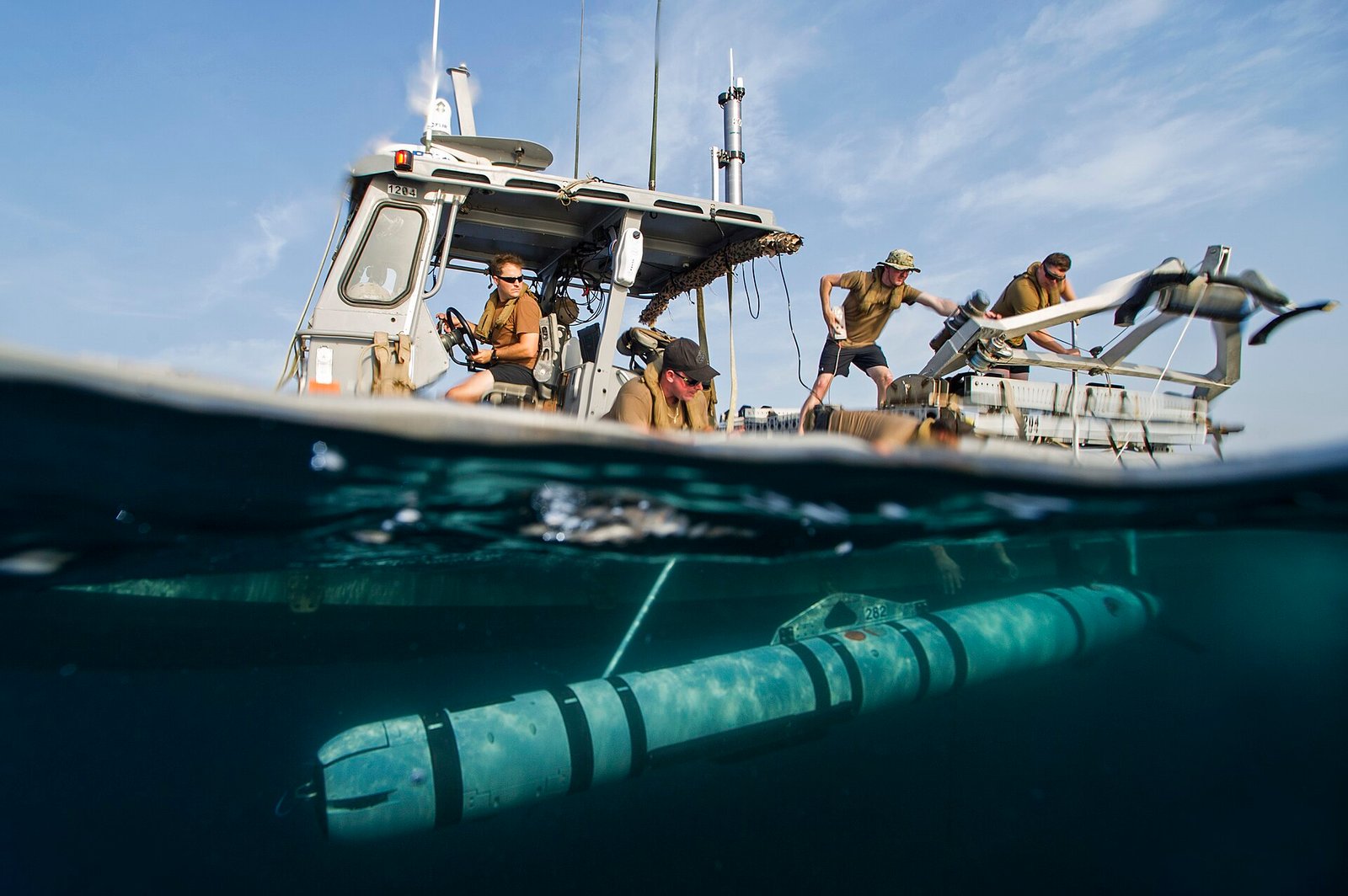
Mumbai-based marine robotics firm GoFloat has progressed development of the Pralay autonomous underwater vehicle (AUV) for non-lethal maritime security applications, according to the headline announcement. The indigenous platform represents India’s expanding private-sector capability in undersea autonomous systems.
Pralay joins a growing suite of Indian autonomous underwater platforms designed for surveillance, reconnaissance, and harbour protection tasks. The AUV segment has attracted significant investment from both DRDO and private vendors as India seeks to reduce dependence on imported subsystems for coastal security infrastructure.
India’s maritime security posture has increasingly emphasised indigenous autonomous systems following the 26/11 attacks and subsequent security reviews. Underwater vehicles operating in non-lethal configurations support coastal surveillance, mine countermeasures, underwater mapping, and port area monitoring without the operational constraints of manned platforms.
GoFloat’s development aligns with the broader Make in India initiative in defence technology. Private companies have entered the autonomous systems space as DRDO capacity remains focused on higher-order weapon system development, creating a collaborative ecosystem where boutique firms address specific operational niches.

The Indian Navy and Coast Guard have integrated autonomous platforms into routine operations over the past decade. Systems deployed for mine reconnaissance, environmental monitoring, and underwater infrastructure inspection have validated operational procedures and maintenance protocols specific to Indian waters and coastal environments.
Pralay’s non-lethal classification positions it for dual-use applications spanning civilian hydrographic surveys, offshore energy sector support, and research institution partnerships. This flexibility enhances commercial viability while maintaining strategic utility for maritime agencies.
India’s AUV ecosystem now encompasses platforms ranging from man-portable systems suitable for tactical deployment to larger endurance vehicles for extended area surveillance. Integration with surface command stations and real-time data relay systems remains critical for operational effectiveness in India’s exclusive economic zone monitoring missions.
The advancement reflects India’s determination to field indigenous solutions for persistent maritime domain awareness across the Indian Ocean, particularly in high-traffic shipping lanes where non-lethal automated surveillance reduces manned vessel requirements and associated operational costs.


Facebook Comments